Redefining Pedagogy for Digital Learning: A Five-Day Journey of Transformation

ATLAS SkillTech University × Association of Indian Universities (AIU) — FDP Highlights
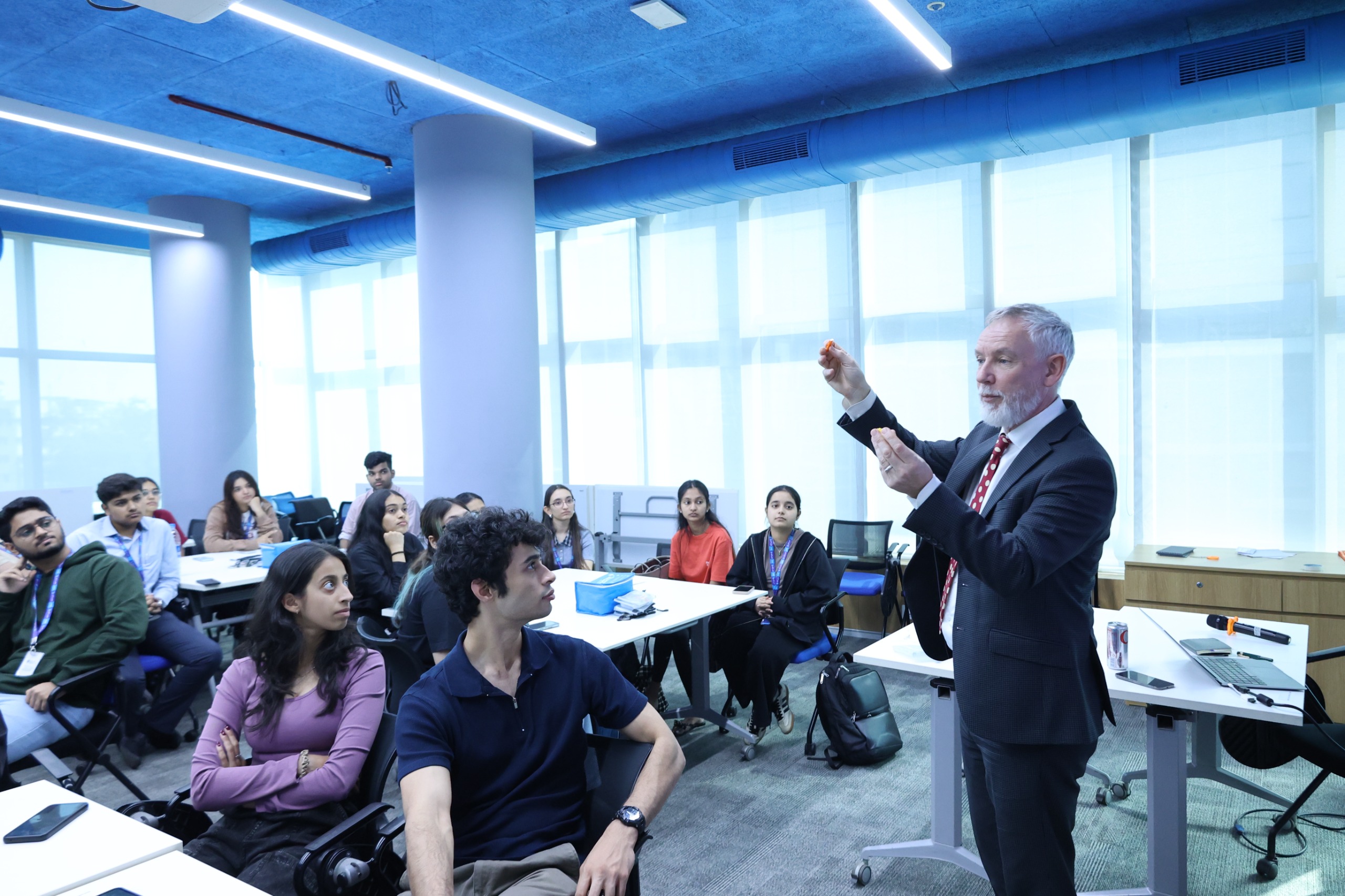
ATLAS SkillTech University, in collaboration with the Association of Indian Universities (AIU), successfully hosted a five-day Faculty Development Program (FDP) on “Pedagogy 4.0: Redefining Education with MOOCs & Digital Content Development.”
With over 100 enthusiastic participants from across the country, the FDP offered a comprehensive immersion into the future of teaching—where digital innovation, learner-centric design and pedagogical empathy converge to redefine higher education.
Valedictory Address by Dr. Pankaj Mittal, Secretary General, AIU
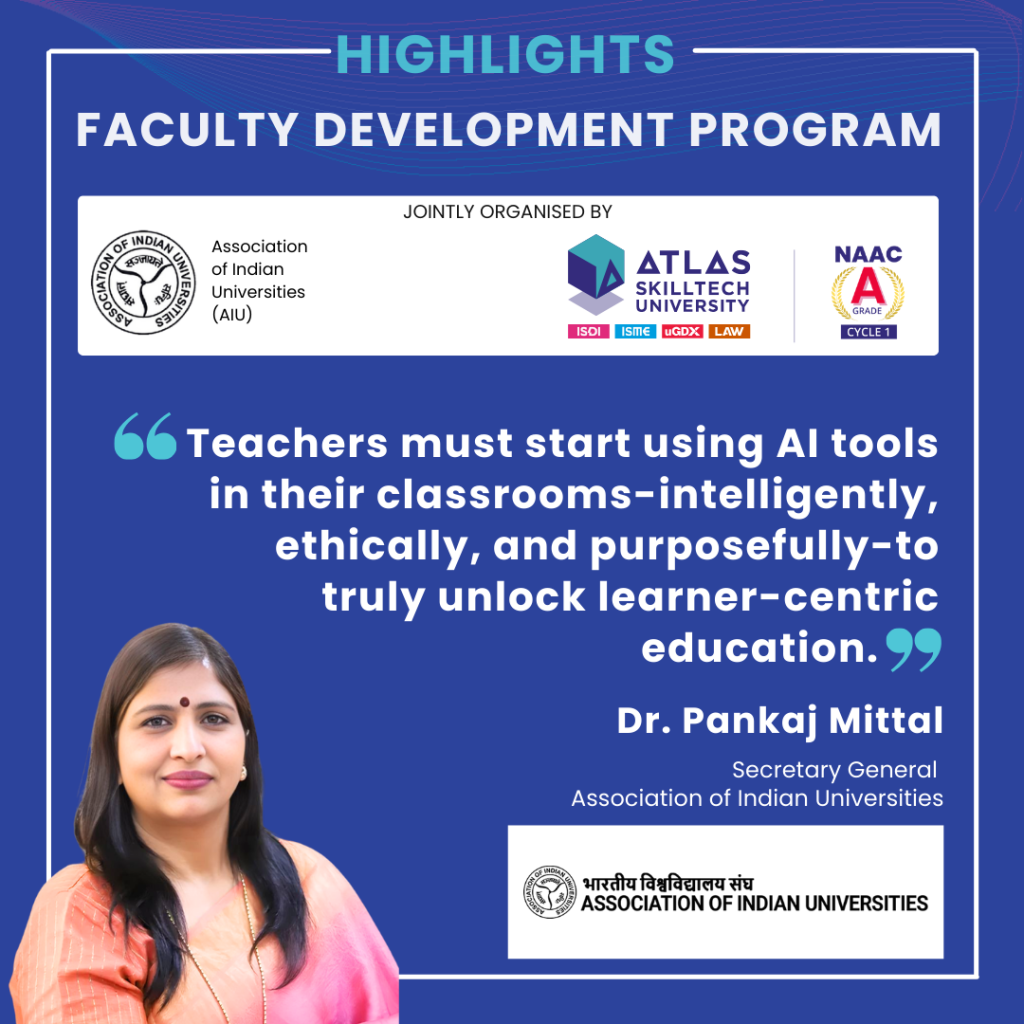
Dr. Mittal delivered an inspiring valedictory speech on the future of Indian higher education. She emphasised:
- the national importance of MOOCs and SWAYAM
- faculty capacity-building in digital content creation
- the ethical, responsible use of AI tools like ChatGPT
- and the vision of Pedagogy 4.0—innovation, multidisciplinarity, and technology-driven learning
Her message reinforced the mission of the FDP: preparing educators for a future where digital learning is personal, equitable and transformative.
Day 1 — Reimagining MOOCs for the Future of Learning
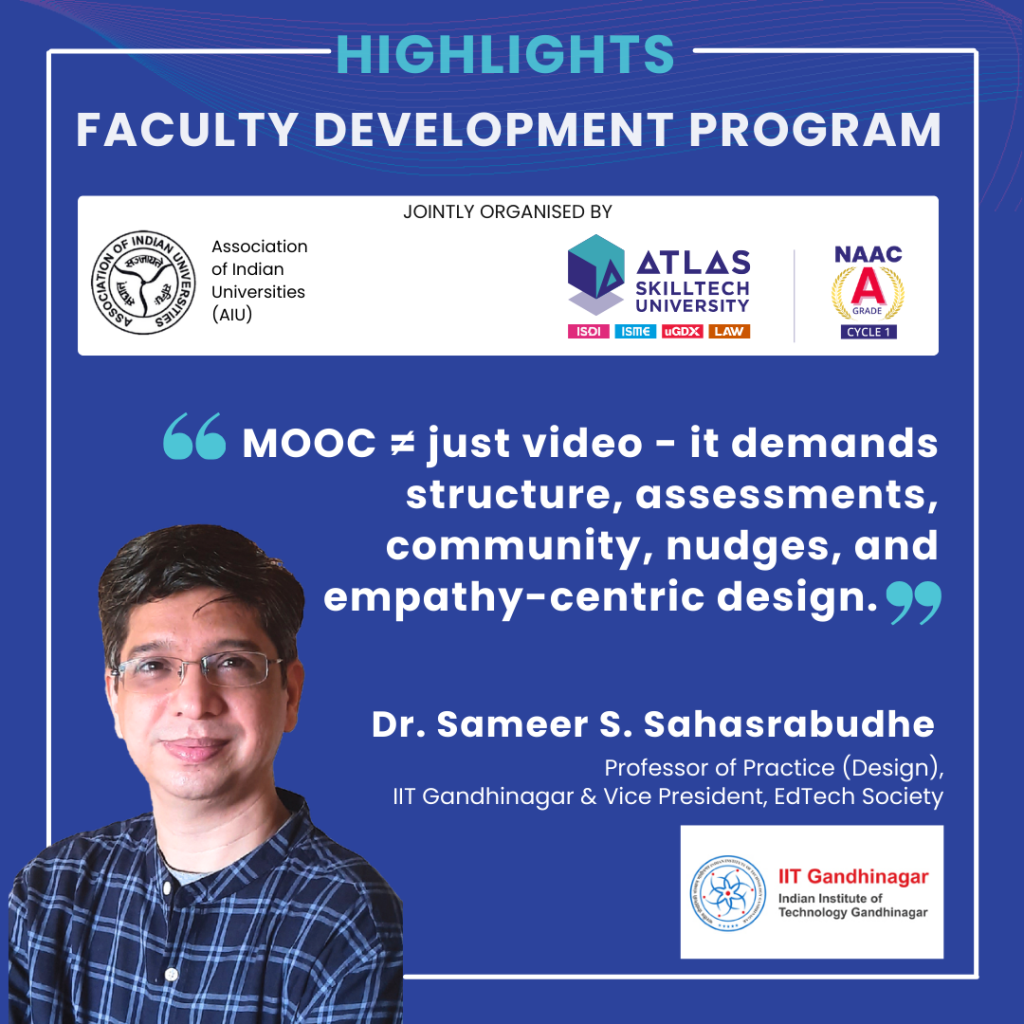
The FDP commenced with an inspiring keynote by Dr. Sameer Sahasrabudhe, Professor of Practice (Design), IIT Gandhinagar & Vice President, EdTech Society. Presenting Pedagogy 4.0 as the “tonal center” of digital education, he emphasised that MOOC demands structure, assessments, community, nudges, and empathy-centric design. His session reframed MOOCs as dynamic, participatory ecosystems rather than one-way information broadcasts.
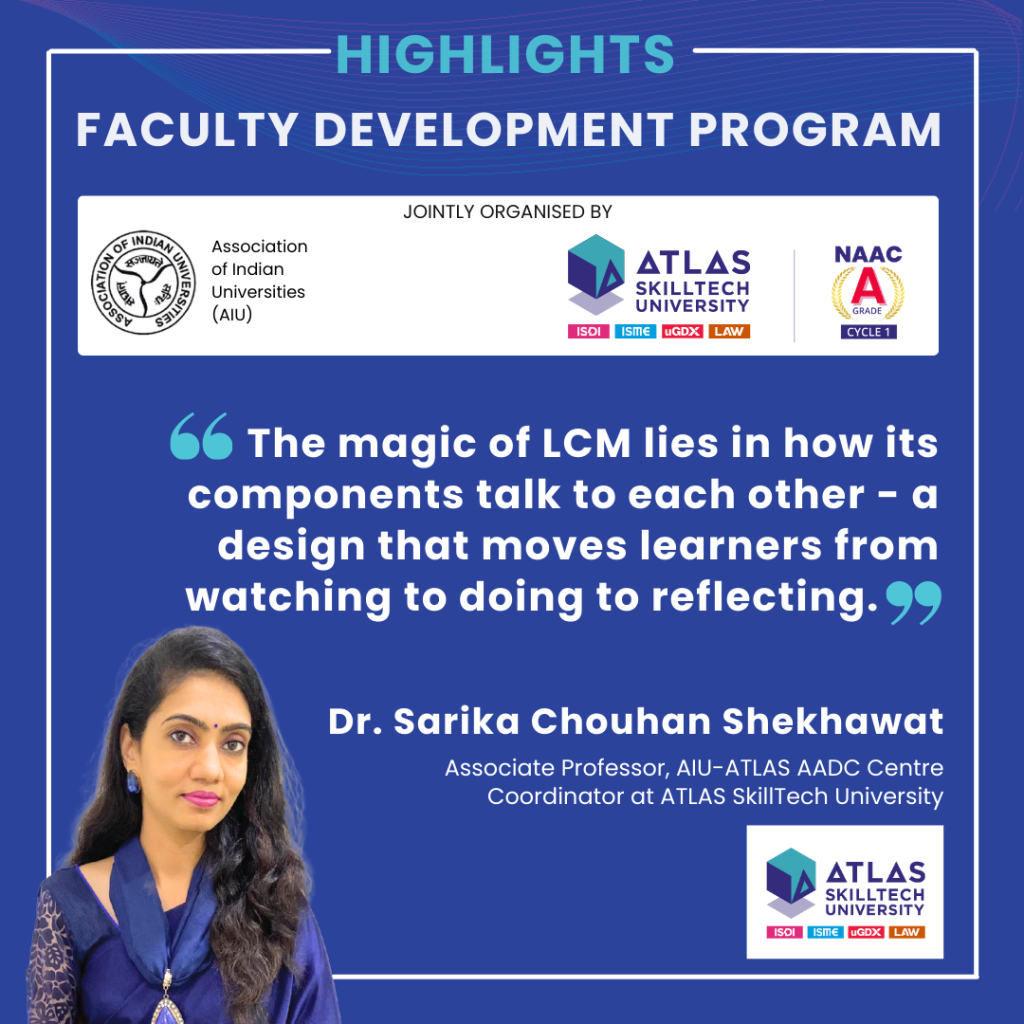
This was followed by an enriching session from Dr. Sarika Chouhan Shekhawat, Associate Professor & AIU–ATLAS AADC Coordinator, who introduced the Learner-Centric MOOC (LCM) Model. She demonstrated how LeD, LbD, LxT, and LxI frameworks transform passive videos into reflective, interactive, inclusive learning experiences.
The day set the tone for a deeply transformative FDP—one grounded in structure, empathy and meaningful digital design.
Day 2 — Designing High-Engagement Online Learning
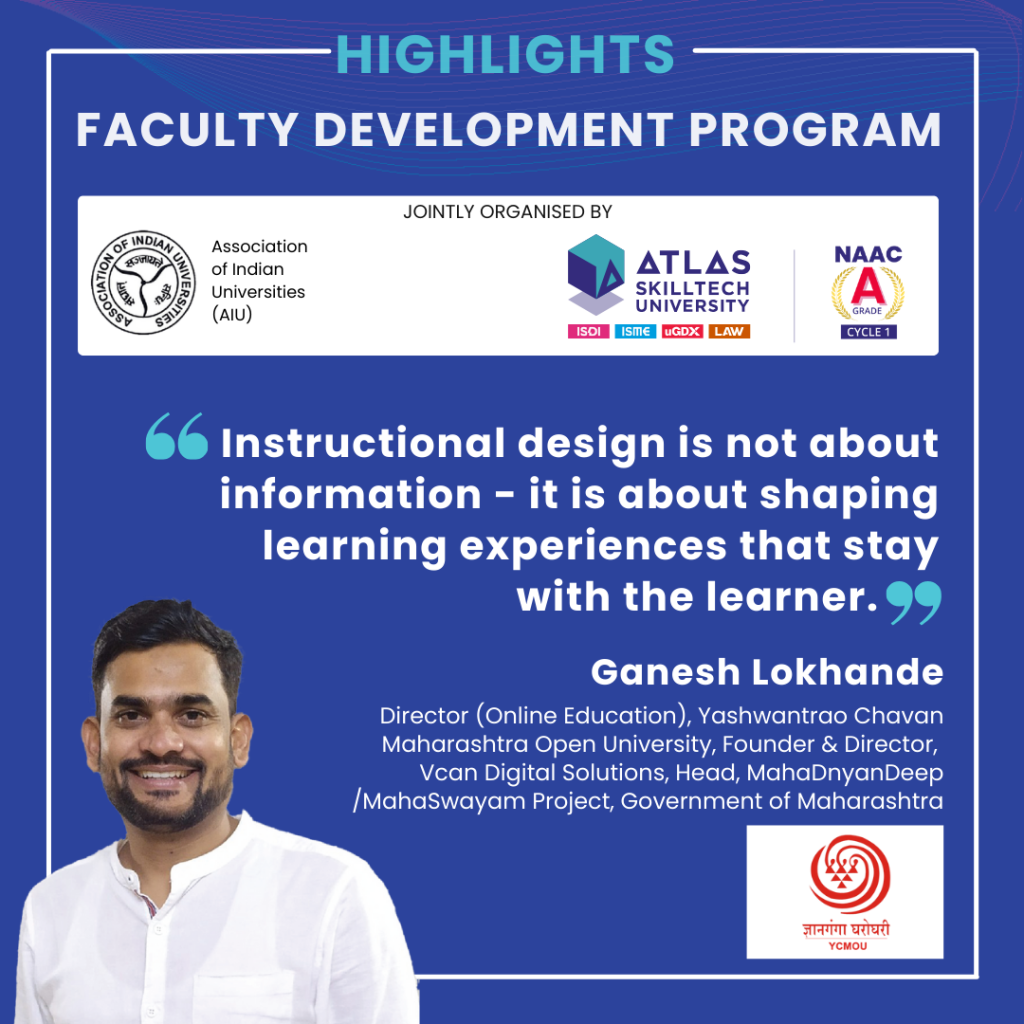
Day 2 featured an intensive hands-on workshop led by Mr. Ganesh Lokhande, Director (Online Education), YCMOU & Founder, Vcan Digital Solutions. He unpacked the art and science of crafting Learning Dialogues (LeDs)—short, crisp, interactive micro-lessons that elevate the learner experience. Participants learned how strategically placed pauses, focused explanations, visual segmentation and reflection prompts can dramatically improve cognitive engagement.
Attendees drafted LeD scripts, receiving personalised feedback on:
- script length vs. recording duration
- cognitive load & concept clarity
- pacing, flow, and micro-learning ratios
Mr. Lokhande’s core message resonated widely: “Instructional design is not about information— it is about shaping learning experiences that stay with the learner.”
Day 3 — Activity-Driven Learning Through LbD
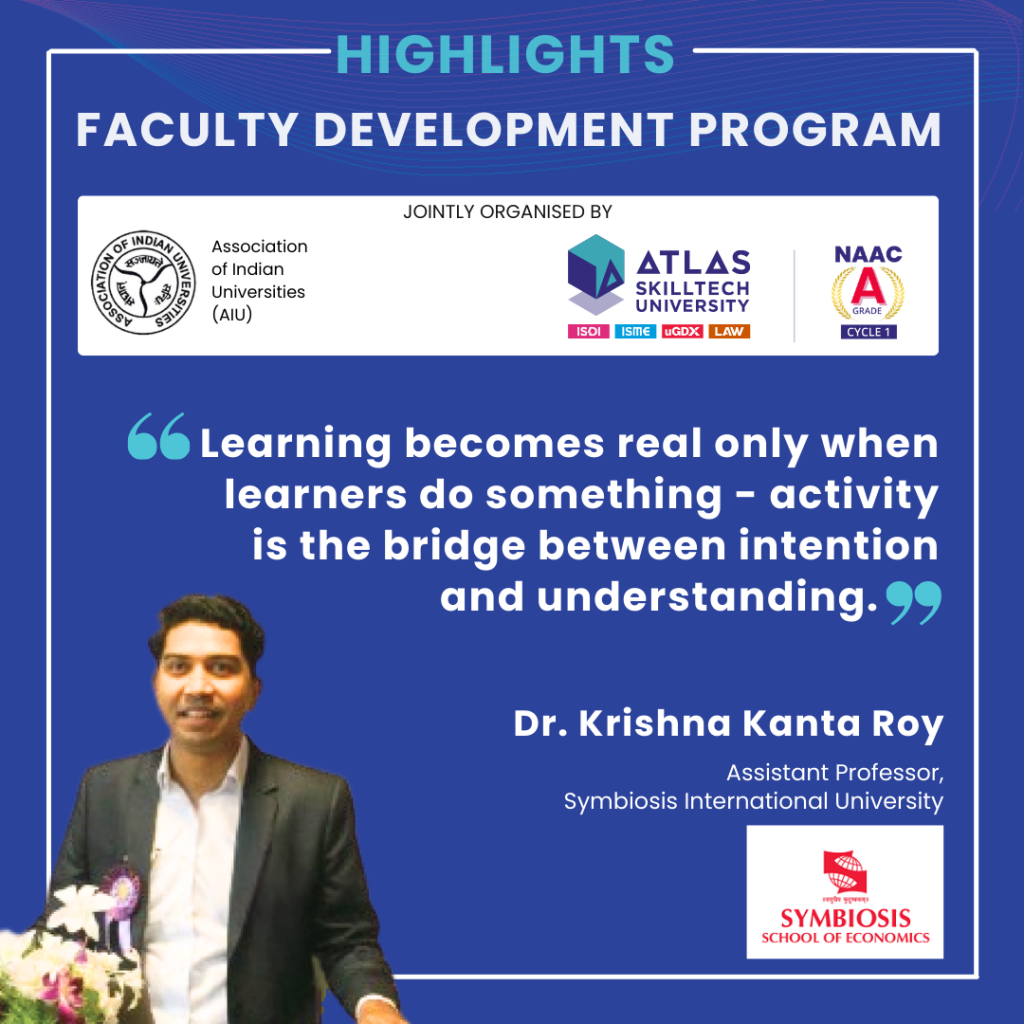
Day 3 was a deep dive into learning by doing, led by Dr. Krishna Kanta Roy, Assistant Professor, Symbiosis International University.
Through an active, workshop-style format, participants explored how LbD activities—MCQs, numerical tasks, drag-and-drop formats and concept-map completions—drive retention, understanding and immediate feedback. Participants also experienced LeD Reflection Spots using EdPuzzle, helping them view interaction through the learner’s lens.
The session closed with educators designing their own LbD activities and exchanging peer feedback on alignment, clarity and conceptual depth.
Day 4 — Designing Peer Interaction & Learner Trajectories
Day 4 explored two pillars of learner-centric MOOCs: LxI (Learner eXperience Interaction) and LxT (Learner eXtension Trajectories).
LxI with Daisy Wadhwa
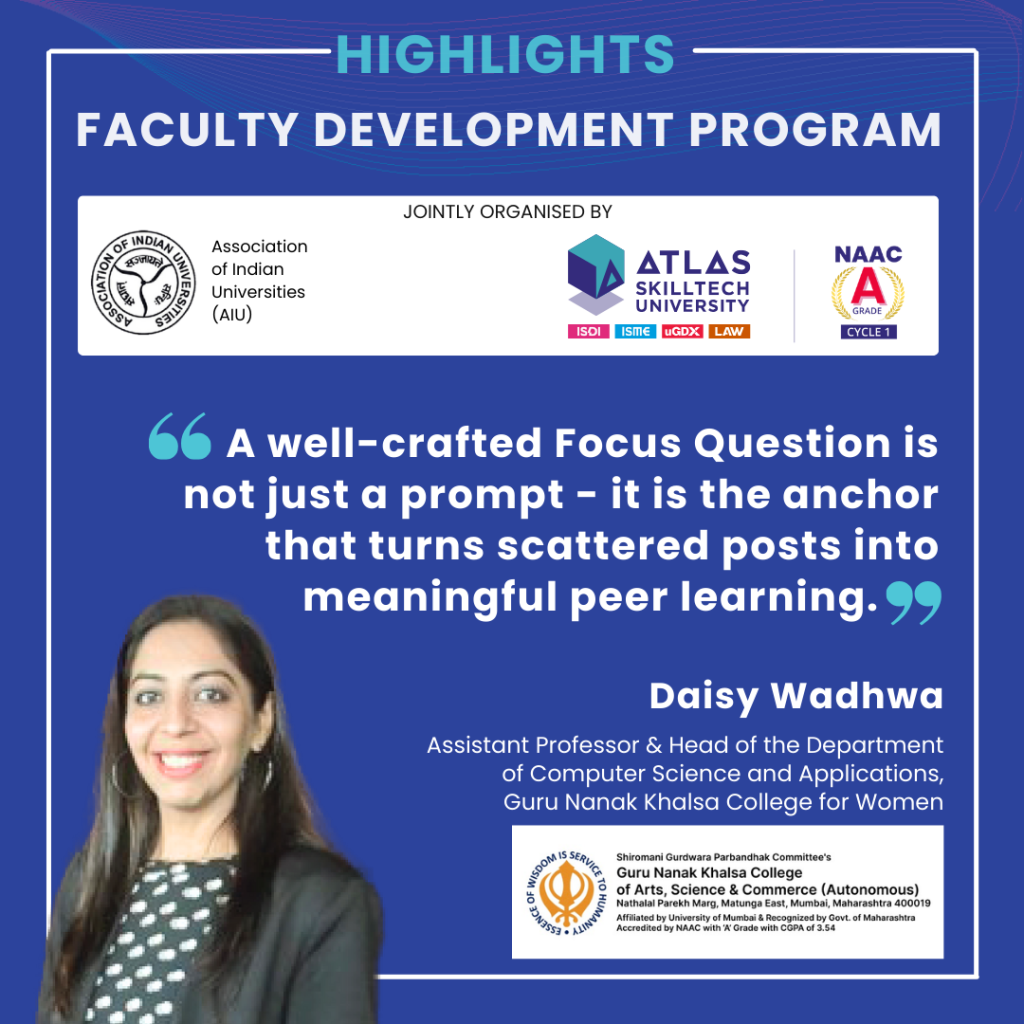
Ms. Daisy Wadhwa, Assistant Professor & Head of Computer Science & Applications, GNKCW (Ludhiana), showcased how the LxI cycle— Focus Question → Peer Interaction → Reflection Quiz creates structured, motivating and meaningful learner engagement. She highlighted how high-quality focus questions and guided responses transform discussion forums from passive spaces into active learning hubs.
LxT & MOOC Orchestration with Divya Thakur
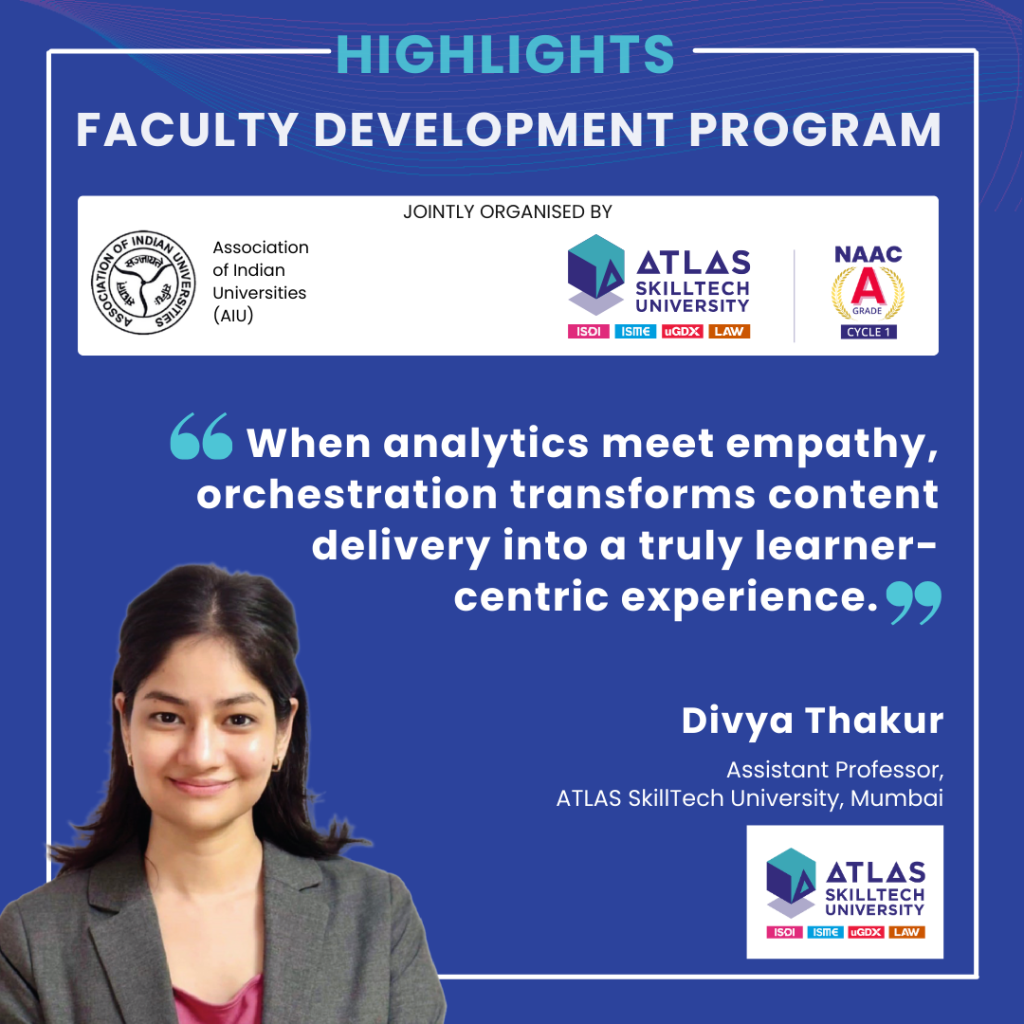
Ms. Divya Thakur, Assistant Professor at ATLAS, simplified how LxTs help instructors address diverse learning needs through curated content extensions paired with assimilation quizzes. She also stressed the importance of MOOC orchestration—analytics, nudges, reminders, and timely instructor actions.
These sessions helped educators understand how to build learning environments where peer interaction, diversity and timely support drive learner success.
Day 5 — Practical MOOC Design & Valedictory Reflections
The final day featured three insightful sessions.
Dr. Anand Kopare shared a step-by-step guide on designing impactful MOOCs—from topic selection to learner engagement, assessment flow, and scalability.

Dr. Varsha Agarwal provided a clear roadmap for preparing strong MOOC proposals aligned with national norms and quality benchmarks.

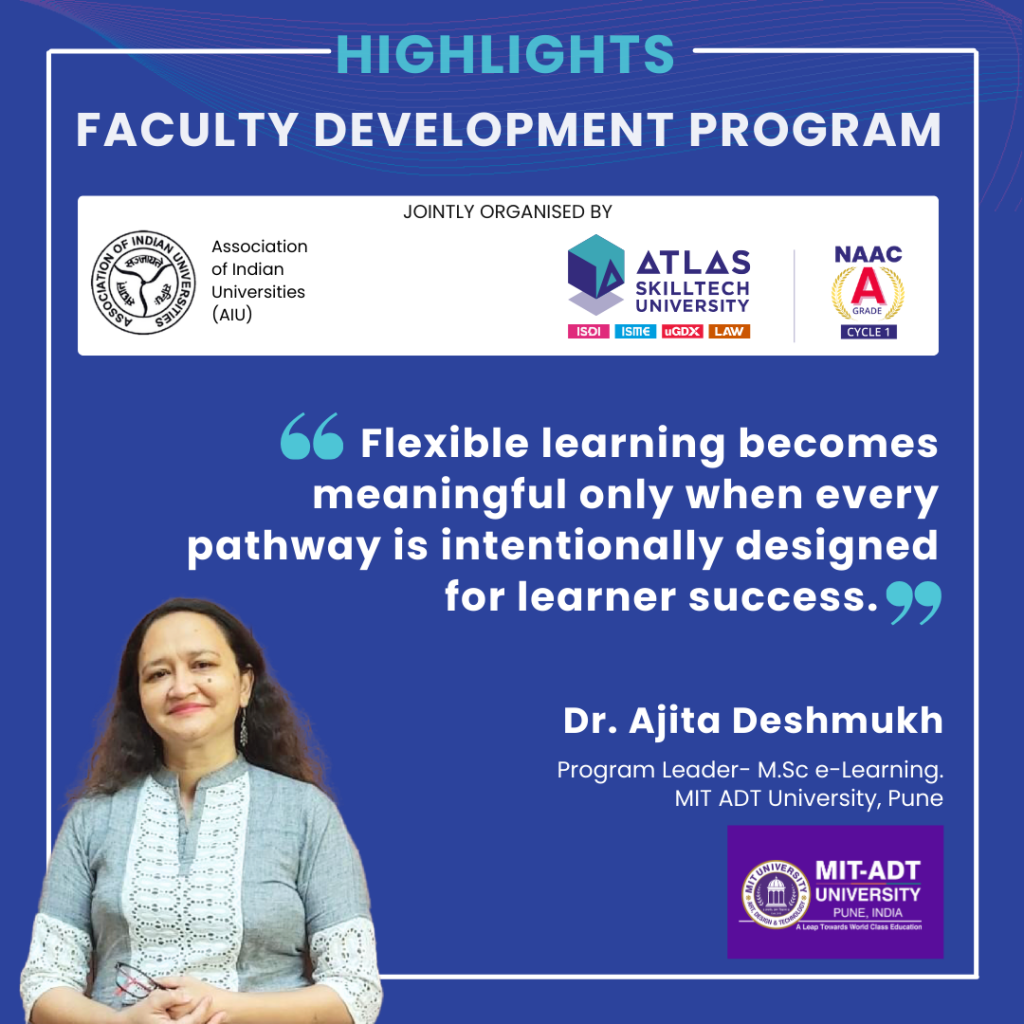
Dr. Ajita Deshmukh Demonstrated how the LCM Model creates flexible, structured, learner-centric learning pathways.
A Powerful Conclusion
With 100+ faculty participants and deeply engaged feedback across all sessions, the FDP concluded on a high note—equipping educators with the frameworks, tools and mindset to design empathetic, interactive, learner-centric digital learning experiences.