ISDI’s Creative Deep Dive into Bengaluru: Exploring Animation, VFX & Gaming
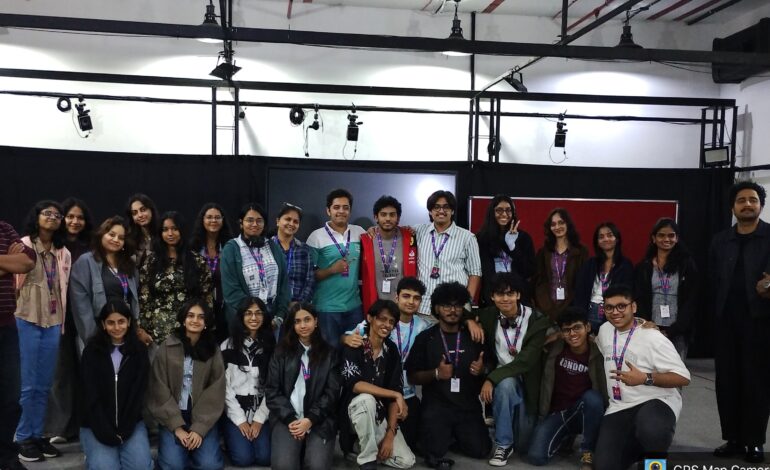

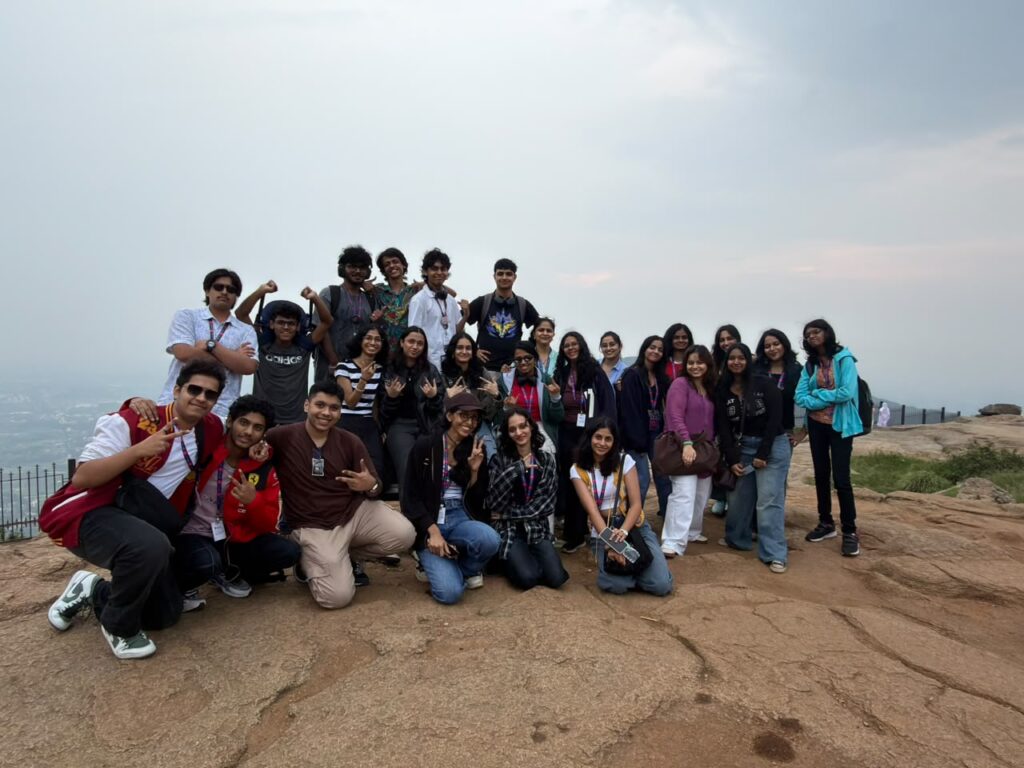
From professional animation studios and motion-capture labs to digital costume design and immersive sound experiences, the Bengaluru immersion offered ISDI Animation students a closer look at how creative ideas evolve into industry-ready experiences.
What does it take to bring an animated character to life? How does a real-world movement translate into a believable digital performance? And how do sound, costume, visual references and technology come together to shape an immersive experience?
For Animation, VFX and Gaming students at ISDI, the answers extended beyond the classroom during an immersive learning experience in Bengaluru, a city recognised for its growing animation, visual effects (VFX) and gaming ecosystem. Designed to connect creative learning with industry practice, the immersion brought together studio visits, expert-led sessions, hands-on workshops and explorations of the city’s cultural and visual landscape.
Over the course of the programme, students engaged with different stages of the animation and game production pipeline, explored emerging digital techniques and discovered how observation, experimentation and technical understanding contribute to the art of storytelling.
Discovering Bengaluru Through a Creative Lens
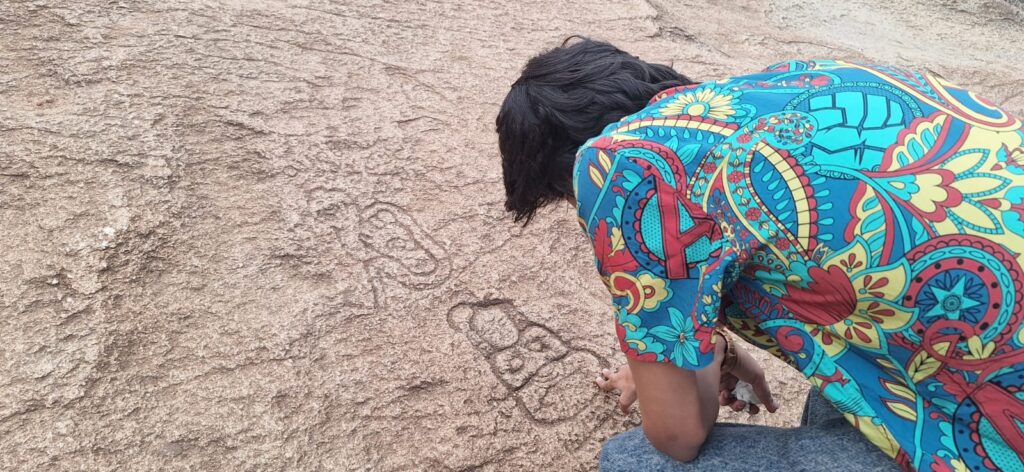
The immersion began with an introduction to the week ahead through an orientation session with Satori Paths. Students explored Bengaluru’s significance as a hub for animation, VFX and gaming, gaining a broader understanding of the creative industries and the professional environments they would encounter.
The orientation also encouraged students to look beyond software and technical skills. Understanding an industry requires an appreciation of the people, processes and creative decisions behind a finished production. With this perspective, the cohort approached the subsequent visits and workshops with a focus on how ideas move from initial concepts to completed visual experiences.
The city itself became part of this learning journey. At Nandi Hills, students had the opportunity to observe the landscape, changing light, viewpoints and surrounding terrain. These observations offered a valuable starting point for visual documentation, helping students recognise how natural environments can inform composition, atmosphere, colour and visual storytelling.
Time spent exploring Commercial Street added another dimension to the experience, exposing students to the visual energy of Bengaluru’s urban environment. From the rhythm of a busy retail street to the details of everyday surroundings, the city offered opportunities to observe the colours, textures, patterns and human interactions that can become inspiration for creative work.
Inside the Animation Production Pipeline at Zebu Animation Studios
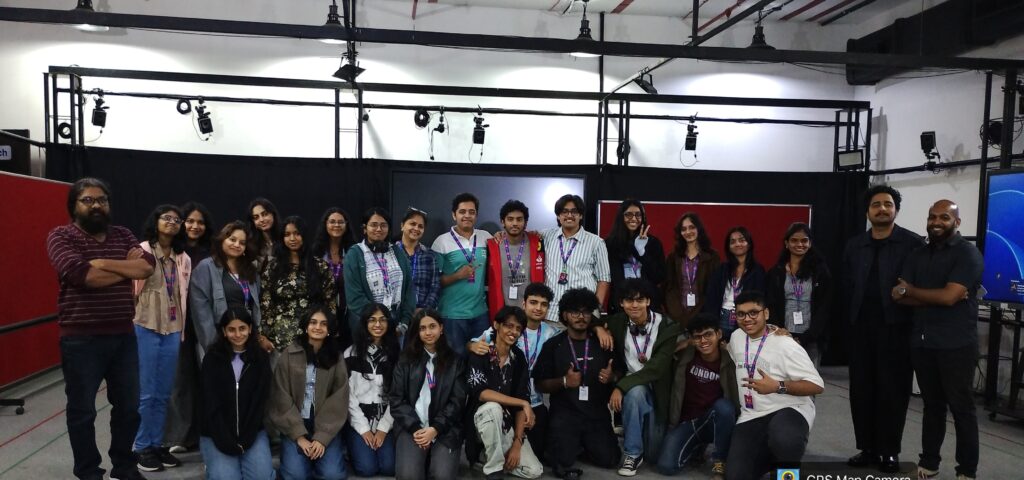
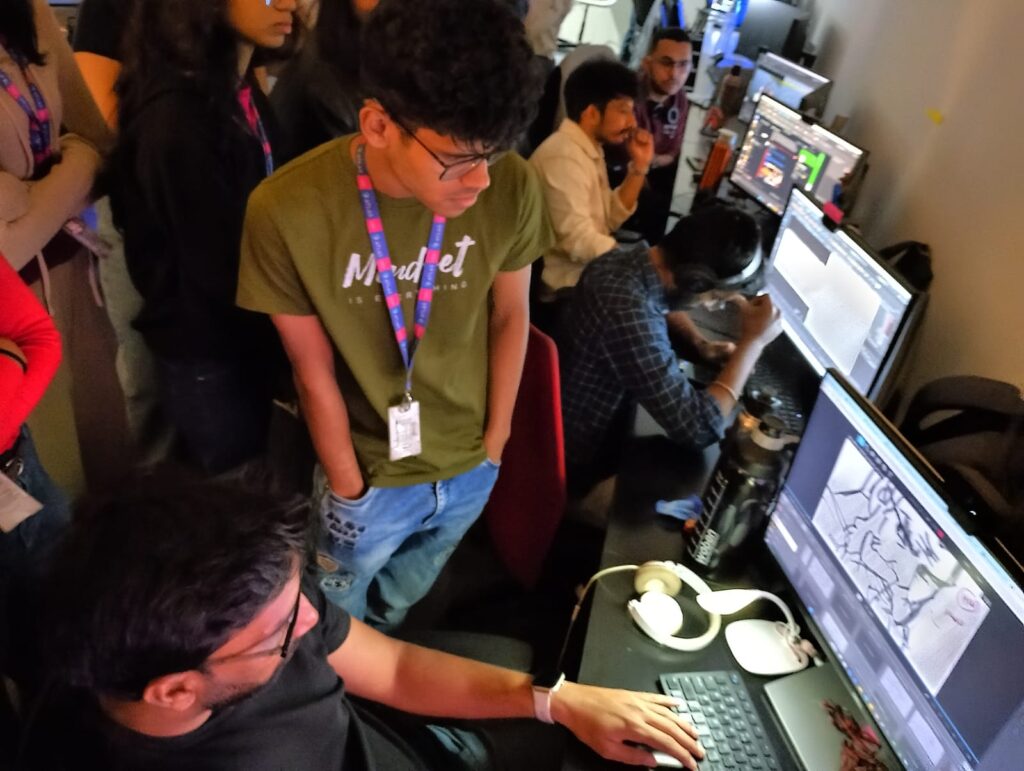
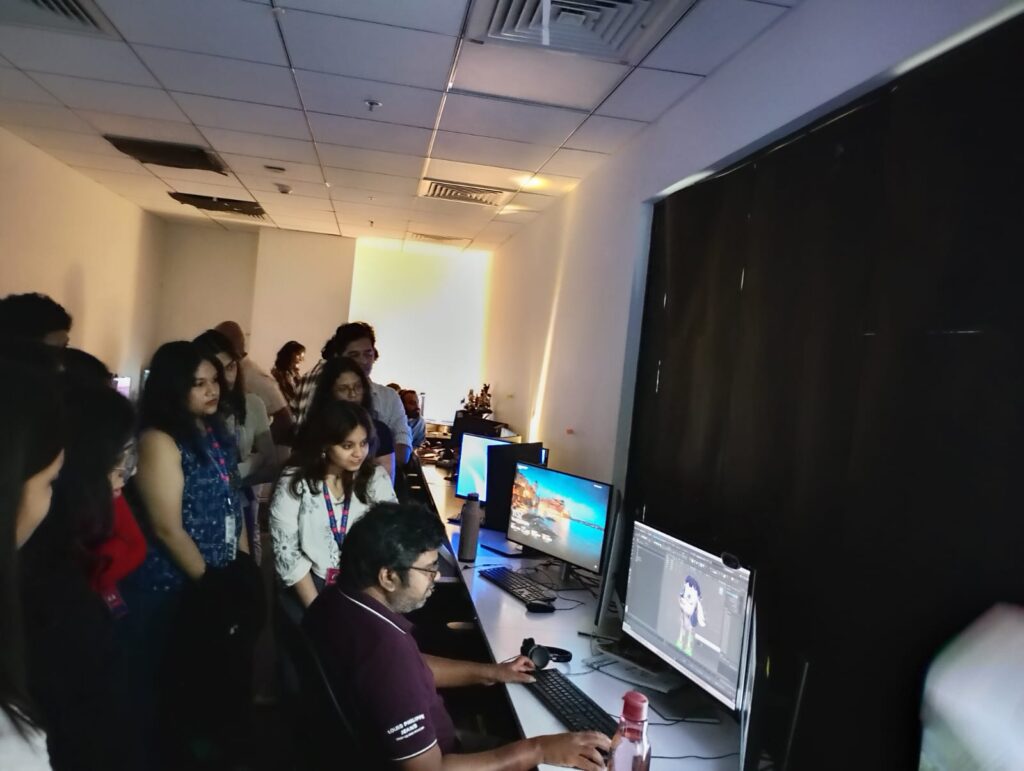
A key highlight of the immersion was the visit to Zebu Animation Studios, where students gained an understanding of how a professional animation project moves through different stages of production.
The visit offered a closer look at the relationship between storytelling, design, animation and final delivery. Students explored how a project is structured, how responsibilities are distributed across teams and how individual contributions come together to create a cohesive final output.
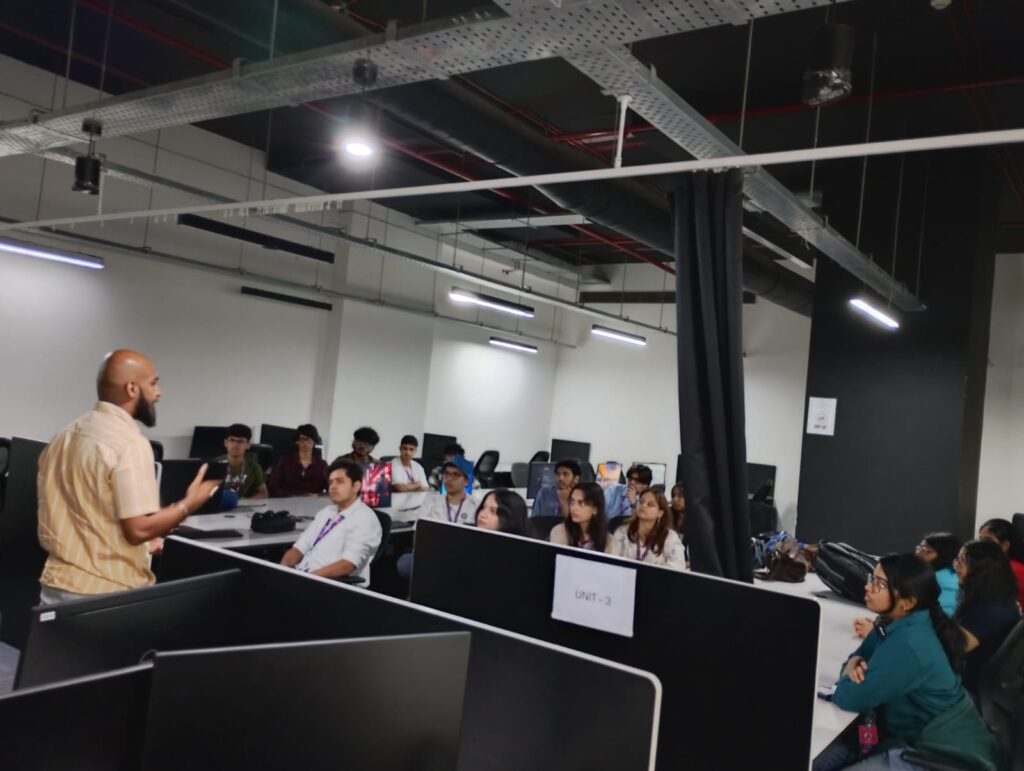
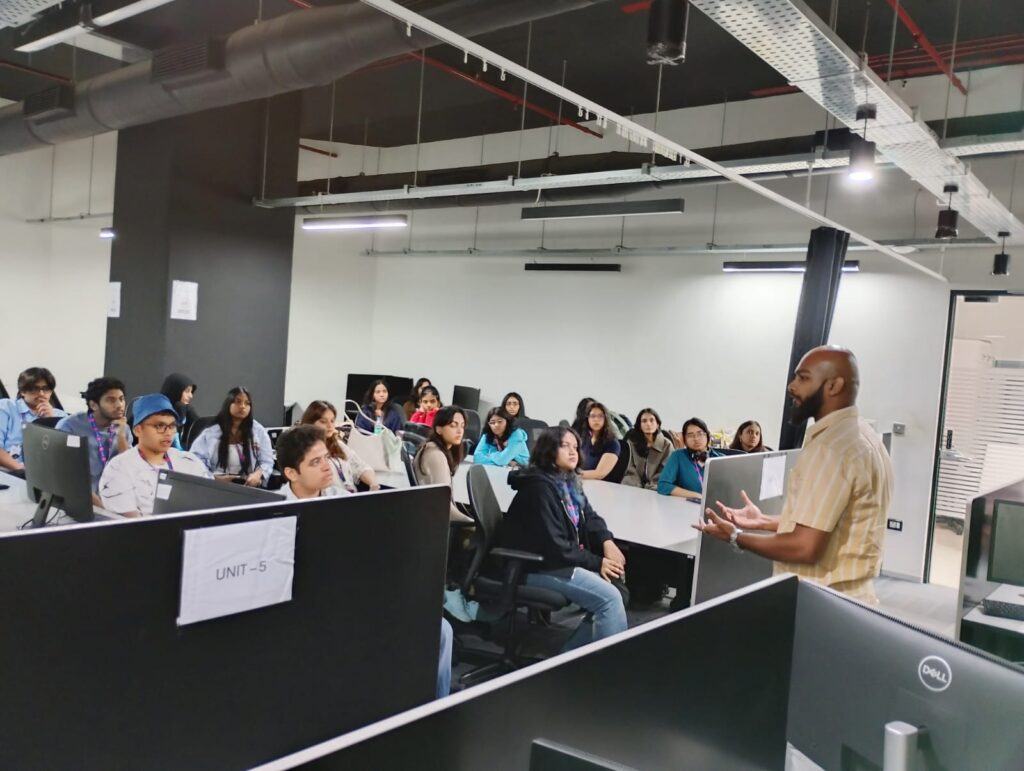
For aspiring animators, this provided an important perspective on the collaborative nature of the industry. A finished animation is rarely the result of one person’s work alone. It involves multiple creative and technical decisions, coordinated workflows and continuous communication between specialists.
The experience helped connect classroom learning with professional production practices, giving students a clearer understanding of the roles, processes and teamwork involved in bringing animated stories to life.
Understanding Interactive Storytelling at TwelveTech Labs
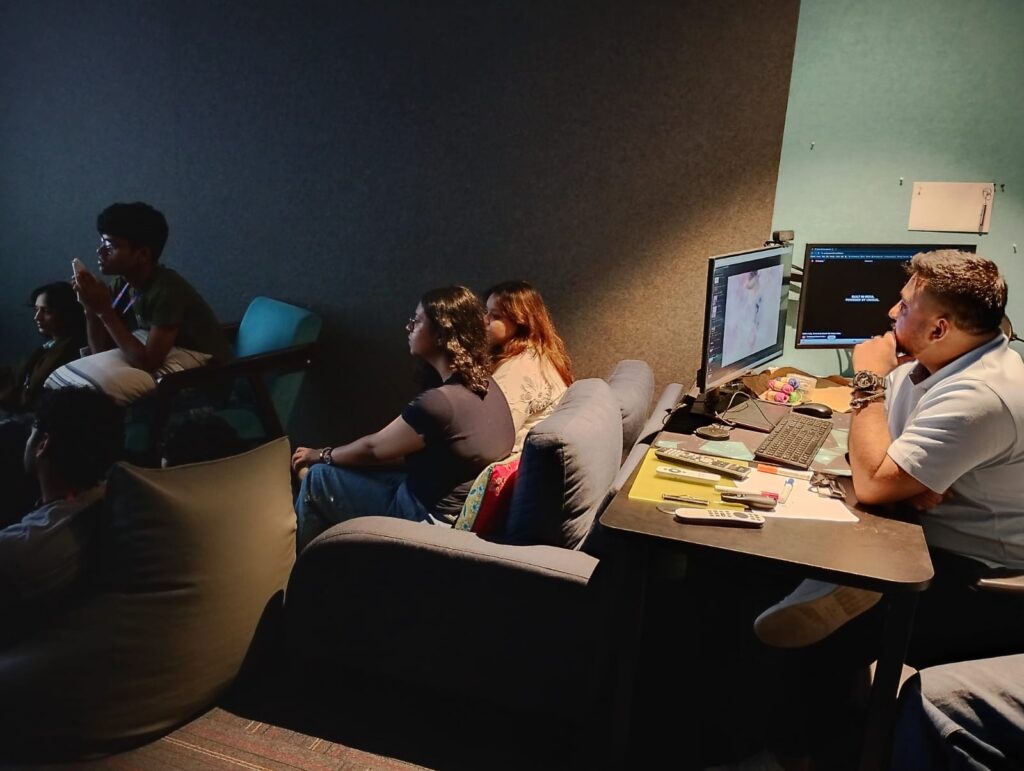
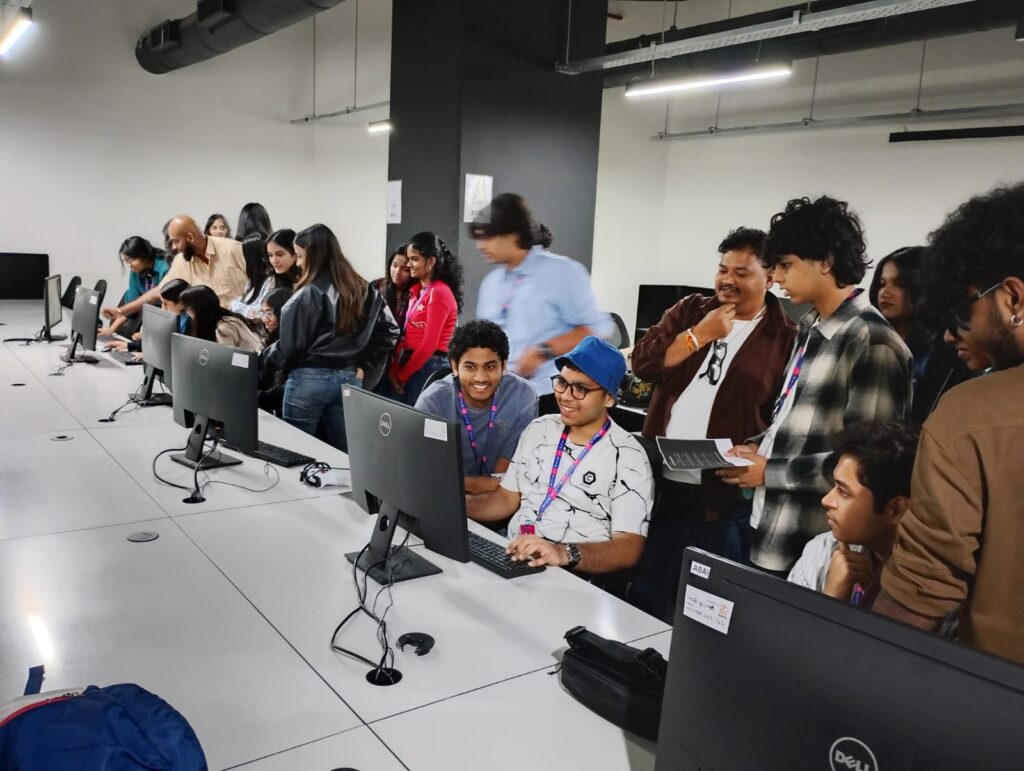
The immersion continued with a visit to TwelveTech Labs, where students explored the production pipeline behind interactive experiences and games.
Unlike linear animation, game development requires creative assets to function within an interactive environment. Students were introduced to the journey from concept development and asset creation to engine integration and testing.
The session highlighted how visual design, technical implementation and user interaction intersect in game production. A character, environment or object must not only look convincing but also function as intended within the game world. Testing and iteration are essential to ensuring that these elements work together smoothly.
This exposure encouraged students to think about animation beyond pre-rendered sequences, understanding how visual storytelling can respond to player choices and become part of a dynamic, interactive experience.
Exploring the Science and Spatial Design of Sound at the Indian Music Experience Museum
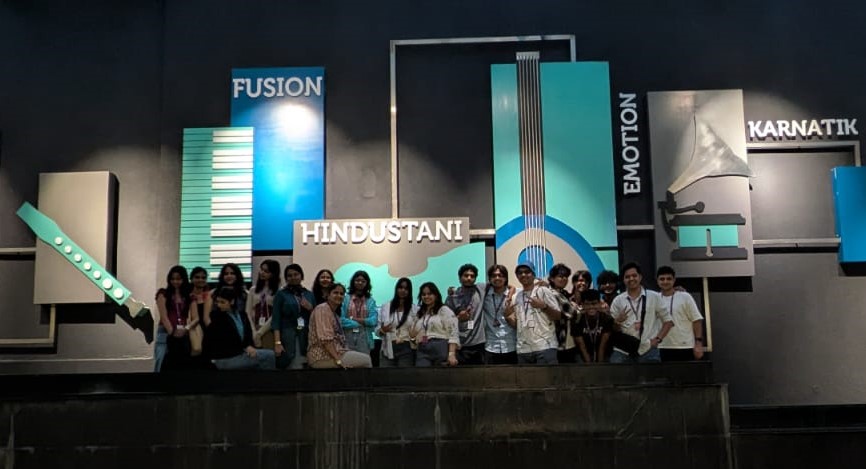
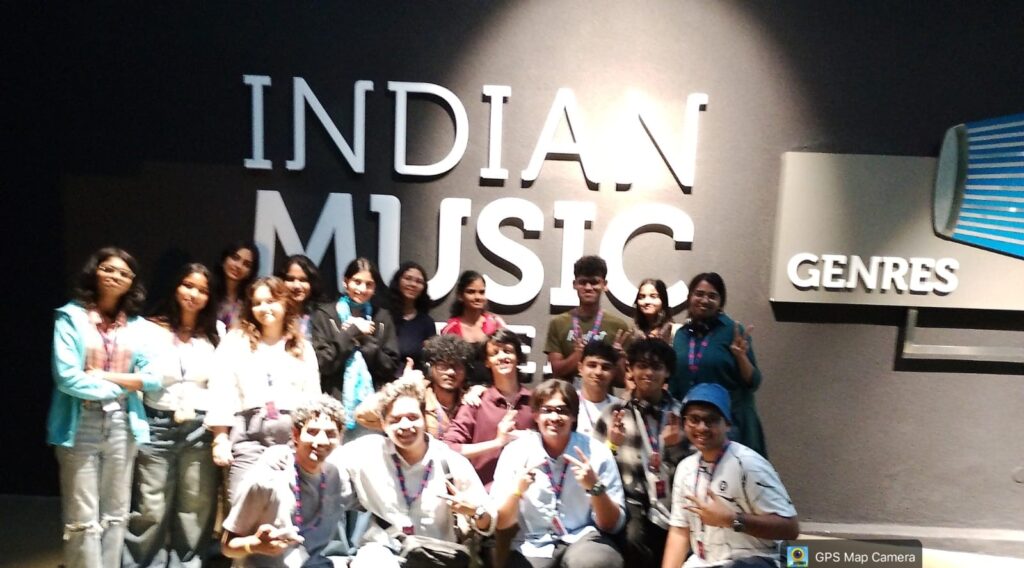
Animation is not only a visual medium. Sound plays an equally important role in establishing mood, building atmosphere and shaping how audiences experience a story.
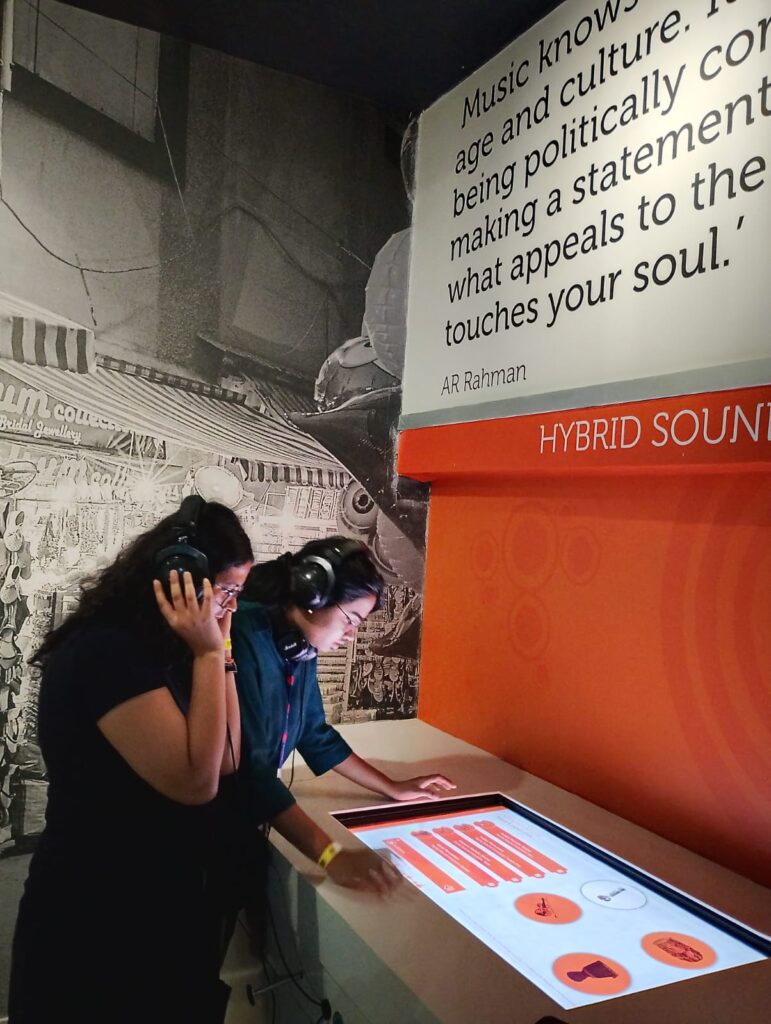
At the Indian Music Experience Museum, students explored organic sound generation and spatial design, examining how sound is produced, presented and experienced within a physical environment.
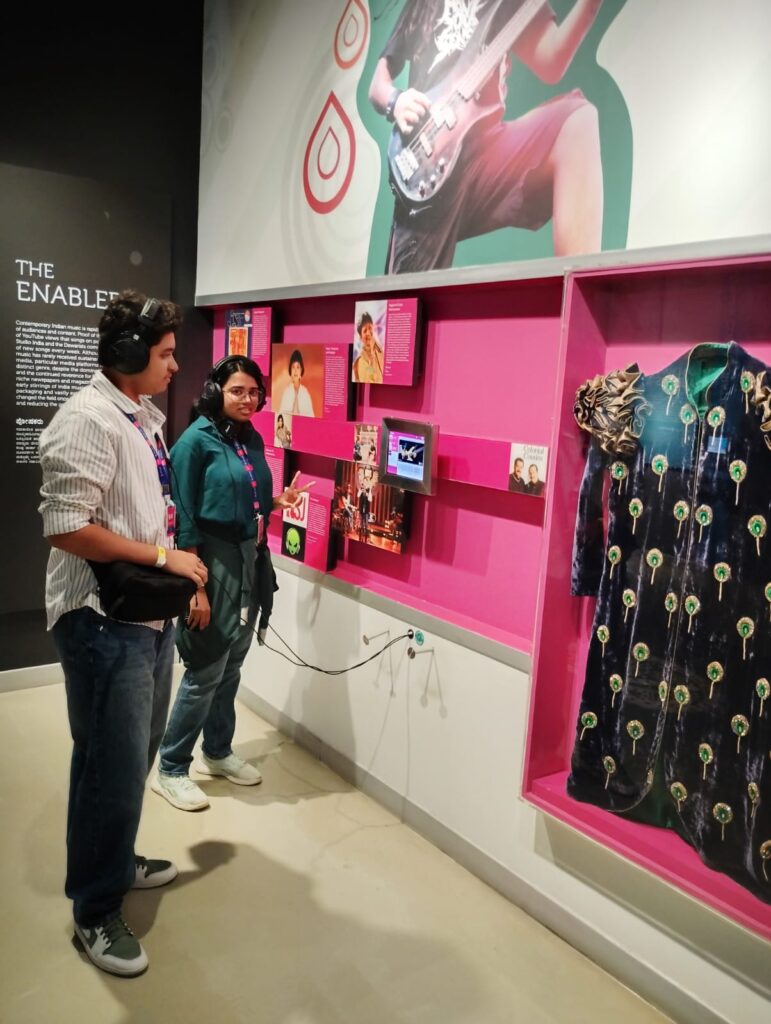
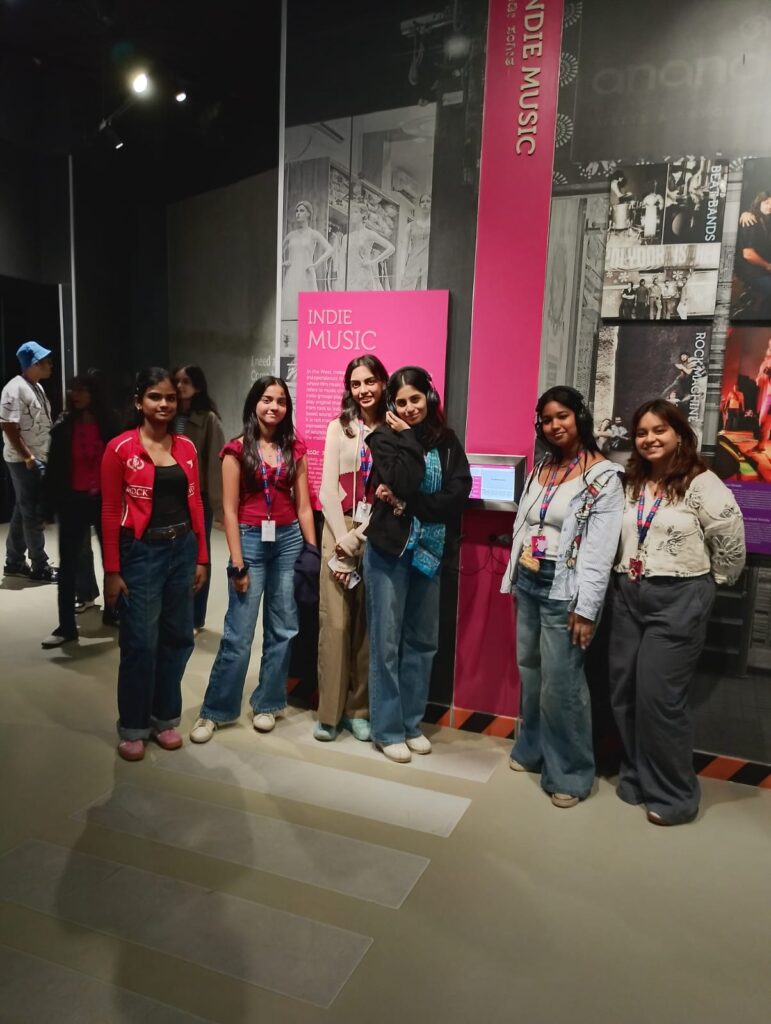
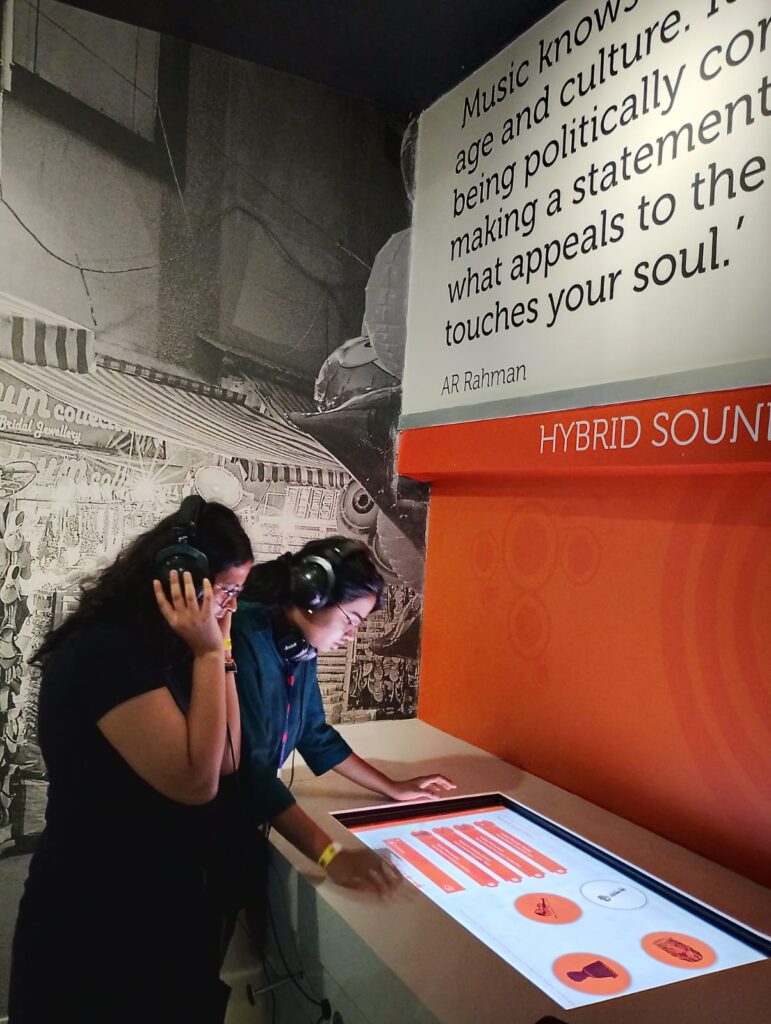
The visit introduced a broader understanding of sound as a creative element that can influence the perception of space, movement and narrative. Students could consider how ambient sounds, musical textures and the placement of audio contribute to the emotional impact of an animated sequence or interactive environment.
The experience also encouraged them to look at sound as something that can be designed and experienced spatially, rather than simply added during post-production. This perspective is particularly relevant to animation, immersive media and game design, where audio can guide attention, establish a sense of place and deepen audience engagement.
Understanding Photogrammetry : From Photographs to 3D Assets
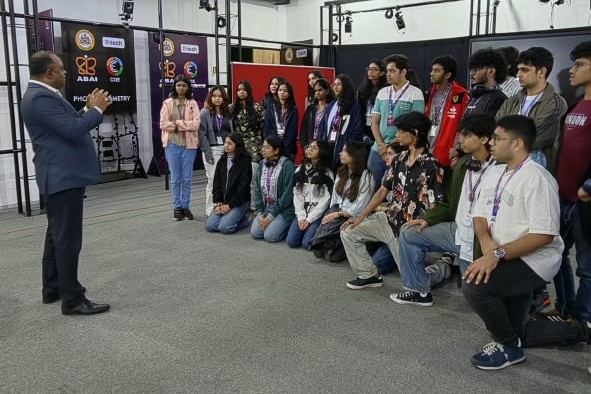
A session with the Association of Bangalore Animation Industry (ABAI) introduced students to photogrammetry, a technique that uses photographs of real-world objects to create accurate three-dimensional digital representations.
The session explored how real-world references can be captured and translated into 3D assets, helping bridge the gap between physical environments and digital production.
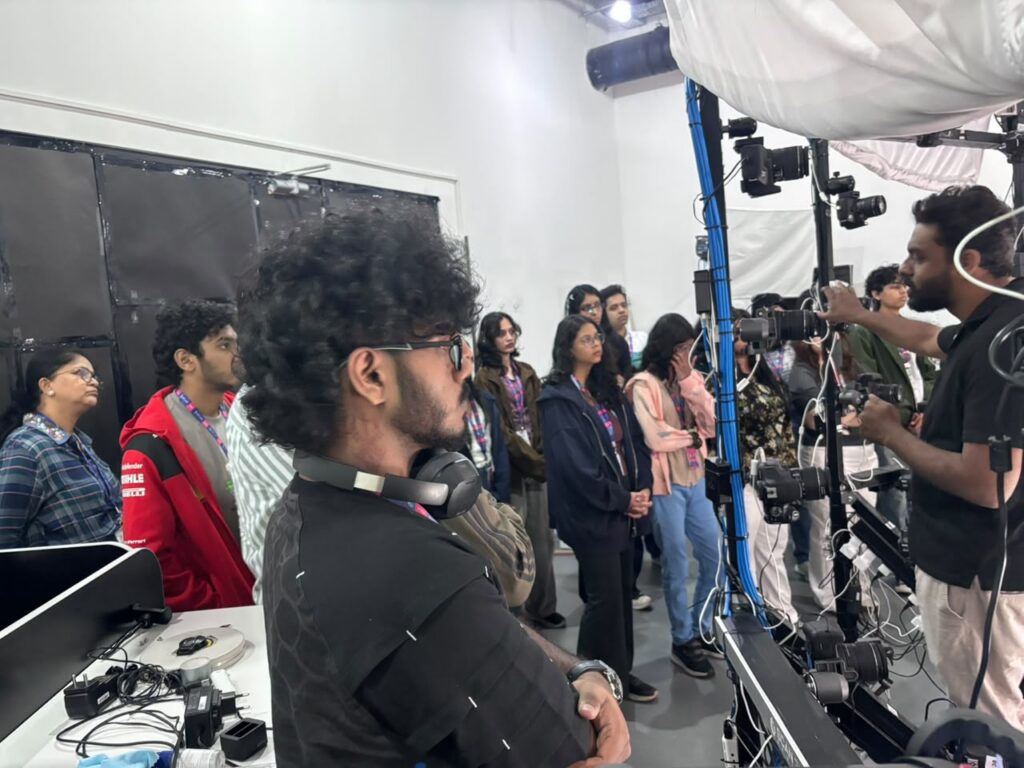
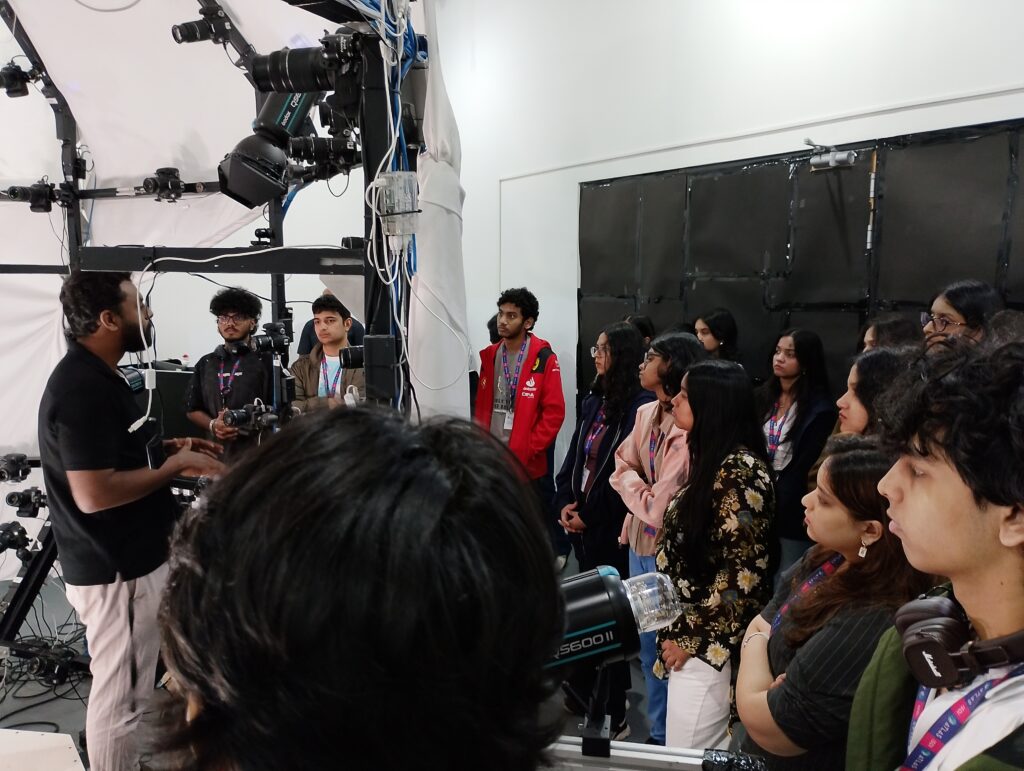
Photogrammetry has applications across animation, VFX, gaming and virtual production, particularly when creators need detailed representations of objects, surfaces and environments. Understanding the technique offered students insight into how contemporary production workflows combine observation, photography, data processing and 3D techniques.
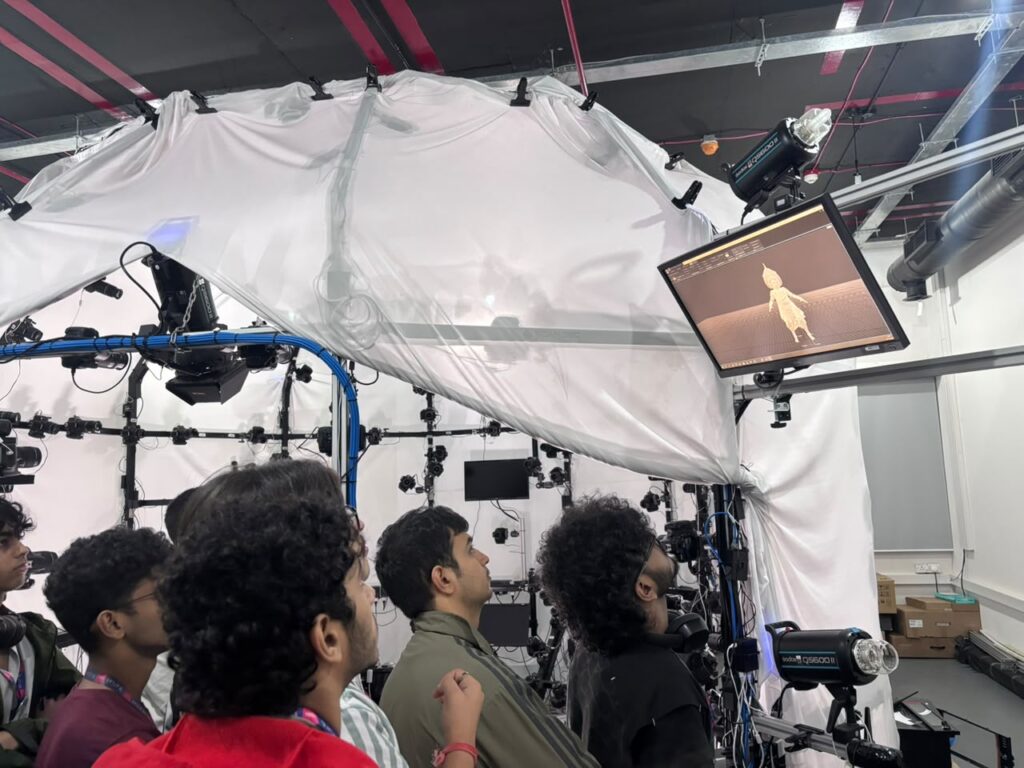
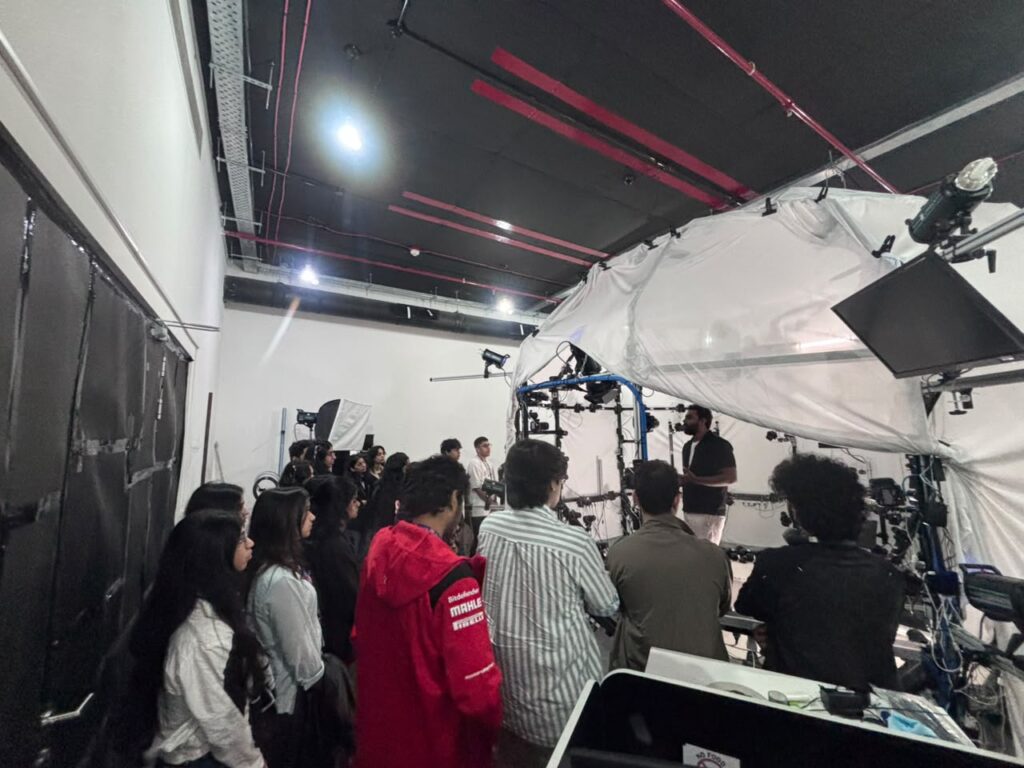
The session also reinforced the importance of looking closely at the real world. Surface details, proportions, textures and material characteristics all contribute to the accuracy of a digital asset. Developing an eye for these details is an important part of building convincing virtual worlds.
Bringing Movement to Life: A Hands-on Motion Capture and Kinematics Workshop
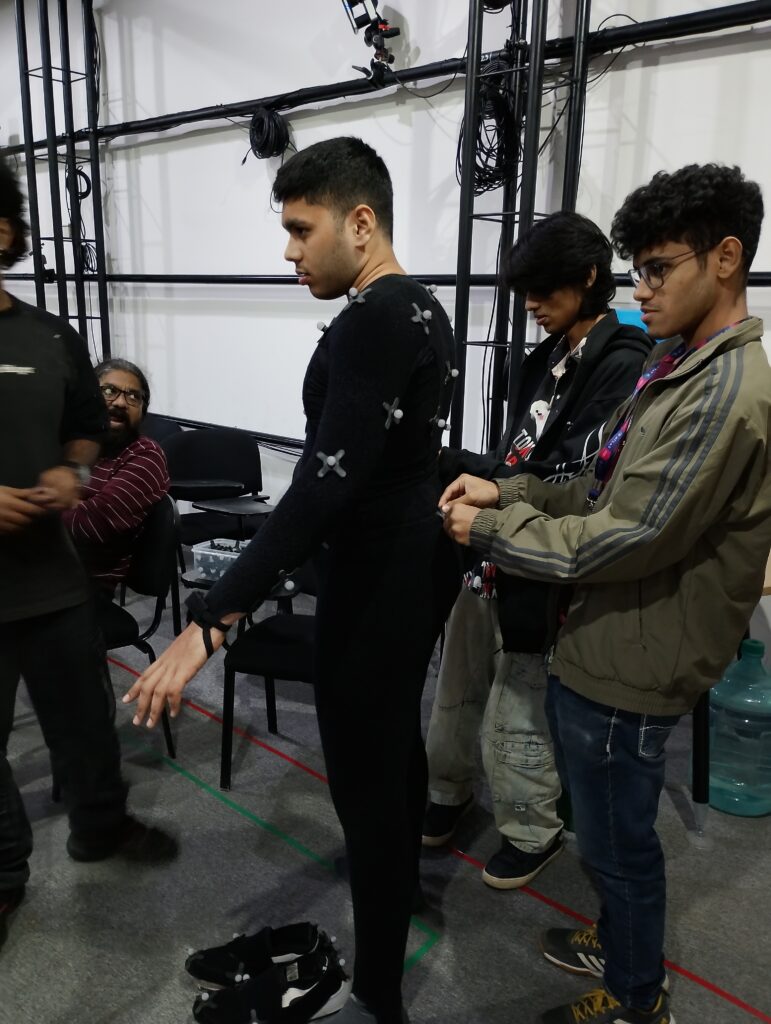
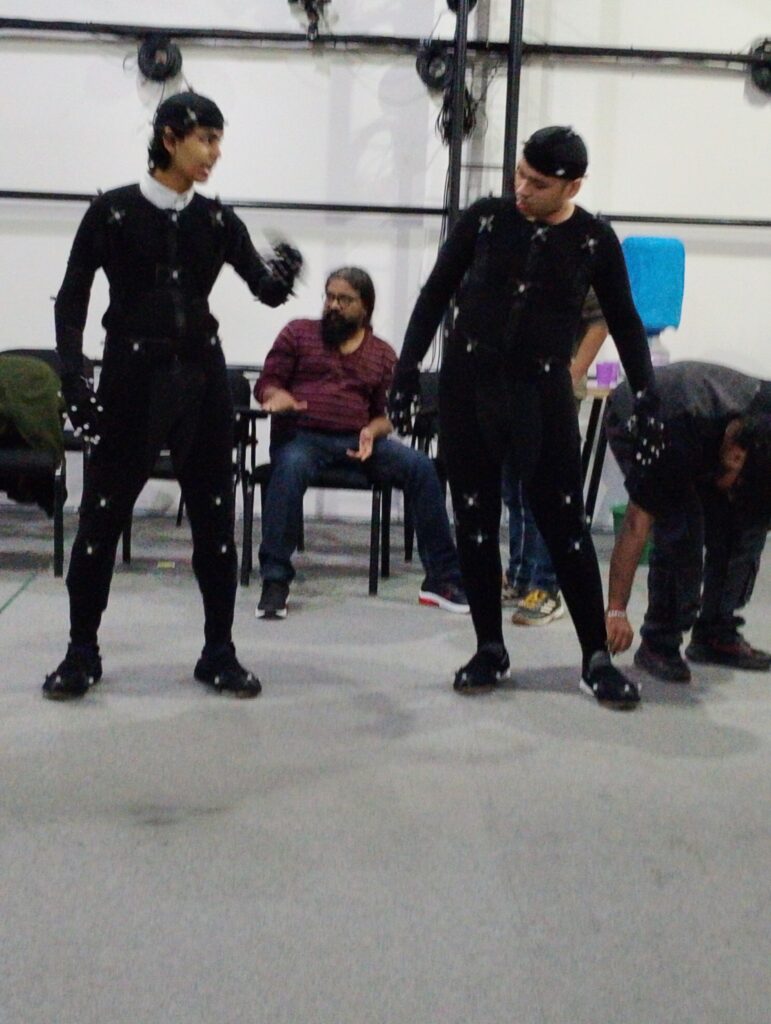
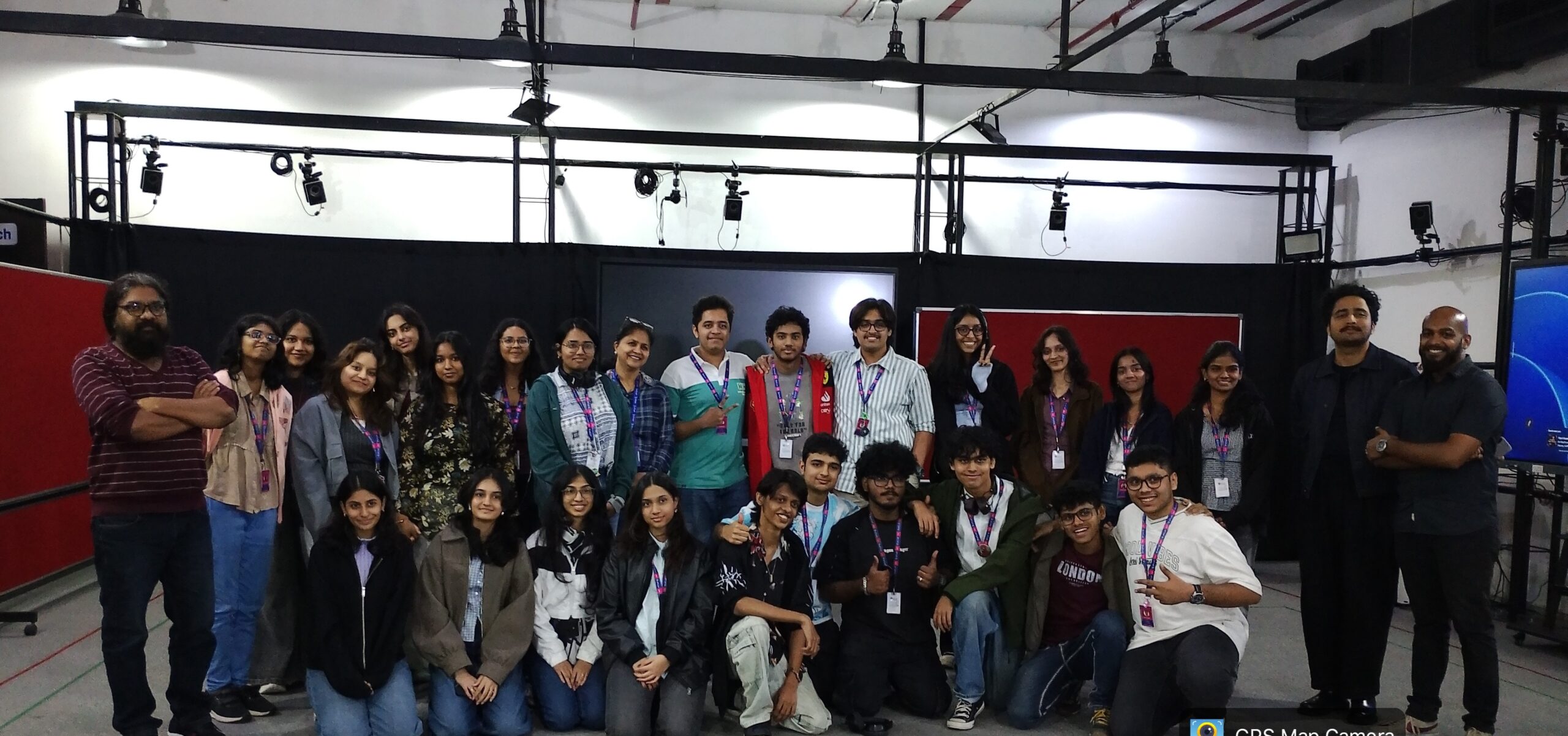
One of the most experiential components of the immersion was the motion-capture and kinematics lab workshop conducted with ABAI.
Students participated in a hands-on motion-capture experience, learning how physical performance can be recorded and translated into digital animation. The process involved capturing movement, understanding the resulting data and exploring the cleaning required to make that data usable within an animation workflow.
The workshop also introduced students to kinematics and its role in creating believable movement. Beyond recording motion, animators must understand how bodies move, how joints articulate and how timing, weight and physical relationships influence the credibility of a performance.
The experience helped students appreciate the relationship between technology and artistic judgement. Motion capture can provide a valuable starting point, but producing convincing animation also requires an understanding of movement, performance and the technical refinement needed to achieve the intended result.
By experiencing the process firsthand, students gained a practical perspective on a technique widely used in contemporary animation, VFX and game production.
Designing Digital Costumes with Marvelous Designer
Character design extends beyond facial features, body proportions and expressions. Clothing can communicate personality, background, profession and mood, making costume an important part of visual storytelling.
The character costume design workshop with ABAI and Marvelous Designer explored how digital garments can be created and simulated on animated characters.
Students were introduced to the process of building virtual clothing and understanding how fabric behaves when applied to a character. The workshop demonstrated how garment construction, material properties, fit and movement influence the final appearance of a digital costume.
This offered an opportunity to examine the connection between technical tools and characterisation. A costume must work visually while also responding convincingly to the character’s body and movement. The choice of fabric, silhouette and detailing can influence how an audience perceives a character before the character even speaks.
Through this hands-on session, students explored how digital garment design contributes to more detailed, expressive and believable characters, while gaining exposure to a specialised tool used in contemporary digital content creation.
Observing India’s Visual Culture at the Museum of Art & Photography
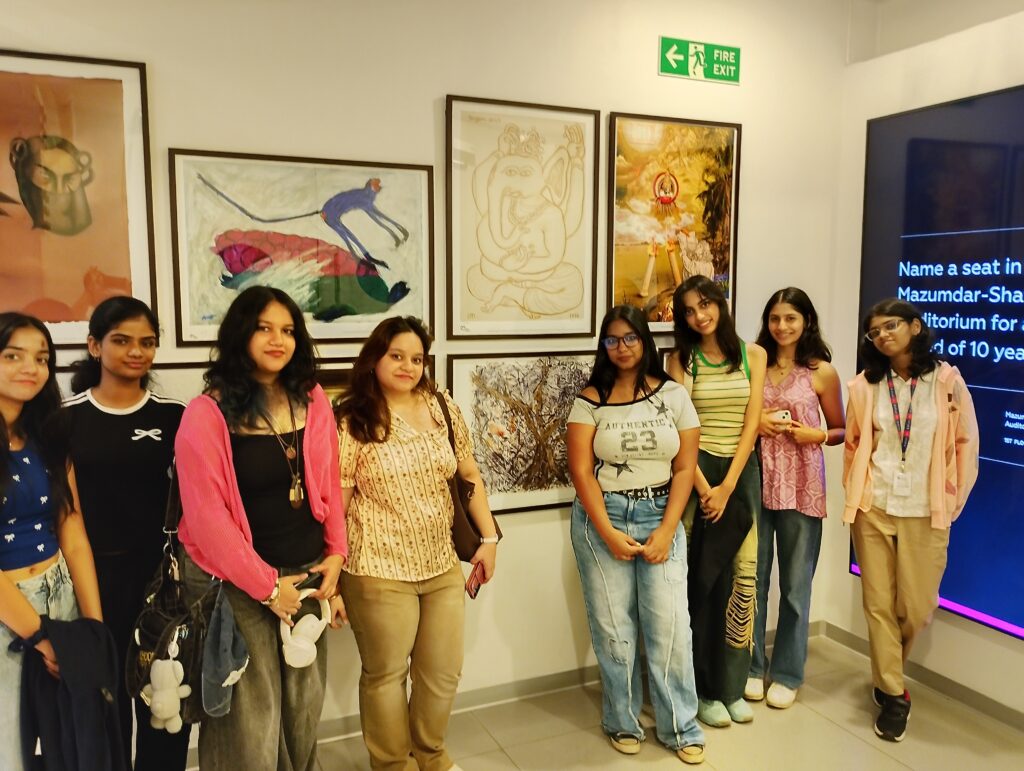
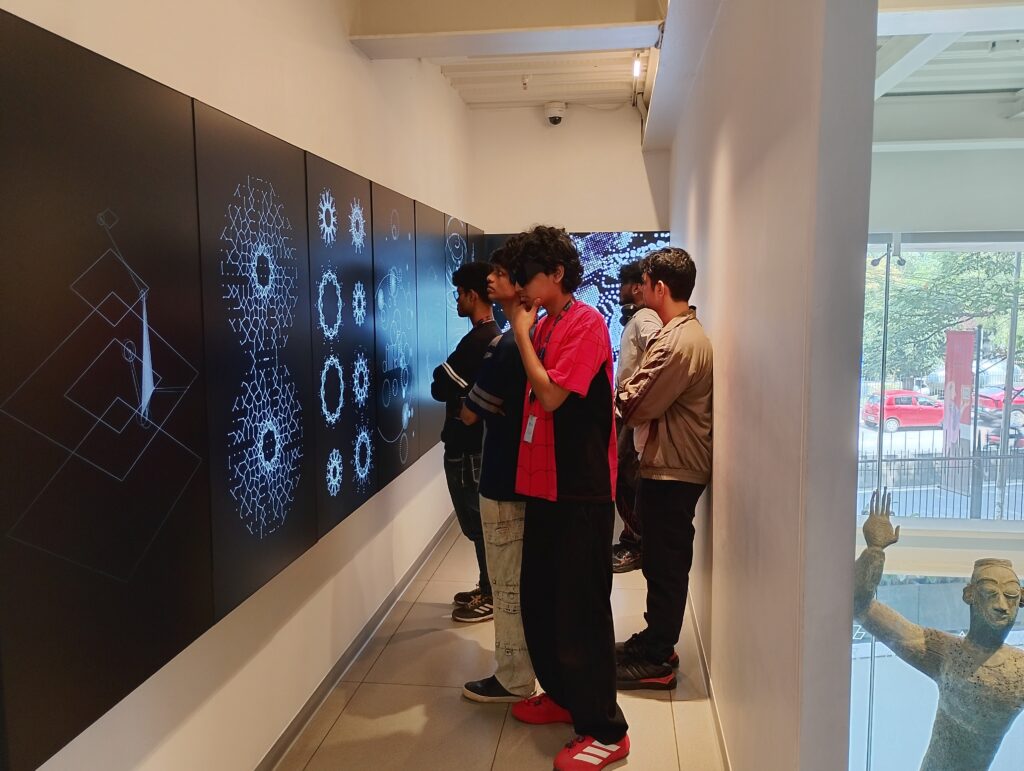
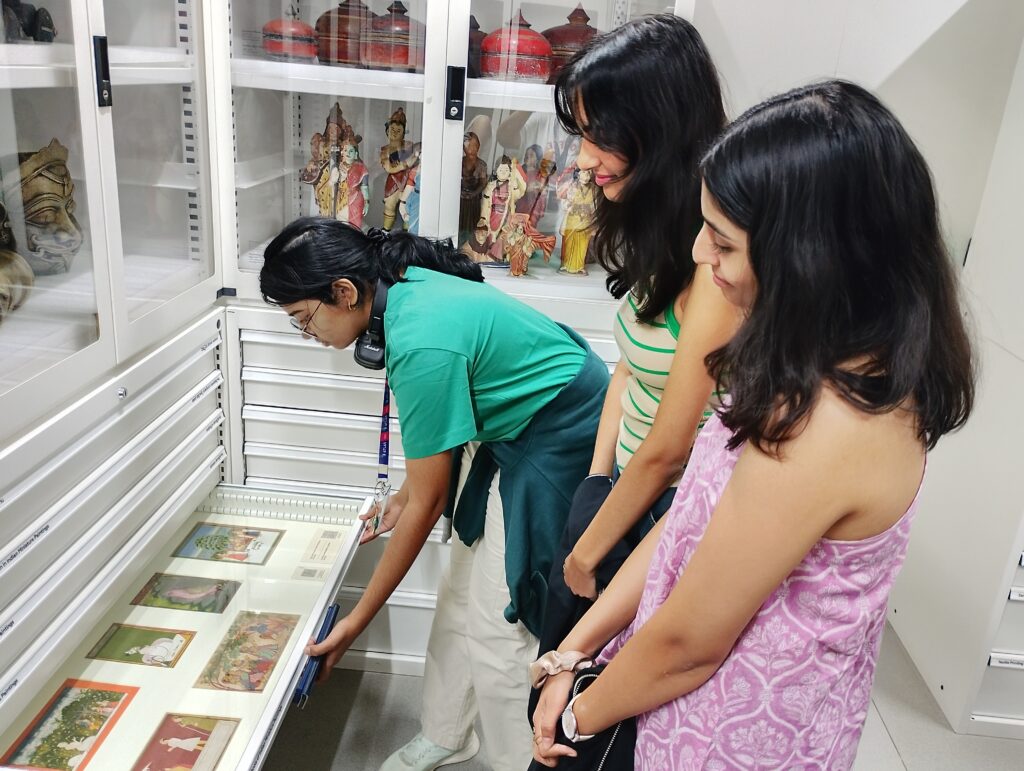
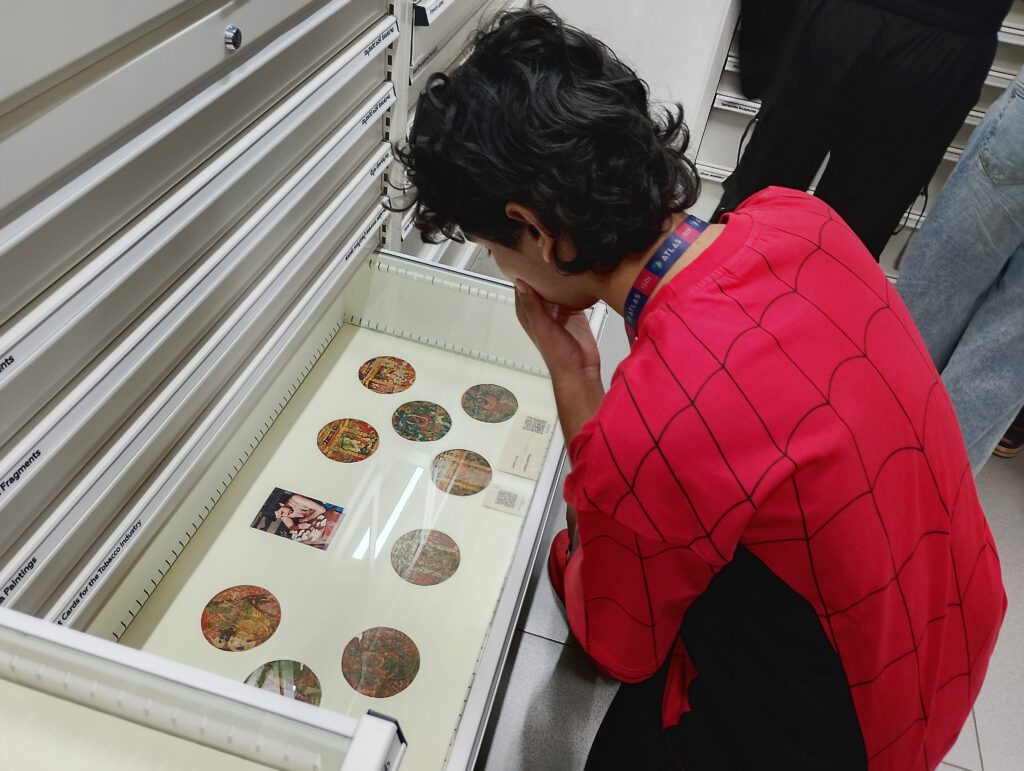
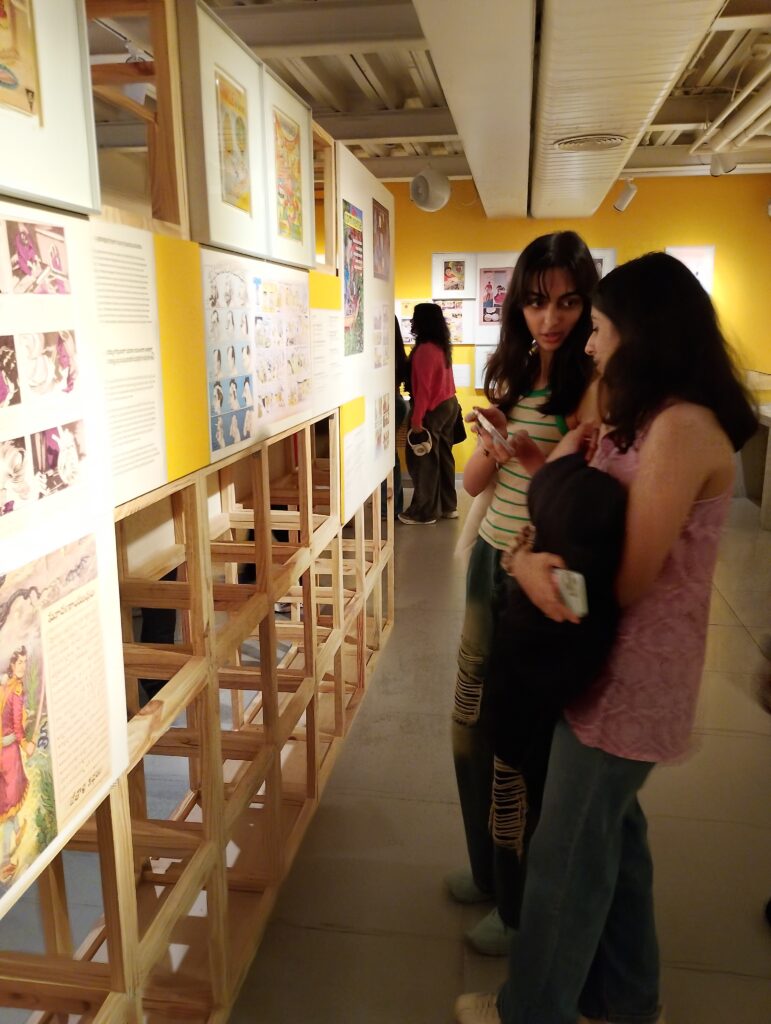
The immersion also made space for visual research and cultural exploration through a visit to the Museum of Art & Photography (MAP).
The visit encouraged students to examine how a contemporary museum selects, presents and contextualises Indian visual culture. Through the museum’s collections and curatorial approach, students could consider the ways images, objects and artistic expressions communicate ideas across different contexts.
For animation students, such experiences can be valuable starting points for developing visual references and expanding creative vocabulary. Studying artistic traditions, materials, compositions and visual narratives can inform everything from character concepts and environment design to colour palettes and storytelling approaches.
The visit also reinforced the importance of documentation as a creative practice. Observing and recording details from the world around us helps build a personal reference library that can support future projects and encourage more thoughtful design decisions.
Preparing for the Future of Animation
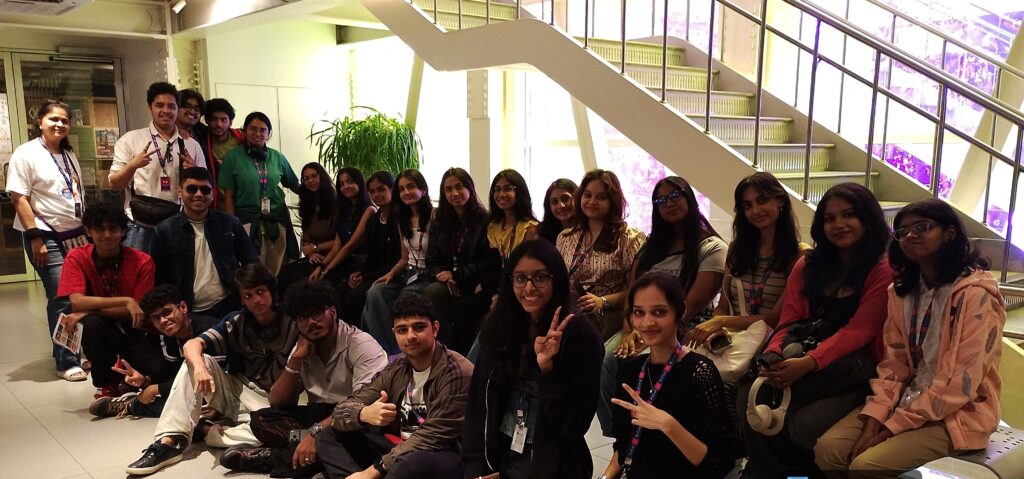
The Bengaluru immersion brought together different dimensions of animation education, connecting industry exposure with technical experimentation, cultural observation and creative inquiry.
As animation continues to evolve through new technologies, interactive formats and increasingly sophisticated production pipelines, aspiring professionals need more than proficiency in creative software. They need to understand how ideas are developed, how teams collaborate, how tools support creative decisions and how stories can be communicated across different media.
The Bengaluru immersion offered ISDI Animation students an opportunity to explore these connections in real-world settings. By engaging with industry professionals, observing production environments and participating in practical workshops, they gained perspectives that can inform their academic projects and future professional journeys.
At ISDI, experiential learning extends beyond the classroom, creating opportunities for students to engage with the industries they aspire to enter. The Bengaluru immersion reflected this approach, bringing together technology, storytelling, design and cultural exploration to help students see animation not just as a craft, but as a constantly evolving creative discipline.