Learning to Play Seriously: A LEGO® Workshop That Built More Than Models
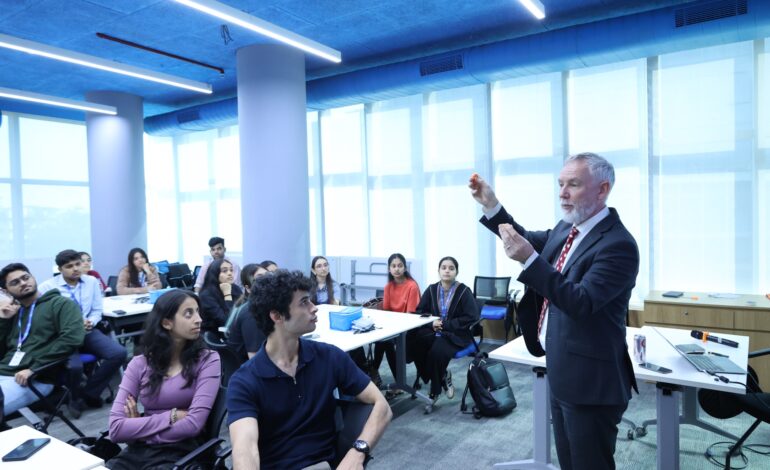

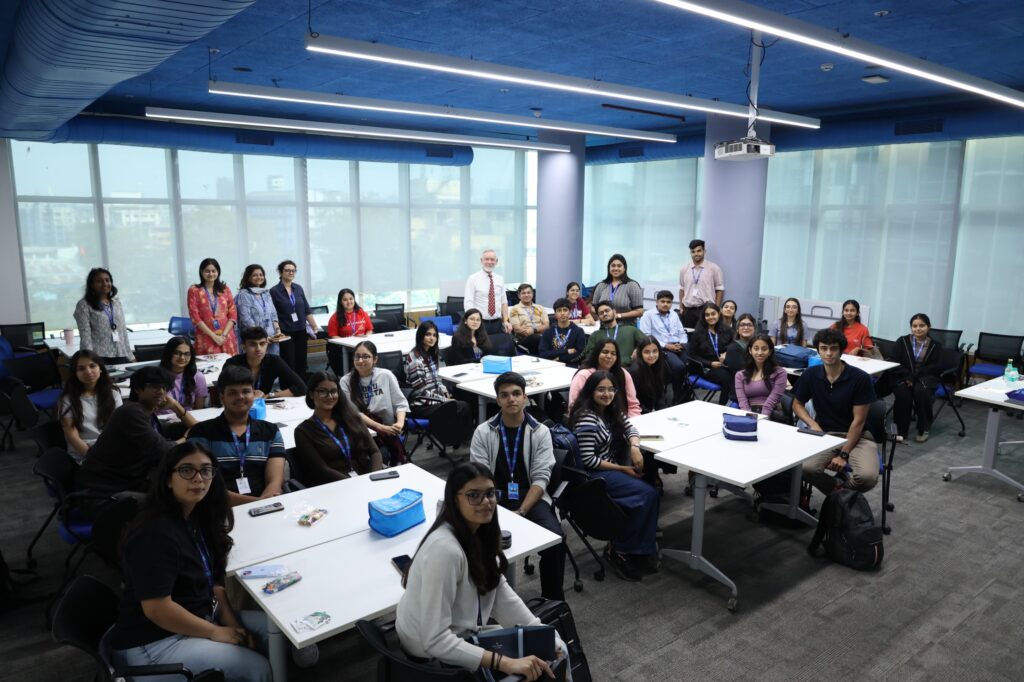
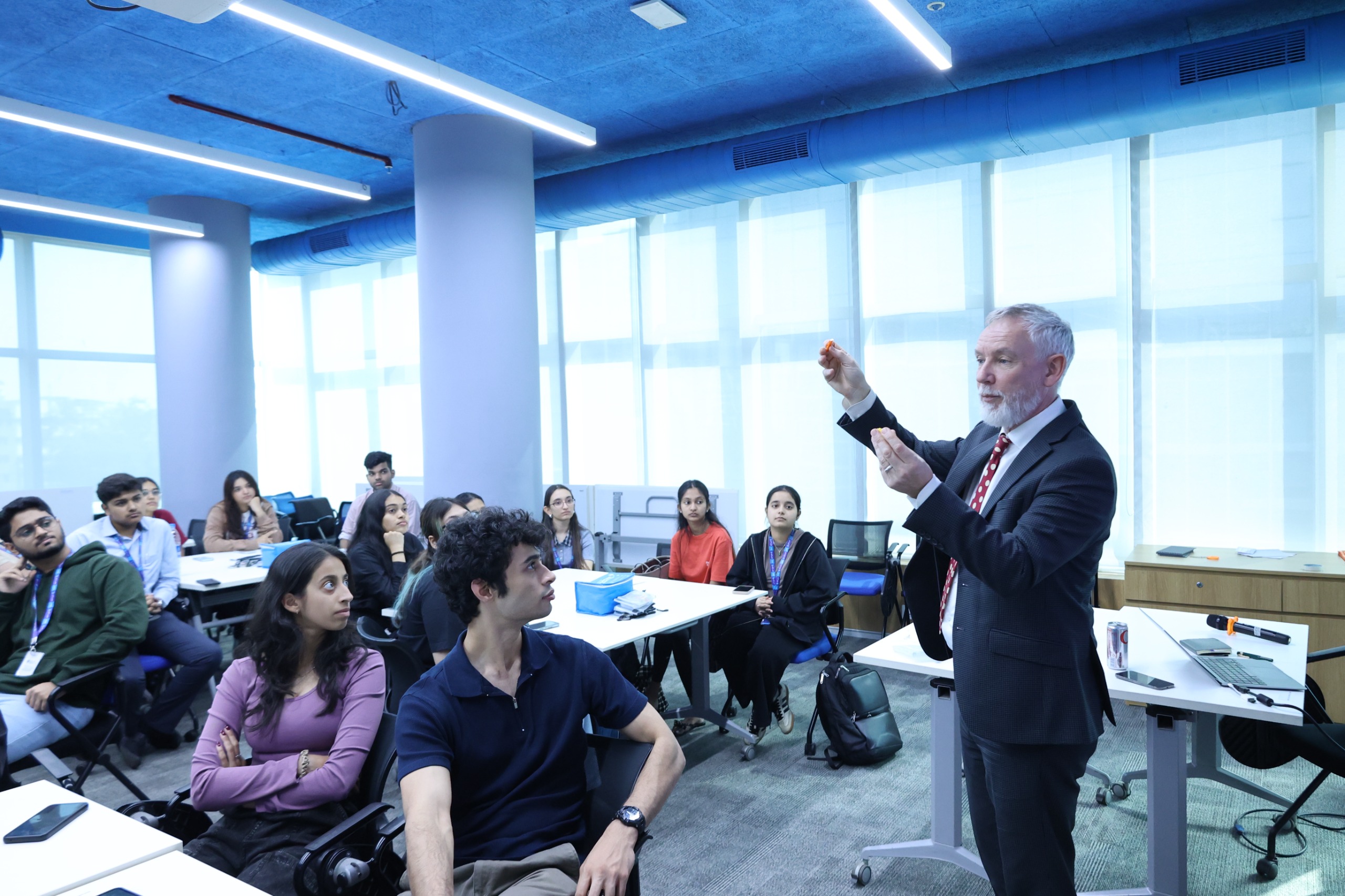
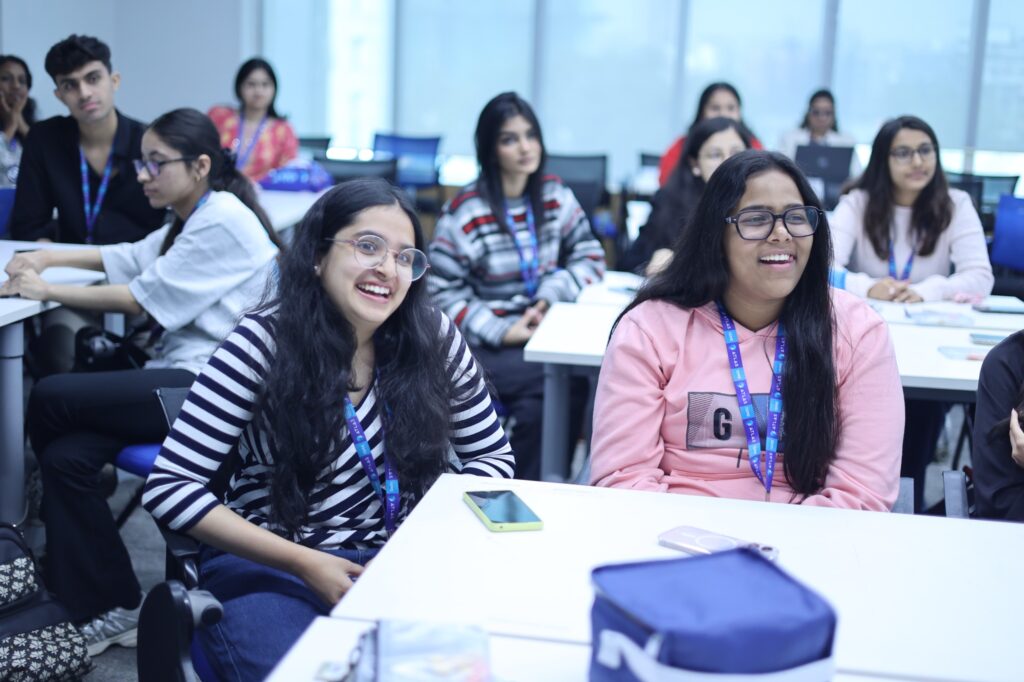
What happens when learning feels less like a lecture and more like play? The LEGO Workshop conducted for the students of ISME School of Management & Entrepreneurship and facilitated by Prof. Simon Thompson, Deputy Pro-Vice-Chancellor (International), University of Sussex, offered a compelling answer. Rooted in hands-on exploration, the session focused on key learnings such as critical thinking, creativity, collaboration, reflective learning, and the ability to find meaning through dialogue and metaphor. By transforming colourful bricks into powerful thinking tools, the workshop demonstrated how learning can be both serious and deeply engaging.
Building Before Speaking
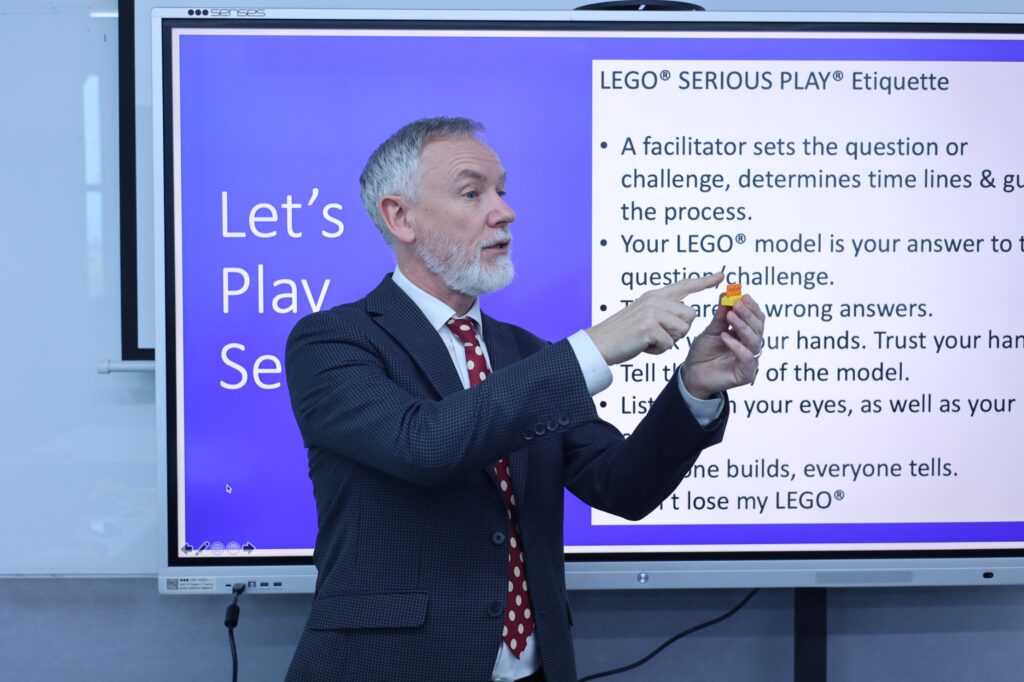
The session opened with a simple yet profound idea, quoted by Prof. Thompson himself: “Learning to play seriously.” His emphasis was clear that the act of building is only the beginning. What truly matters is talking about what you build, listening to others, and discovering how meaning shifts through perspective.
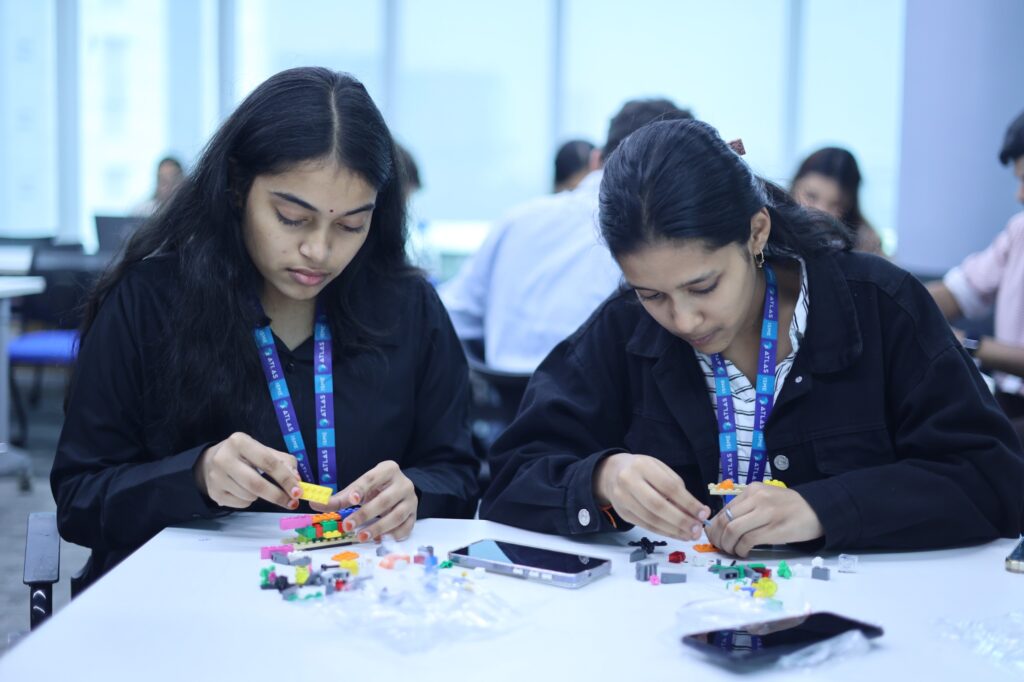
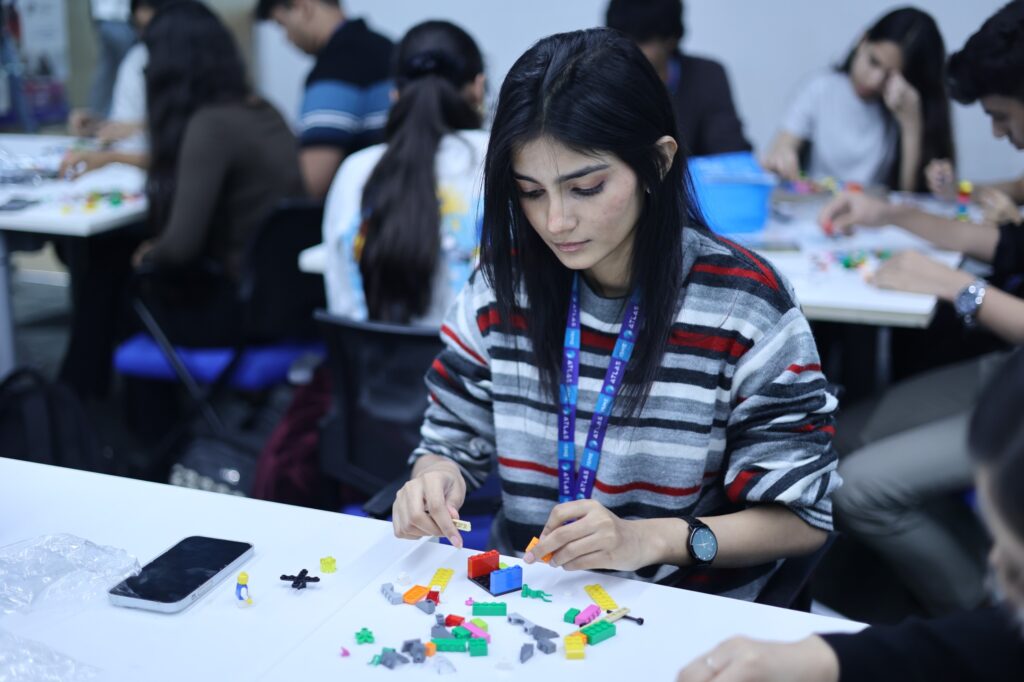
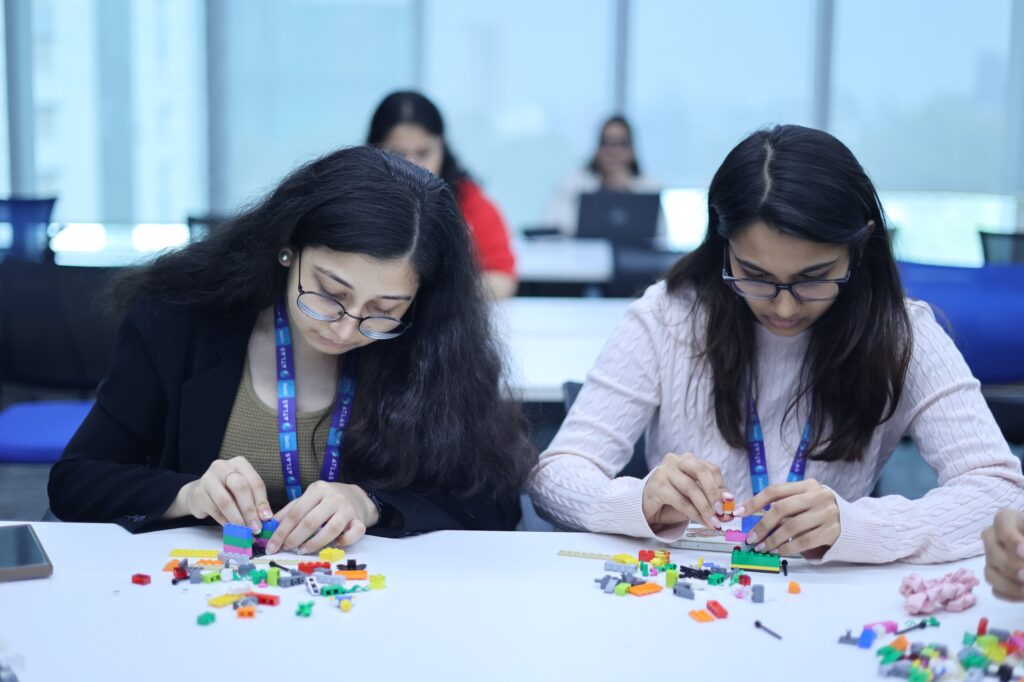
Each participant was given LEGO sets for every task, immediately setting the tone for an inclusive and tactile learning environment. Prof. Thompson’s approachable nature, attentiveness, and quick wit kept the room light and welcoming. Learning, after all, works best when people feel comfortable enough to experiment and occasionally fail.
To complement the physical builds, students were introduced to Padlet, a digital platform where images of their LEGO models could be uploaded along with written reflections. This seamlessly blended physical creativity with digital storytelling.
Task One: Six Bricks, Infinite Ducks
The first challenge sounded deceptively simple. Using just six LEGO pieces, students were asked to build a duck within a few minutes. The result? Not a single duck looked the same.
As everyone looked around the room, it became evident that even with identical instructions, but different sizes of LEGO pieces, interpretation varies wildly. What emerged was a visual reminder that creativity is deeply personal. There is no single “correct” duck, just as there is no single way of thinking.
Task Two: Towers, Rules, and Reflection
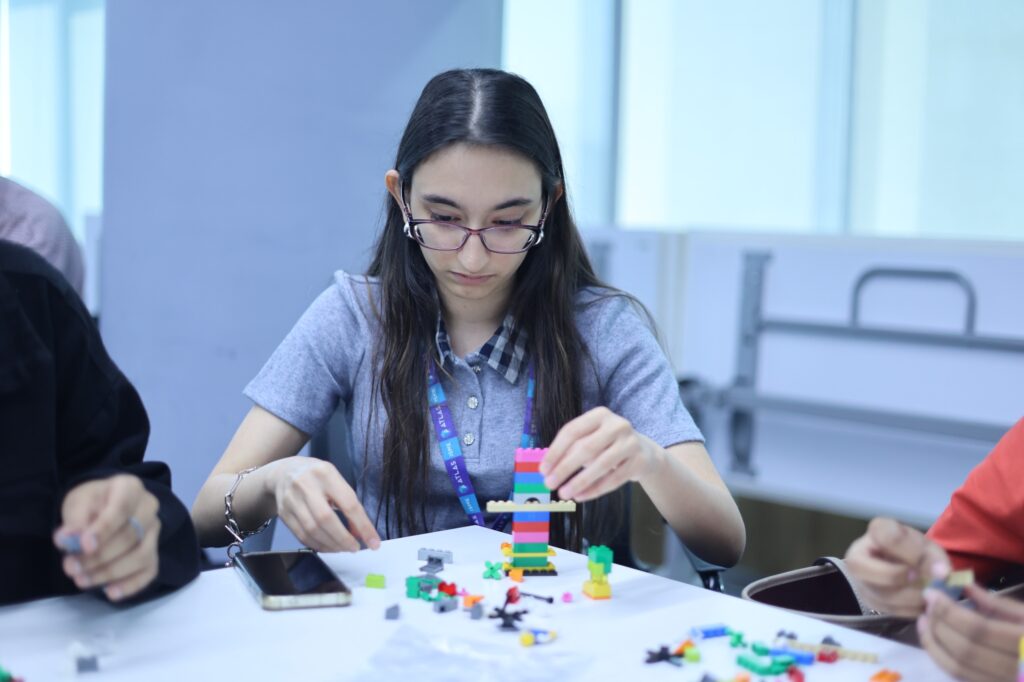
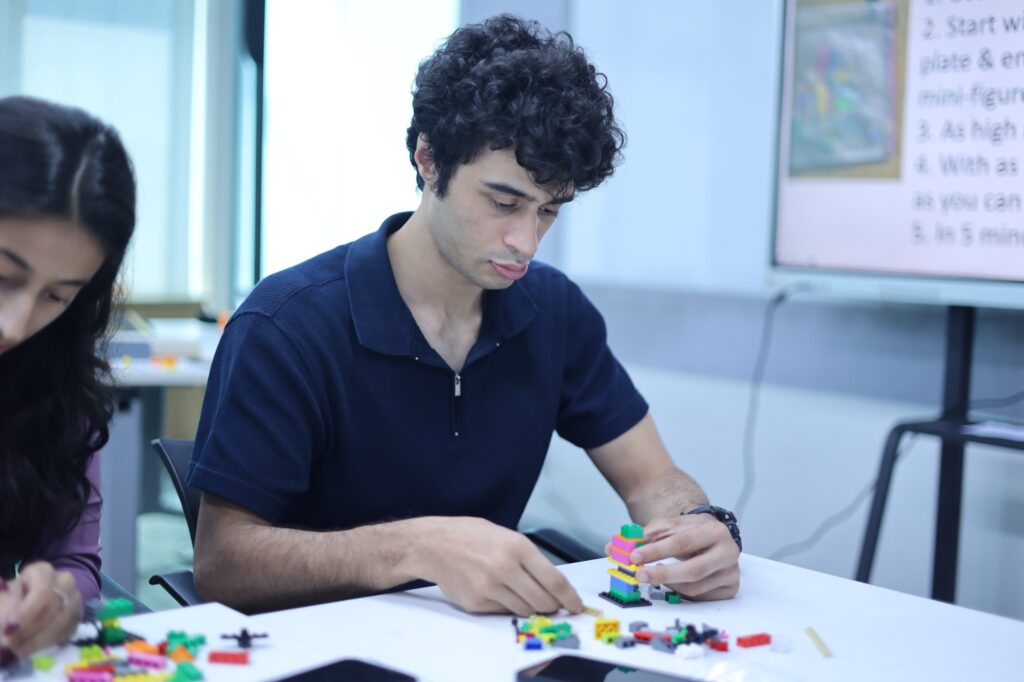
The second task raised both the difficulty level and the depth of reflection. Students were asked to build a tower using identical LEGO sets, following only two rules: start with a base plate and end with a mini-figure on top.
To ensure focus, hands were placed under the table during instructions, and a gentle warning was given about slippery tables. Once completed, students were asked to describe one aspect of their model without talking about themselves, shifting attention from the builder to the build.
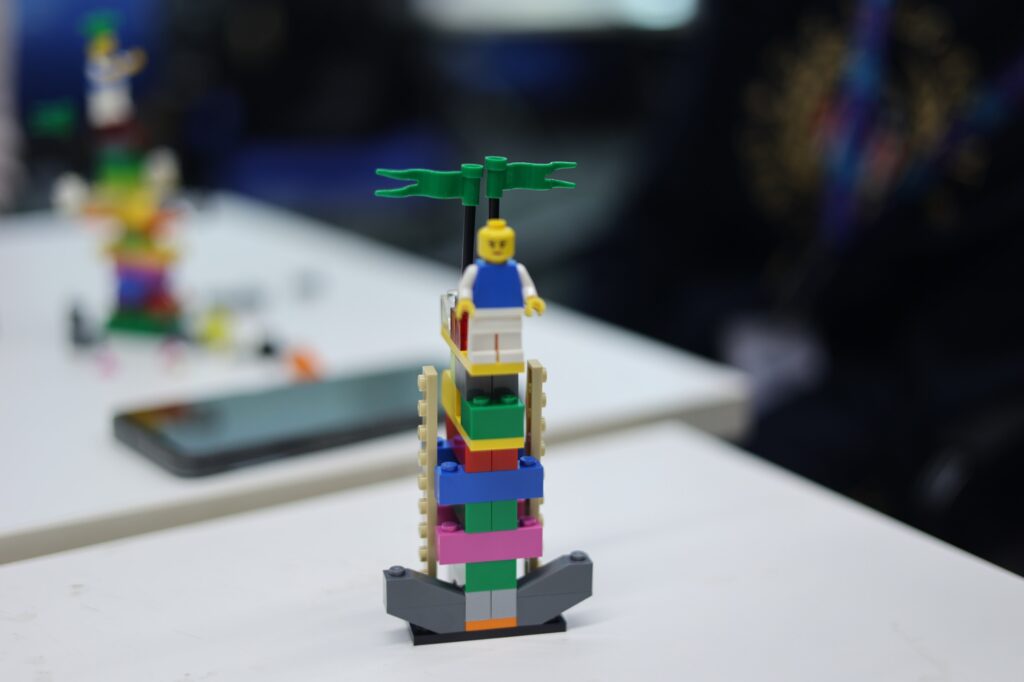
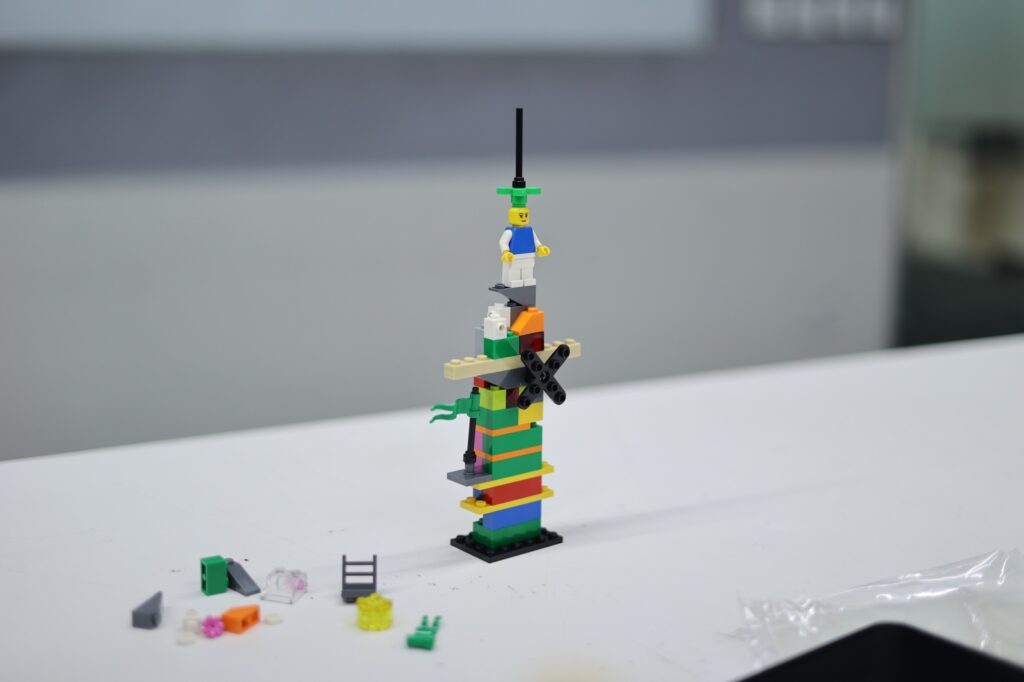
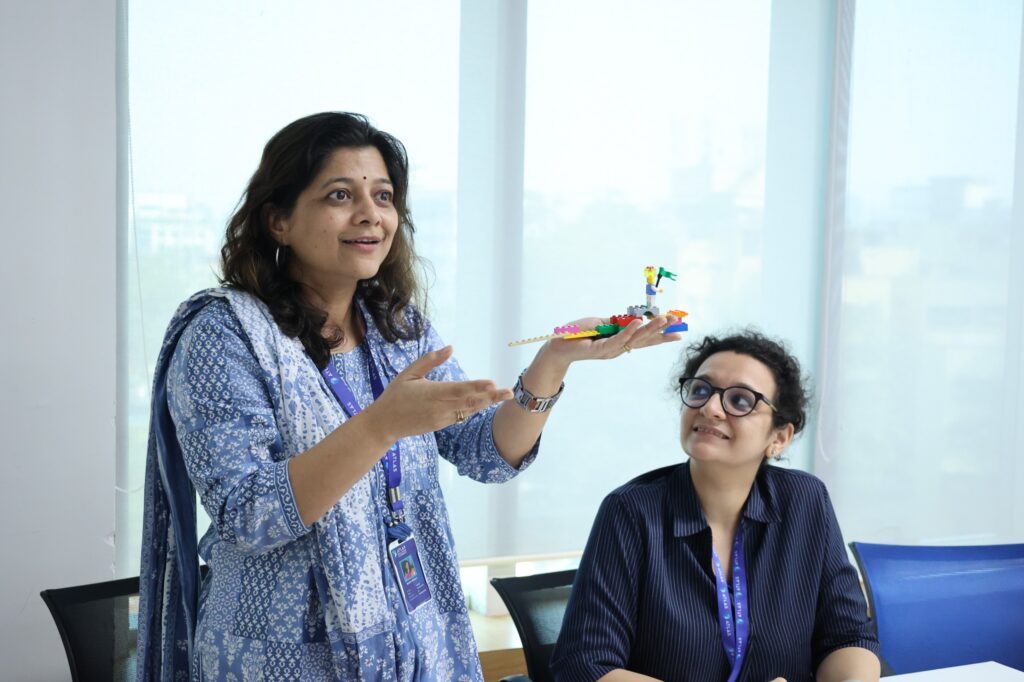
Prof. Thompson then shared a personal example by describing a tower he once built to represent the University of Sussex. Large windows symbolised openness and journeys. Pillars and a wizard with an owl stood for knowledge. A globe represented global perspectives and international engagement. A lion appeared simply because it “looked nice,” as he jokingly admitted. Two crowned figures on horses referenced the Duke and Duchess of Sussex, adding a touch of humour and storytelling to the model.
When a Brick Becomes a Metaphor
The session then moved into metaphor-building. Prof. Thompson presented individual LEGO pieces and asked students what they could represent.
A simple white brick transformed into snow, clouds, a pillow, the moon, even a cheese cube. A flower became a compass, a windmill, or appreciation. Ladders symbolised bookshelves, goals, or paths to heaven. Flags stood for achievement and success, while a single eye evoked ideas of surveillance, protection, and being watched.
These responses revealed not just creativity, but emotional depth, lived experiences, and personal associations, proof that meaning is constructed, not assigned.
Task Three: The Bridge of Education
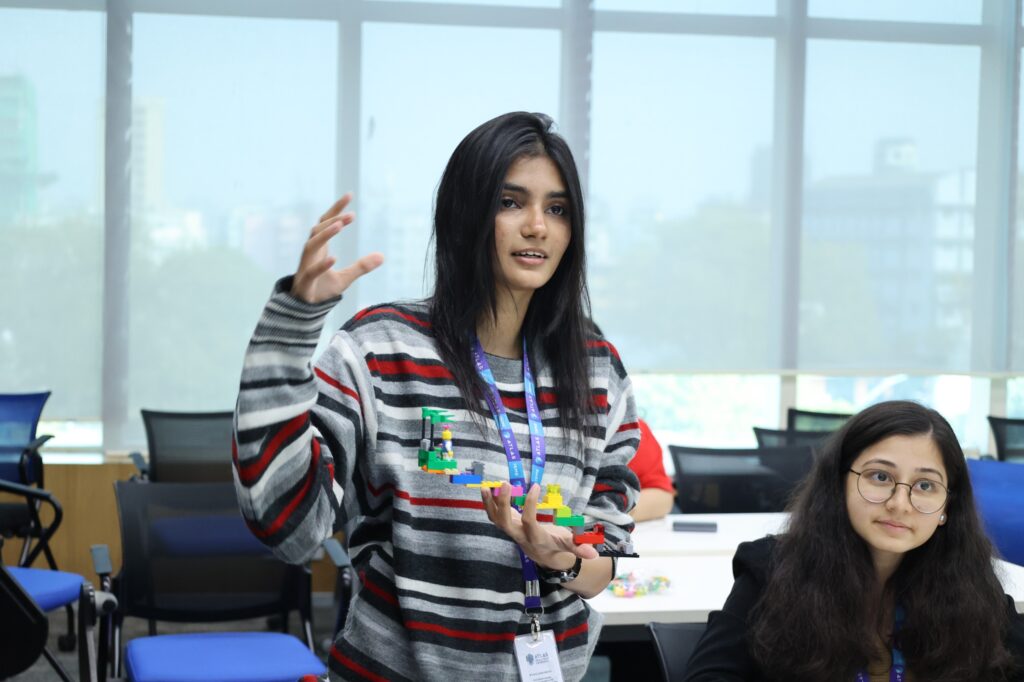
Perhaps the most moving segment of the workshop involved building a “Bridge of Education.” Students were asked to narrate their educational journeys using metaphors, while consciously speaking about the model rather than themselves.
What emerged were deeply honest, sometimes unsettling stories. Some bridges began bright and hopeful, only to fade into emptiness, reflecting burnout and mental health struggles. Others depicted slopes, alarms, and googly eyes, suggesting constant pressure, limited recognition, and the quiet presence of support systems.
One teacher used the metaphor of Noah’s Ark, portraying herself as a guide leading students forward despite resistance and generational gaps. Another bridge showed confidence at the start, instability in the middle during board exams, and eventual victory. Some bridges shifted direction entirely, symbolising changed paths and difficult choices.
Though the models differed, they shared a common truth: education is rarely linear, rarely easy, and deeply personal.
Task Four: Collective Concerns of 21st-Century Learners
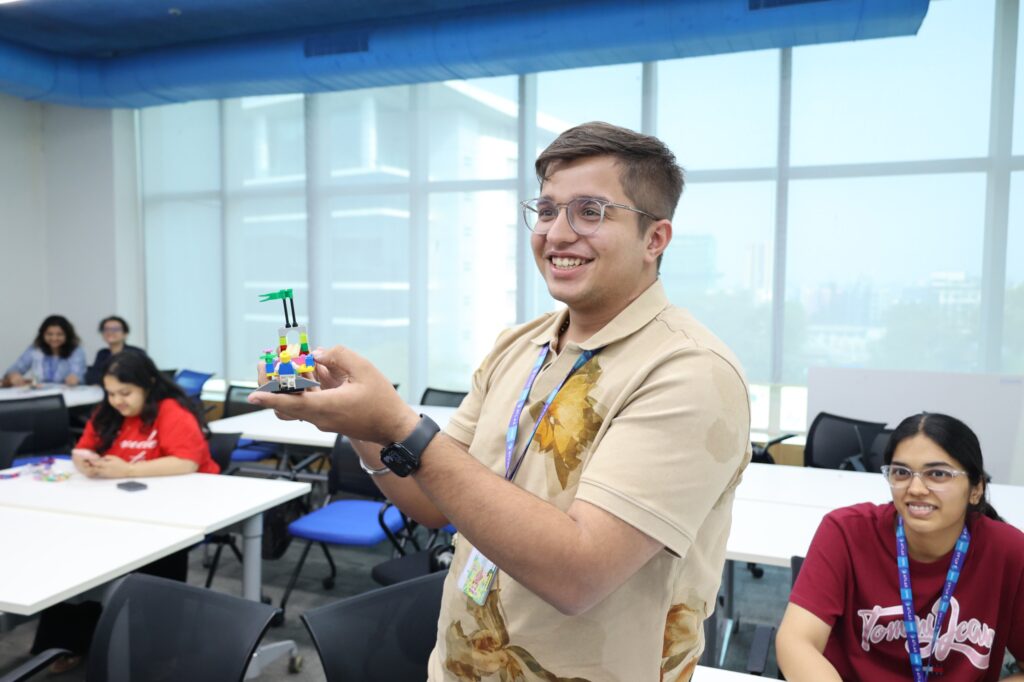
The final task required collaboration. In groups of five, students built collective models capturing their shared worries and aspirations as modern learners.
Almost every model had two sides. Heaven and hell. Positive and negative. Hope and fear.
Some explored corporate dissatisfaction versus personal fulfilment. Others depicted fear of failure, shortcuts that lead to danger, and longer, more complex paths that ultimately lead to growth. One model examined the tension between artificial intelligence and human creativity, showing both efficiency and loss. Another tackled deforestation, surveillance, societal pressure, and resilience.
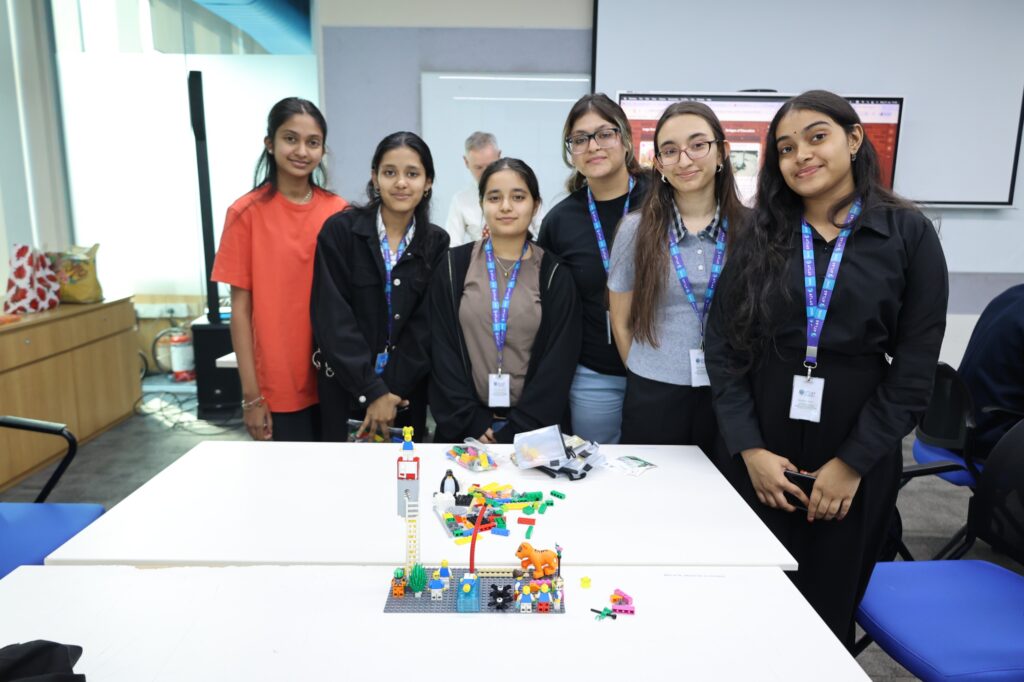
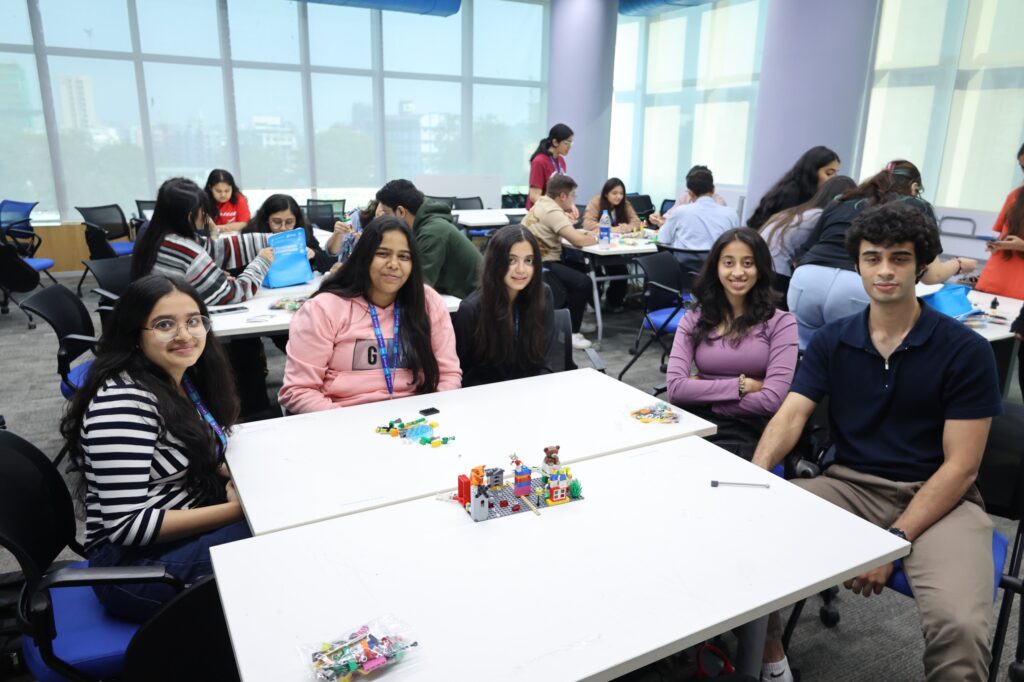
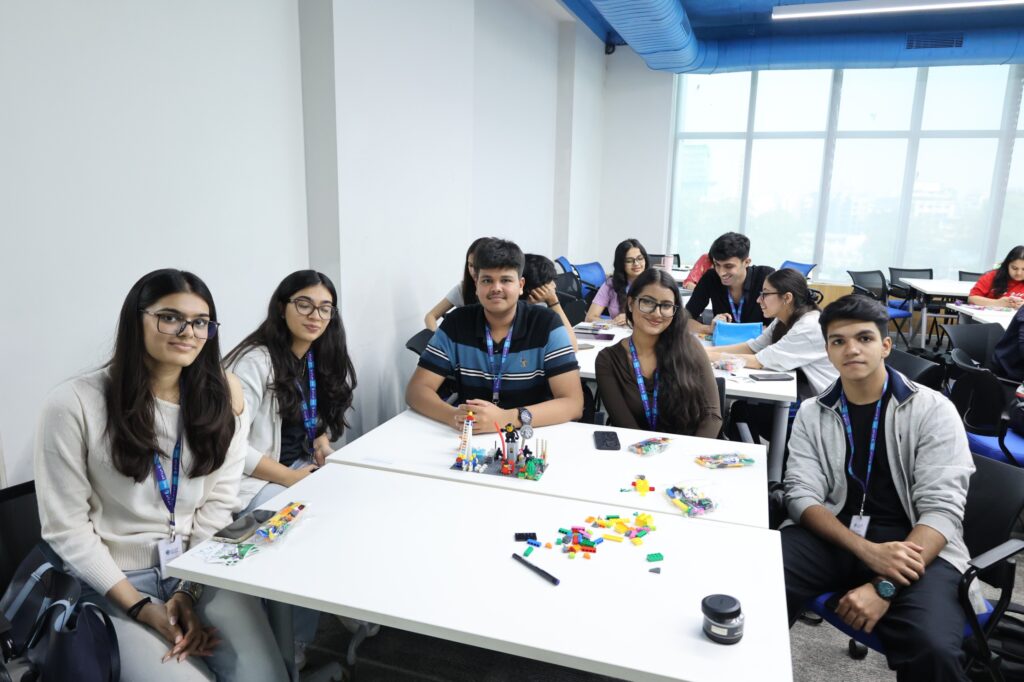
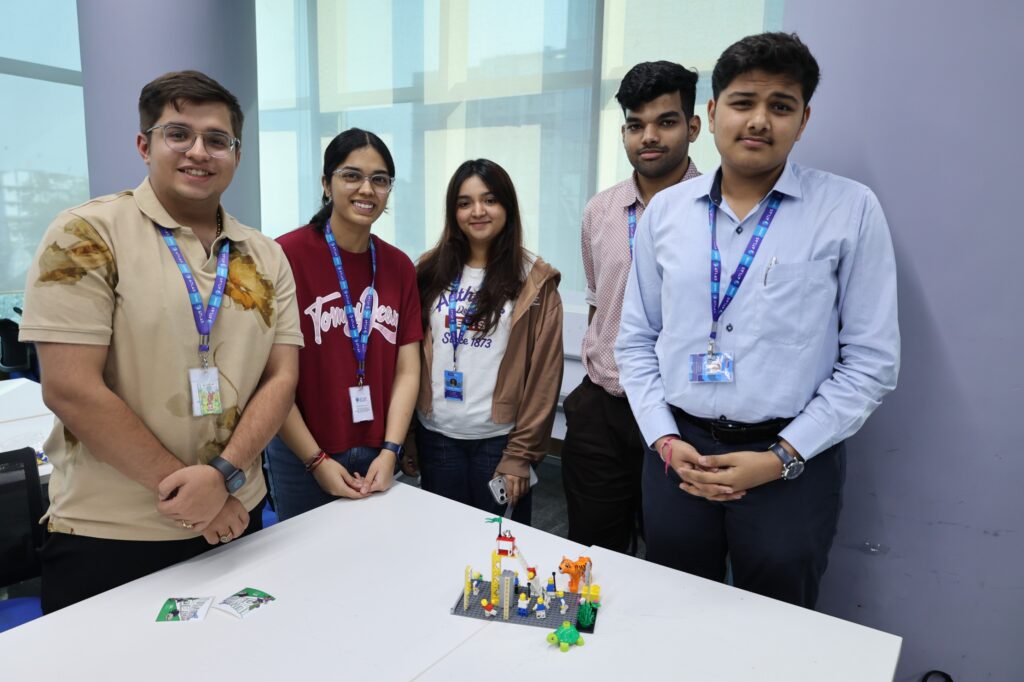
A recurring theme across all builds was choice. The presence of a figure standing between two paths appeared again and again, suggesting that while systems influence us, agency still exists.
More Than Just LEGO
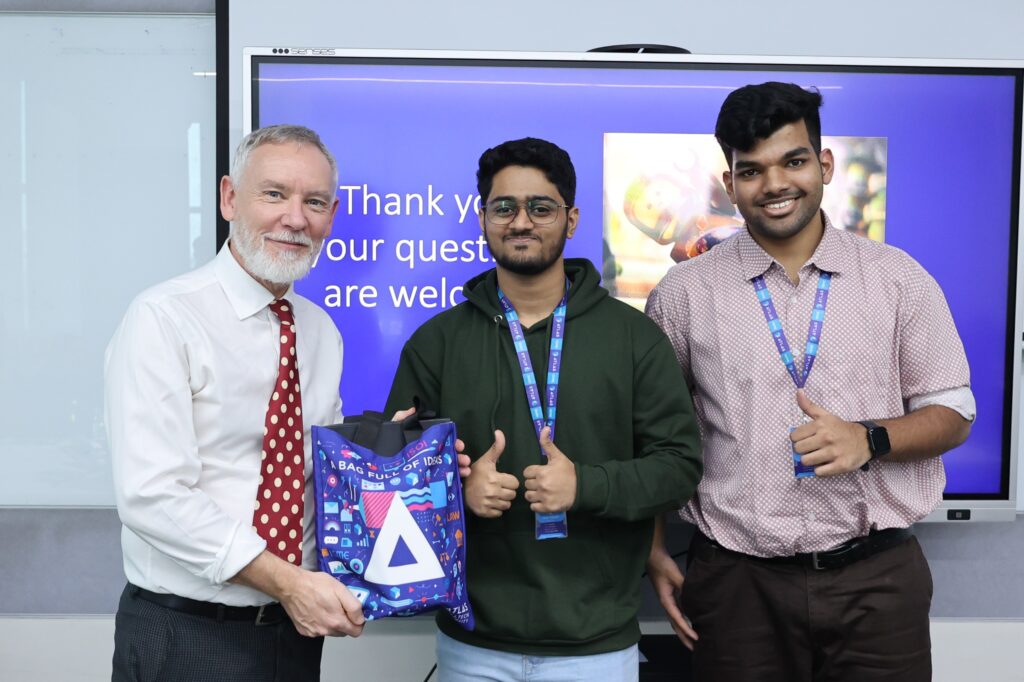
As the session concluded, Prof. Thompson praised the depth, honesty, and imagination displayed by the students. Each participant was gifted a LEGO set, a small gesture that brought visible joy and gratitude across the room.
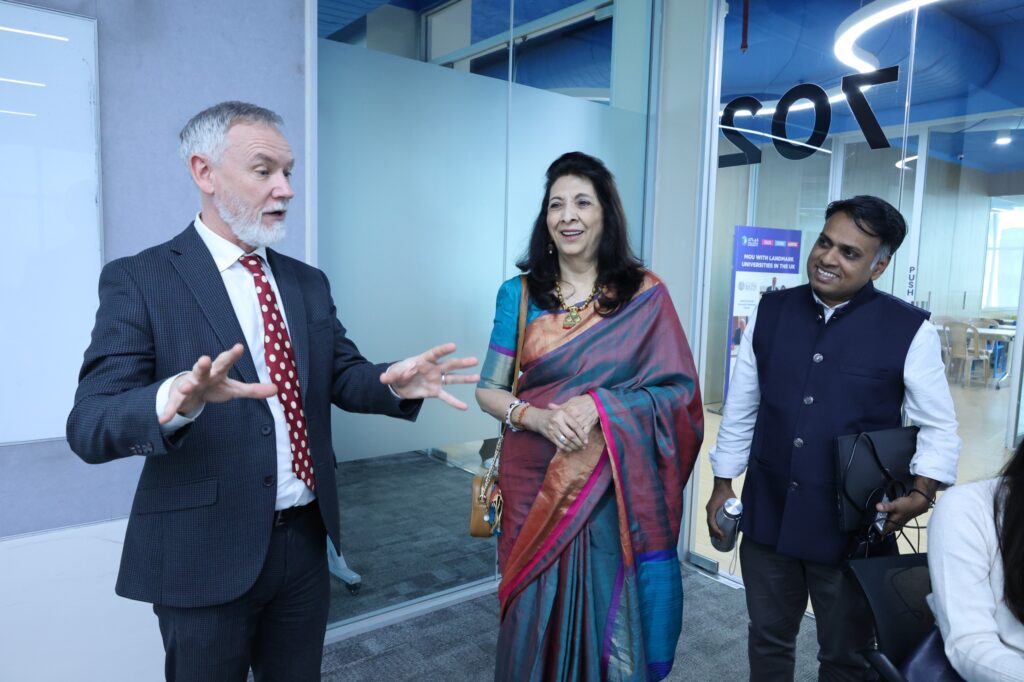
Faculty members shared overwhelmingly positive feedback, appreciating how the workshop brought them into the learning process alongside students. It was hands-on, inclusive, and unexpectedly fun.
What We Took Away
This workshop was not about building perfect models. It was about building conversations, empathy, and self-awareness. Through LEGO, students learned to see differences not as contradictions, but as coexistence. They learned that creativity thrives when voices are heard and stories are shared.
Sometimes, learning really does begin when we sit down on the floor, pick up a few bricks, and start to play seriously.