


For years, b des interior design was largely associated with creating beautiful spaces. While aesthetics remain an important part of the profession, they are no longer enough. Today, interior designers are expected to understand how people live, work, learn, shop, and interact with the spaces around them. Every design decision, whether it's the placement of furniture, the choice of materials, or the flow of a room, has an impact on functionality, comfort, accessibility, and experience.
This evolution has transformed the role of an interior designer. Professionals now work at the intersection of design, technology, sustainability, psychology, and business. They collaborate with architects, engineers, product designers, contractors, and clients to create spaces that are not only visually appealing but also practical, efficient, and future-ready. Whether designing a co-working space, a luxury residence, a retail store, or a healthcare facility, today's interior designer is expected to think beyond appearances and solve real-world challenges.
Naturally, the expectations from graduates have changed too. Employers are no longer evaluating candidates only on the basis of technical drawings or software proficiency. They want individuals who can think critically, communicate ideas clearly, adapt to changing project requirements, and approach design with curiosity and empathy. A strong portfolio, hands-on experience, and the ability to connect design decisions with user needs often carry as much weight as academic qualifications.
This changing landscape has also influenced the way interior design education is structured. Students today can choose from different academic pathways, each with its own philosophy and approach to learning. Among the most common options are a BDes Interior Design and a BSc Interior Design degree. While both can lead to successful careers in the industry, they differ in how they prepare students for professional practice.
So, which one gets you hired faster?
The answer isn't as simple as choosing one degree over the other. In reality, employability depends on much more than the title of a programme. The curriculum, learning environment, exposure to industry, opportunities to build a portfolio, and the skills developed over the course of the degree all play an important role in shaping career outcomes.
Understanding these differences can help aspiring designers move beyond the question of which degree is better and instead focus on choosing the educational experience that best aligns with their interests, strengths, and long-term career aspirations.
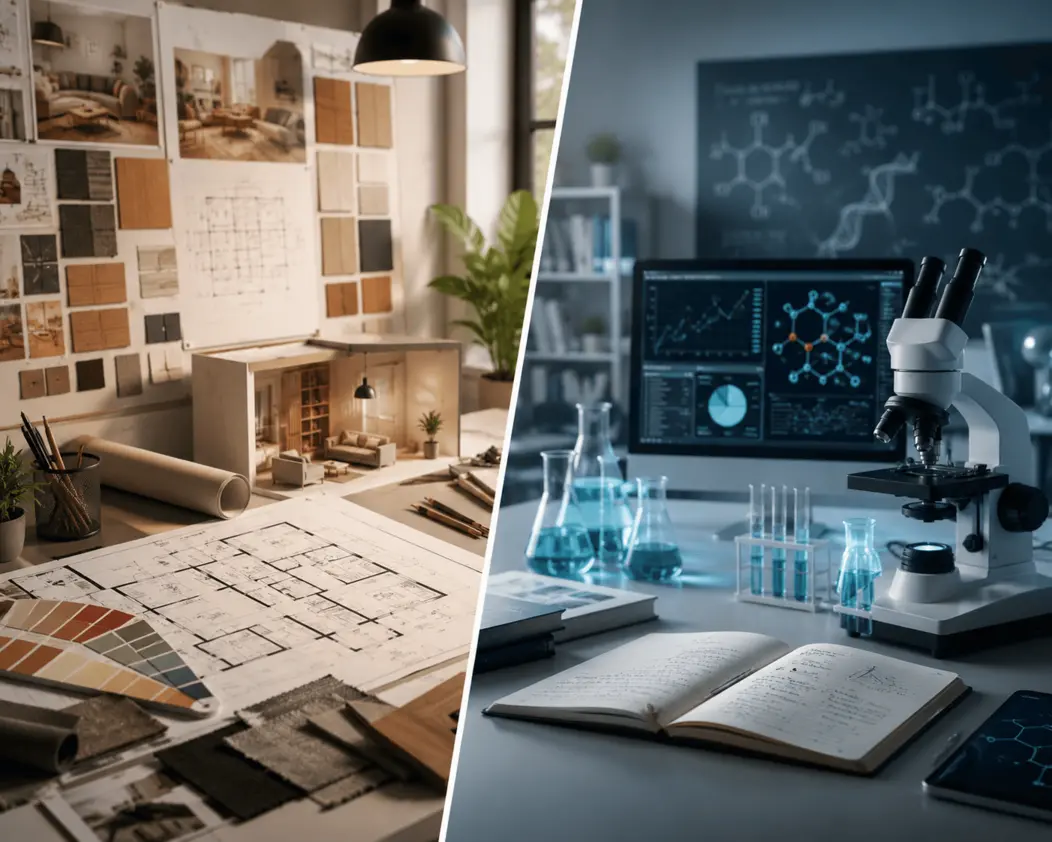
Both BSc Interior Design and BDes Interior Design prepare students for careers in the design industry, but they do so through different educational philosophies. While the end goal is the same, to equip graduates with the skills to design functional and engaging spaces, the journey differs in terms of curriculum, teaching methodology, and learning outcomes.
Understanding these differences is important because your choice should reflect not just the role you want after graduation, but also how you learn best and the kind of designer you aspire to become.
A BSc Interior Design course offers a structured approach to understanding the technical and practical aspects of interior design. For students exploring BSc Interior Design , the programme typically combines design fundamentals with construction principles, material studies, space planning, and project execution. Alongside creative concepts, students also gain an understanding of building systems, regulations, estimation, and project management, preparing them for implementation-focused roles.
Common BSc Interior Design subjects include interior construction, furniture design, architectural drafting, CAD, building materials, environmental design, and professional practice. While the BSc Interior Design eligibility criteria generally require students to have completed Class 12 from a recognised board, admission requirements may vary across institutions. Similarly, BSc Interior Design fees depend on factors such as the university, infrastructure, faculty, and industry exposure offered by the programme.
A BDes Interior Design is an interior design bachelor degree that takes a design-led approach to learning. Instead of focusing only on how spaces are built, it explores why they are designed in certain ways and how thoughtful design can improve the way people live, work, and interact with their surroundings. Studio-based learning, design critiques, research, and collaborative projects form an integral part of the curriculum, encouraging students to experiment, iterate, and develop creative confidence.
Typical B Des Interior Design subjects include design thinking, spatial design, user-centred design, visual communication, furniture and lighting design, digital visualisation, sustainability, and portfolio development. The emphasis is on nurturing creative problem-solvers who can combine aesthetics with functionality while building a body of work that reflects their design process and capabilities.
Also Read : Biophilic Interior Design Degree: Why Students Must Know
Choosing an interior design degree is not just about comparing subjects or course structures. The learning environment plays an equally important role in shaping how prepared graduates are for the demands of the profession. While classroom instruction builds technical and theoretical knowledge, it is often the experiences outside the textbook that help students develop confidence, adaptability, and a practical understanding of the design process.
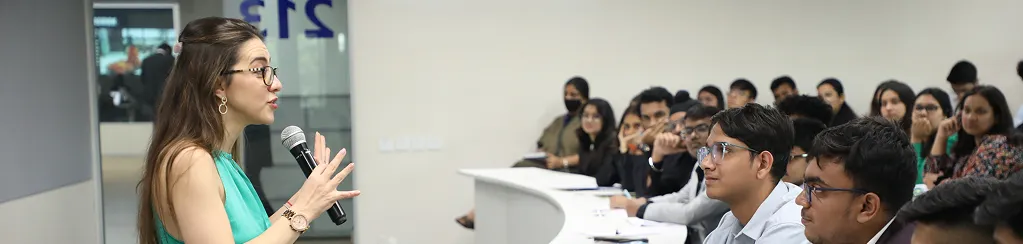
Today's interior design programs are increasingly moving towards experiential learning, where students engage with live projects, internships, studio-based assignments, workshops, and industry interactions throughout their academic journey. These experiences expose students to real design challenges, helping them understand client requirements, collaborate with multidisciplinary teams, present ideas effectively, and refine solutions based on feedback. In the process, they also develop a portfolio that showcases not only the final outcome but also their design thinking and problem-solving approach.
This combination of academic rigour and hands-on learning gives graduates a stronger foundation as they enter the workforce. It enables them to bridge the gap between theory and practice, making them better equipped to contribute from day one, regardless of whether they pursue a BSc Interior Design course or a B Des Interior Design degree. In an industry where practical application matters as much as technical knowledge, the quality of the learning experience can be just as influential as the qualification itself.
As the interior design industry evolves, hiring decisions are no longer based solely on academic qualifications or software proficiency. Employers want graduates who can contribute meaningfully to projects from the outset, collaborate with diverse teams, and approach challenges with both creativity and practicality. While technical knowledge remains essential, recruiters increasingly evaluate candidates based on a combination of design capability, professional readiness, and the potential to grow with the industry.
A portfolio is often the first impression a designer makes. Beyond showcasing polished outcomes, employers want to see how you approached a problem, developed concepts, refined ideas, and arrived at the final solution. A portfolio that demonstrates research, critical thinking, and creativity often carries more weight than one that simply displays finished designs.
A good designer needs to translate ideas into practical solutions. Employers look for graduates who are comfortable with industry-standard design software, understand materials and construction techniques, and can produce accurate drawings and visualisations. Technical proficiency helps designers communicate effectively with clients, architects, contractors, and other project stakeholders.
Interior design is rarely an individual effort. Every project involves working with clients, consultants, vendors, and multidisciplinary teams. The ability to present ideas clearly, incorporate feedback, and collaborate throughout the design process is a skill employers value just as highly as creative talent.
Design trends, materials, technologies, and user expectations continue to evolve. Employers seek professionals who stay curious, embrace new ideas, and are willing to learn throughout their careers. Graduates who can adapt to changing industry demands are often better equipped to build long-term, successful careers rather than simply secure their first job.
Also Read - How AI Is Changing Bdes Interior Design Education in India 2025
One of the biggest misconceptions among aspiring designers is that a particular degree automatically guarantees a higher salary or access to better career opportunities. In reality, employers rarely make hiring decisions based on whether a candidate has pursued a BSc Interior Design course or a B Des Interior Design degree alone. Compensation and career progression are influenced by the skills you bring, the quality of your portfolio, your industry exposure, and your ability to deliver value in real-world projects.
The same holds true for opportunities in luxury residential, hospitality, commercial, retail, healthcare, workplace, and experiential design. Each sector looks for a unique combination of creative, technical, and collaborative skills, making practical experience and specialisation just as important as academic qualifications.
Ultimately, while an interior design bachelor degree provides the foundation, long-term career growth depends on continuously building relevant skills, gaining practical experience, and staying adaptable to the evolving demands of the design industry.
Many students assume that a particular interior design degree offers better career opportunities than another. However, access to high-value projects depends less on whether you pursue a B Des Interior Design or a BSc Interior Design course and more on the skills, portfolio, and industry exposure you gain throughout your academic journey. Employers look for graduates who can combine creativity with technical expertise and adapt to the unique demands of different sectors.
An interior design bachelor degree can open doors to careers across diverse industries, including:
Ultimately, the right interior design programs prepare students to work across multiple sectors by combining design knowledge with practical experience, helping them build versatile and future-ready careers.
When comparing a B Des Interior Design with a BSc Interior Design course , it's easy to focus on the degree title, curriculum, or duration. However, these factors alone don't determine how prepared you'll be for the industry. The quality of the learning experience, the relevance of the curriculum, and the opportunities to apply your knowledge in real-world settings often have a far greater impact on your career.
As you evaluate different interior design programs , look beyond the course brochure. Consider whether the programme offers studio-based learning, live industry projects, internships, mentorship from experienced professionals, exposure to emerging technologies, and opportunities to build a strong portfolio. An interior design bachelor degree should not only teach design principles but also help you develop the confidence, adaptability, and practical skills needed to thrive in a profession that continues to evolve. The right educational environment prepares you not just for your first job, but for a long and meaningful career in design.
Also Read : Top Interior Designing Degree Program in India for 2026
The debate between BDes Interior Design and BSc Interior Design often comes down to a simple question: which degree will help me get hired faster? However, the reality of the design industry is more complex. While your qualification provides the foundation, your ability to think creatively, solve problems, communicate ideas, and apply your knowledge in real-world situations ultimately shapes your career journey.
Both pathways can lead to successful careers, but the learning experience behind the degree makes a significant difference. A programme that combines strong fundamentals with industry exposure, interdisciplinary learning, practical projects, and portfolio development can help students transition from aspiring designers to confident professionals.
For students looking to build a career in interior design, exploring a programme that goes beyond traditional classroom learning is essential. ATLAS ISDI School of Design and Innovation, offers a BDes Interior Design programme designed around experiential learning, industry engagement, and creative problem-solving, helping students develop the skills and perspective needed to navigate the evolving world of design.
The goal is not just to earn an interior design degree, but to develop the ability to create spaces that are meaningful, functional, and responsive to the needs of the future.
Both BSc Interior Design and BDes Interior Design can lead to successful careers. A BSc generally focuses more on technical knowledge, construction, and execution, while a BDes emphasises design thinking, creativity, research, and portfolio development. The better choice depends on your career goals and the kind of designer you want to become.
BSc Interior Design subjects typically include space planning, interior construction, building materials, furniture design, CAD, architectural drafting, lighting design, environmental design, project management, and professional practice.
Salary depends more on skills, experience, portfolio quality, specialisation, and industry exposure than the degree name alone. Graduates with strong practical experience and expertise in areas like luxury, commercial, hospitality, or sustainable design often have better career growth opportunities.
A BDes Interior Design programme that focuses on industry exposure, live projects, mentorship, and portfolio development can help students build the skills needed for diverse design opportunities. ISDI, ATLAS SkillTech University's School of Design and Innovation, emphasises experiential learning and industry-oriented design education.
Yes, students from different academic backgrounds can pursue a BSc Interior Design course if they meet the eligibility criteria set by the institution. Many programmes focus on developing design skills during the course rather than requiring a specific stream in Class 12.