

B Des Product design has quietly shifted from a niche creative role to one of the most influential functions shaping modern digital and physical experiences. But ask what a product designer does, and you'll still get varied answers. That's not confusing. It reflects how wide and layered the role has become. A product designer today is not just shaping screens or visuals. They are shaping how something fits into a person's life. That could be a banking app that reduces financial stress, a healthcare platform that simplifies decisions, or a connected product that blends digital and physical experiences.
This is why the role sits at the intersection of human behavior, business thinking, and technology. The real skill is not being strong in one area, but moving between all three without losing clarity. From a broader perspective, product design is no longer just execution. In many companies, it actively shapes strategy. Design decisions influence trust, usability, conversion, and even how a brand is perceived over time. That makes the role far more central than it used to be.
At its core, product design is about shaping experiences over time, not just first impressions. Good design becomes invisible because it feels natural. Poor design keeps reminding you something is off. This shift is also changing how students enter the field. It's no longer enough to focus only on visuals. Structured pathways like a b des product design or a wider product design degree are becoming more relevant because they train students to think in systems, not just outputs.
The expectation today is clear. Designers need to understand behavior, work with constraints, think in flows, and still stay grounded in empathy when trade-offs appear. That's why learning now is less about tools and more about exposure to real problems.
In that sense, product design is less a fixed job title and more a way of thinking that cuts across industries. And that's exactly why its relevance keeps growing.
Earlier, design roles were neatly separated. Visual design stayed with designers, engineering handled build and functionality, and business teams focused on goals, revenue, and strategy. Each function operated in its own lane, and collaboration often happened late in the process. That structure doesn't really work anymore. Today, a product designer moves fluidly across all these spaces. They spend time understanding user problems through research, translate those insights into early concepts, test ideas through quick prototypes, and then work closely with engineers to make sure what gets built actually works in the real world.
Alongside that, they stay in constant conversation with product and business teams to ensure the experience aligns with both user needs and business direction. It is less about delivering a fixed output and more about continuously asking better questions, especially around what problem is being solved and whether the solution is actually the right one. This shift is also why structured learning paths like a bachelor of design product design or b des product design are becoming more important. They don't just teach tools or software skills, but help students build systems thinking and the ability to work within real constraints.
Even broader programs like ba product design are now evolving in the same direction, with stronger focus on user behavior, applied research, and how digital products function in complex environments.
Also Read: Best Product Design Colleges in India | B.Des in Product Design
There is no fixed template for a product designer's day, and that is exactly what makes the role interesting. It is not a job that runs on repetition. It runs on problems, and problems rarely arrive in a predictable order. Some days begin with clarity and direction, others begin with ambiguity that needs to be untangled before any design work can even start.
A product designer's day rarely begins with design. It begins with information. This could be user feedback, product analytics, customer support issues, or insights shared by the product team. But this data is never taken at face value. The first job is to understand patterns, not jump to conclusions. If users are dropping off at a specific step, or if a feature is being ignored, the question is not "how do we fix this immediately," but "what is actually causing this behavior." This shift in mindset is important because it sets the tone for everything that follows. Good product design starts with framing the right problem, not rushing toward a solution.
Once the problem space is clearer, designers move deeper into user understanding. This is where research becomes central. It may involve interviews, usability testing, journey mapping, or reviewing how users interact with a product in real time.
What makes this stage interesting is that users rarely explain problems directly. They describe experiences, frustrations, or workarounds. A product designer's job is to interpret these signals and connect them to underlying needs. Often, what users think is the problem is only a symptom of something deeper in the system. This is also where structured learning pathways like a b des product design or bachelor of design product design become valuable, because they train students to approach user behavior as something to study, not assume.
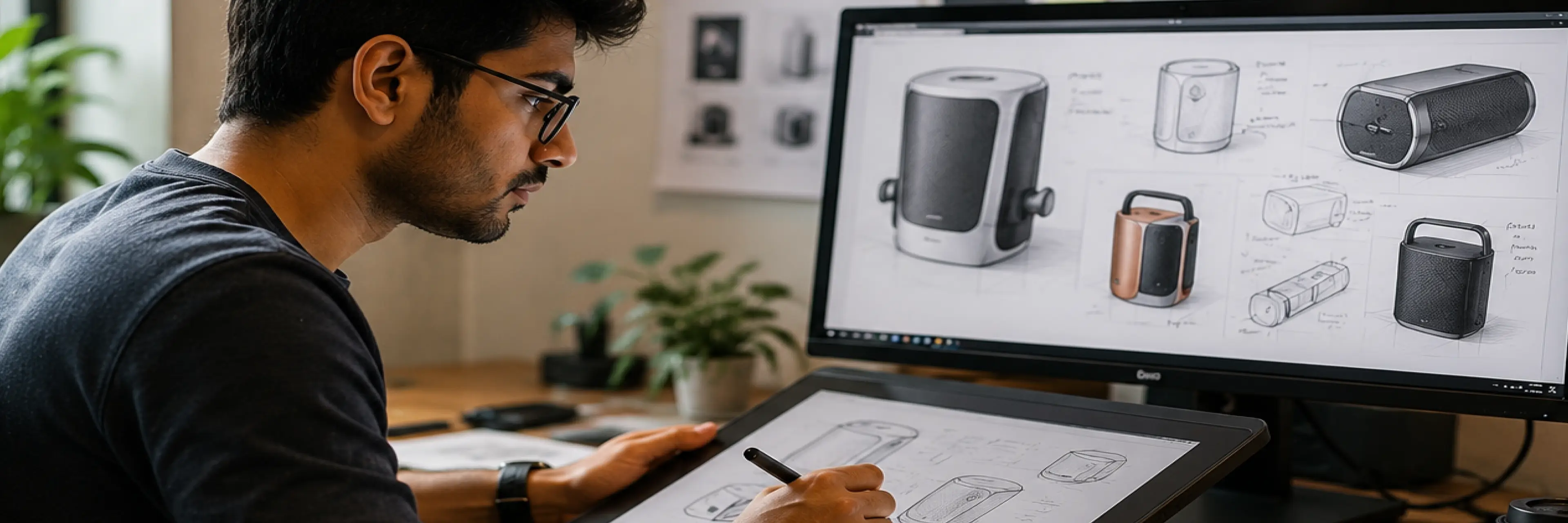
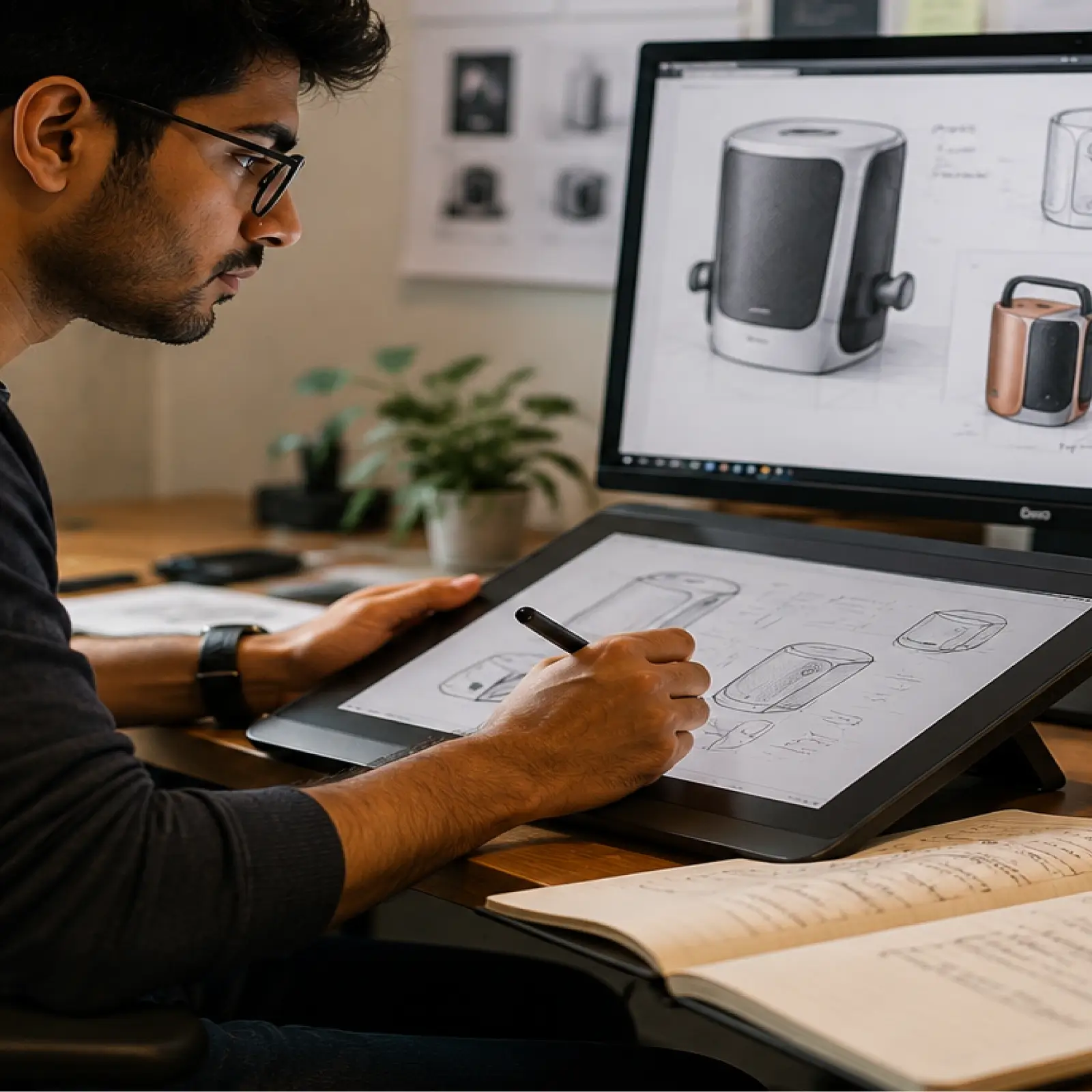
After insights start taking shape, the work moves into exploration. This is not about final designs. It is about testing directions quickly and cheaply. Designers sketch multiple ideas, build wireframes, and create prototypes that help answer specific questions. Will this flow reduce friction? Does this layout improve clarity? Where do users hesitate?
The key here is not perfection. It is the speed of learning. Each version is meant to reduce uncertainty, not finalize the product. This mindset is also central to how to be a product designer. You are constantly iterating, not aiming for a single correct answer on the first attempt.
As ideas mature, collaboration becomes the dominant part of the day. Product designers work closely with engineers, product managers, and sometimes business teams to evaluate feasibility, priority, and impact. This stage often changes the design more than the earlier exploration phase. Technical constraints may simplify a flow. Business priorities may shift emphasis. Engineering inputs may reshape how something is built.
Rather than seeing this as compromise, product designers learn to treat it as refinement. Real-world products are always shaped by multiple perspectives. This is why interdisciplinary education in programs like b des product design or ba product design matters. Students learn early that design is never a solo process.
What defines a product designer's day is not a fixed order of tasks. It is a loop. Research leads to design. Design leads to testing. Testing leads back to research. And the cycle continues. A single day can move through all these stages or stay deep in just one. That flexibility is not chaos. It is the nature of working with complex human problems.
As products become more digital, connected, and data-driven, the role of a product designer is expanding beyond execution. It now influences how products are shaped at a strategic level.
And that is exactly why strong foundational programs like a bachelor of design product design are gaining importance. They prepare students not just to design interfaces, but to think in systems, understand behavior, and work across disciplines.
In many ways, product design today is less about producing output and more about guiding decisions.
A strong product designer is not defined by the tools they use, because tools will keep changing with time. What truly matters is how they think, observe, and make decisions. At the core, a strong designer is someone who can look beyond surface-level user feedback and understand what people are actually trying to achieve, even when they don't clearly articulate it. They are able to take complex systems and simplify them into experiences that feel intuitive and easy to navigate, without losing the logic behind how those systems work. They also operate in a constant balancing act between user needs and business goals, making sure neither side is ignored in the process.
Just as importantly, they don't get attached to their first idea. They stay open to iteration, feedback, and change, refining their work instead of defending it. Because the role demands this level of depth and adaptability, many professionals eventually choose to deepen their expertise through a product design masters or a more advanced product design master degree , often moving into areas like systems design, service design, or emerging fields such as AI-driven product experiences.
Product design is no longer something that sits at the end of the process, waiting to make things look or feel better. It has moved much closer to the center of decision-making. Today, how a product is designed often influences what the product becomes in the first place. As digital ecosystems expand and user expectations keep rising, companies are realizing that design choices directly impact usability, trust, retention, and even business outcomes. Because of this, product designers are now expected to think beyond screens and interfaces. They are increasingly involved in shaping product strategy, understanding system-level constraints, and connecting user needs with business goals in a way that is both practical and forward-looking.
This shift is also changing how design education is approached. Institutions like ATLAS ISDI are responding by encouraging interdisciplinary learning, where design, technology, and business are not treated as separate domains but as connected ways of thinking. Students work on real-world problems, collaborate across disciplines, and engage with industry-style challenges early on. This helps bridge the gap between academic learning and the realities of building products in fast-moving environments, where decisions are rarely isolated and every choice has a wider impact.
Also Read- What is B.Des? Course Details, Colleges, and Career Options
Product design today is less about isolated execution and more about continuous decision-making in complex, changing systems. It sits at the intersection of user behavior, business priorities, and technology, which means every choice carries weight beyond just appearance or usability. As products become more layered and expectations become sharper, the role of a product designer naturally expands into strategy, systems thinking, and long-term experience design. It is no longer enough to simply build what is asked for. The real value lies in questioning, refining, and shaping what should exist in the first place.
For students and aspiring designers, this makes the learning journey just as important as the role itself. Exposure to real problems, interdisciplinary thinking, and hands-on practice becomes essential to truly understand how products come to life in the real world.
This is where environments like ATLAS ISDI become relevant, not as a destination, but as a space where design thinking is explored alongside business and technology, helping learners build the mindset needed to engage with the evolving world of product design.
A product designer studies user problems, defines solutions, and designs how a product works and feels. They move between research, ideation, prototyping, and collaboration with engineers and business teams to shape usable, meaningful experiences.
Not exactly. Industrial design focuses on physical products like furniture or appliances, while product design often includes digital products like apps and platforms. There is overlap, especially in connected or smart products.
Common tools include Figma, Adobe XD, Sketch, FigJam, Miro, and prototyping tools like Framer. They also use research tools, analytics platforms, and sometimes basic coding knowledge depending on the role.
UX design focuses mainly on user experience and interaction flows, while product design is broader. It includes UX but also considers visuals, business goals, technical constraints, and overall product strategy.
Product designers are hired across tech companies, fintech, e-commerce, healthcare, edtech, SaaS startups, consulting firms, and increasingly in automotive and IoT companies as digital integration grows.