



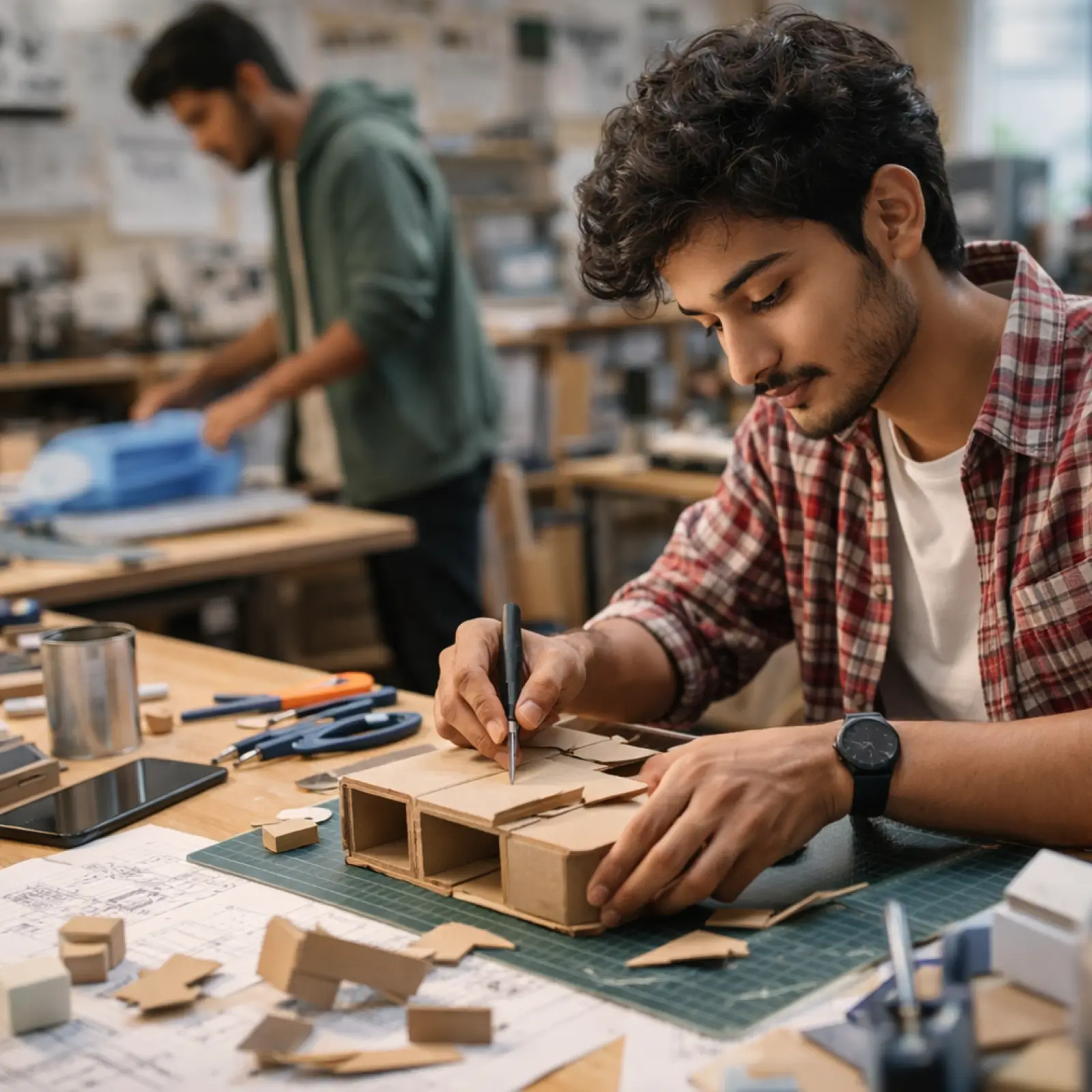
Product design today operates at the intersection of creativity, engineering, technology, and human behaviour. What was once viewed primarily as a discipline concerned with form and aesthetics has evolved into a strategic function that influences how people interact with products, services, and complex systems. From physical consumer goods to digital platforms and hybrid experiences, design now plays a critical role in shaping usability, efficiency, sustainability, and long-term value.
As industries increasingly rely on design-led innovation, the expectations placed on a product designer have expanded significantly. Designers are no longer limited to visual problem-solving; they are expected to understand engineering constraints, user psychology, manufacturing processes, and business objectives. This shift has made design education far more consequential than before, positioning the bachelor of design product design as a foundational step in preparing professionals for a rapidly evolving design landscape.
For students evaluating best product design colleges in india , the decision is no longer about where to learn a specific set of tools or software. Instead, it is about choosing an academic environment that builds strong design thinking, technical awareness, and interdisciplinary fluency. The most effective programs focus on developing adaptable thinkers who can respond to real-world complexity, not just academic briefs.
In this context, identifying the best product design colleges in India requires looking beyond rankings and infrastructure. The true measure of a strong program lies in how well it integrates creativity with product design engineering , encourages critical inquiry, and prepares students for diverse and evolving career paths. As the role of design continues to expand across industries, the right educational foundation becomes essential, not only for entering the profession, but for shaping its future.
When students and parents search for the best product design colleges in India , the conversation often centres around rankings, campus infrastructure, or placement statistics. While these factors are important, they offer only a partial view of what truly defines a strong design education. Product design is not a static discipline, and colleges that focus only on surface-level metrics may fail to prepare students for the realities of an evolving industry.
The most impactful product design colleges are those that focus on building long-term capability rather than short-term employability. They recognise that the role of a product designer continues to expand and that graduates must be equipped to think critically, adapt quickly, and work across domains.
The most effective institutions typically share the following characteristics:
Ultimately, the purpose of a bachelor of product design is not to create specialists limited to one function, but to develop versatile designers capable of navigating complexity. When evaluating the best product design colleges in India , students should look for institutions that prioritise depth, adaptability, and future relevance over short-term outcomes.
A bachelor of design product design plays a critical role in shaping how aspiring designers think, observe, and respond to real-world challenges. More than a technical qualification, it forms the intellectual and creative foundation required to design products that are functional, meaningful, and contextually relevant. A well-designed bachelor of product design introduces students to the full lifecycle of a product, from early-stage research and problem identification to concept development, prototyping, testing, and refinement.
Throughout this process, students learn to balance creativity with practicality by understanding materials, manufacturing processes, usability, and environmental impact. They are trained to ask the right questions before proposing solutions, ensuring that design decisions are informed by user needs, technical constraints, and broader system considerations. This depth of learning enables graduates to move beyond surface-level design execution and develop the confidence, adaptability, and critical thinking required to grow within an evolving design profession.
The career journey of a product designer today is far more dynamic and fluid than traditional education models often suggest. Designers no longer follow a straight path from junior roles to senior titles within a single domain. Instead, careers evolve based on interests, exposure, and the ability to adapt to new challenges. A designer may begin by working on physical products, then gradually move into user experience strategy, digital product ecosystems, innovation consulting, research-driven roles, or even entrepreneurship. This shift reflects how the industry now values depth of thinking over rigid job descriptions.
Employers increasingly assess portfolios, problem-solving approaches, and the ability to collaborate across disciplines rather than relying solely on titles or years of experience. As a result, communication skills, strategic thinking, and adaptability have become just as critical as technical design capabilities. A forward-looking bachelor of design product design program recognises this non-linear reality and prepares students for long-term relevance by equipping them with transferable skills, interdisciplinary exposure, and the confidence to navigate multiple career pathways as the design profession continues to evolve.
A product design bachelor degree influences far more than a graduate's ability to secure their first role. It shapes how individuals observe the world, interpret human needs, and translate complex problems into thoughtful, responsible solutions. At its best, design education trains students to move beyond surface-level problem solving and develop sound judgment, empathy, and critical reasoning. Through continuous exposure to research, iteration, and reflection, students learn to question assumptions, understand diverse user perspectives, and make decisions that balance creativity with real-world constraints. This foundation is what allows a product designer to contribute meaningfully across different contexts, industries, and stages of a career, rather than being limited to execution-focused roles.
This depth of learning becomes increasingly important as designers take on greater responsibility in shaping how people interact with products, services, and systems. Design decisions now influence behaviour, accessibility, inclusivity, and long-term environmental impact. A thoughtfully structured bachelor of product design prepares students to recognise this responsibility early in their careers, equipping them with the confidence to navigate ambiguity and the awareness to consider ethical and sustainable outcomes. In this way, the right degree does not simply improve employability; it shapes designers who are capable of making informed, accountable contributions to the world around them.
Choosing the right path in product design is ultimately about more than selecting a degree or an institution. It is about investing in an education that builds depth of thinking, adaptability, and a clear understanding of the designer's role in a complex and evolving world. As the scope of design continues to expand beyond aesthetics into systems, experiences, and long-term impact, designers must be equipped to navigate uncertainty, collaborate across disciplines, and make informed decisions that balance creativity with responsibility.
A strong academic foundation ensures that graduates are not merely prepared for their first job, but are capable of growing with the profession, responding to change, and shaping meaningful outcomes over time. The true value of a product design education lies in its ability to develop designers who can think critically, act thoughtfully, and contribute with purpose throughout their careers.
For students seeking an academic environment that reflects this depth and future-focused approach, ATLAS ISDI offers a design education grounded in interdisciplinary learning, industry relevance, and long-term career development. By combining strong design fundamentals with exposure to technology, business, and real-world challenges, ATLAS ISDI prepares aspiring designers to step into the profession with clarity, confidence, and the ability to shape what comes next.
The best product design course is one that combines design thinking, technical understanding, and real-world application through projects and industry exposure. A well-structured bachelor's program with an interdisciplinary curriculum offers the strongest foundation for long-term growth.
Product design careers are non-linear and evolve over time, often moving across roles such as product designer, UX strategist, design researcher, or innovation lead. Growth is driven by skills, thinking, and portfolio strength rather than fixed job titles.
Senior roles such as design lead, principal product designer, and head of design are among the highest paid positions in the field. Compensation increases significantly with experience, strategic responsibility, and industry exposure.
A design course that offers interdisciplinary learning, strong fundamentals, and exposure to real-world challenges is best for a long-term career. Programs that balance creativity with technical and strategic thinking prepare designers for evolving industry demands.