


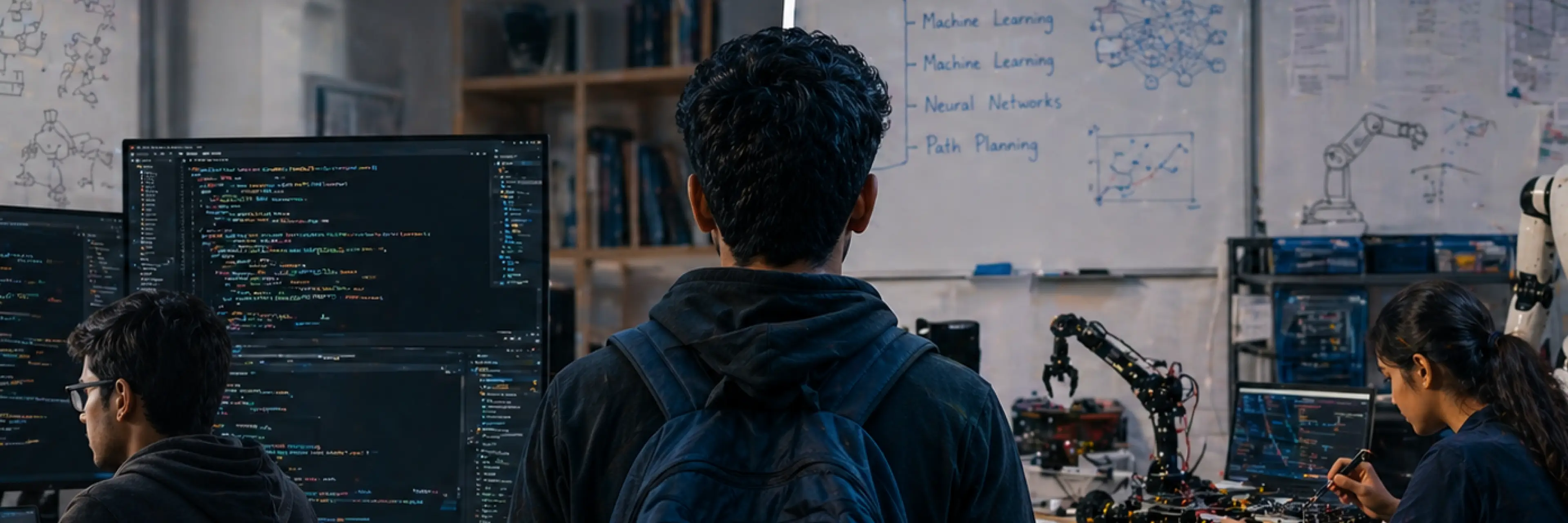
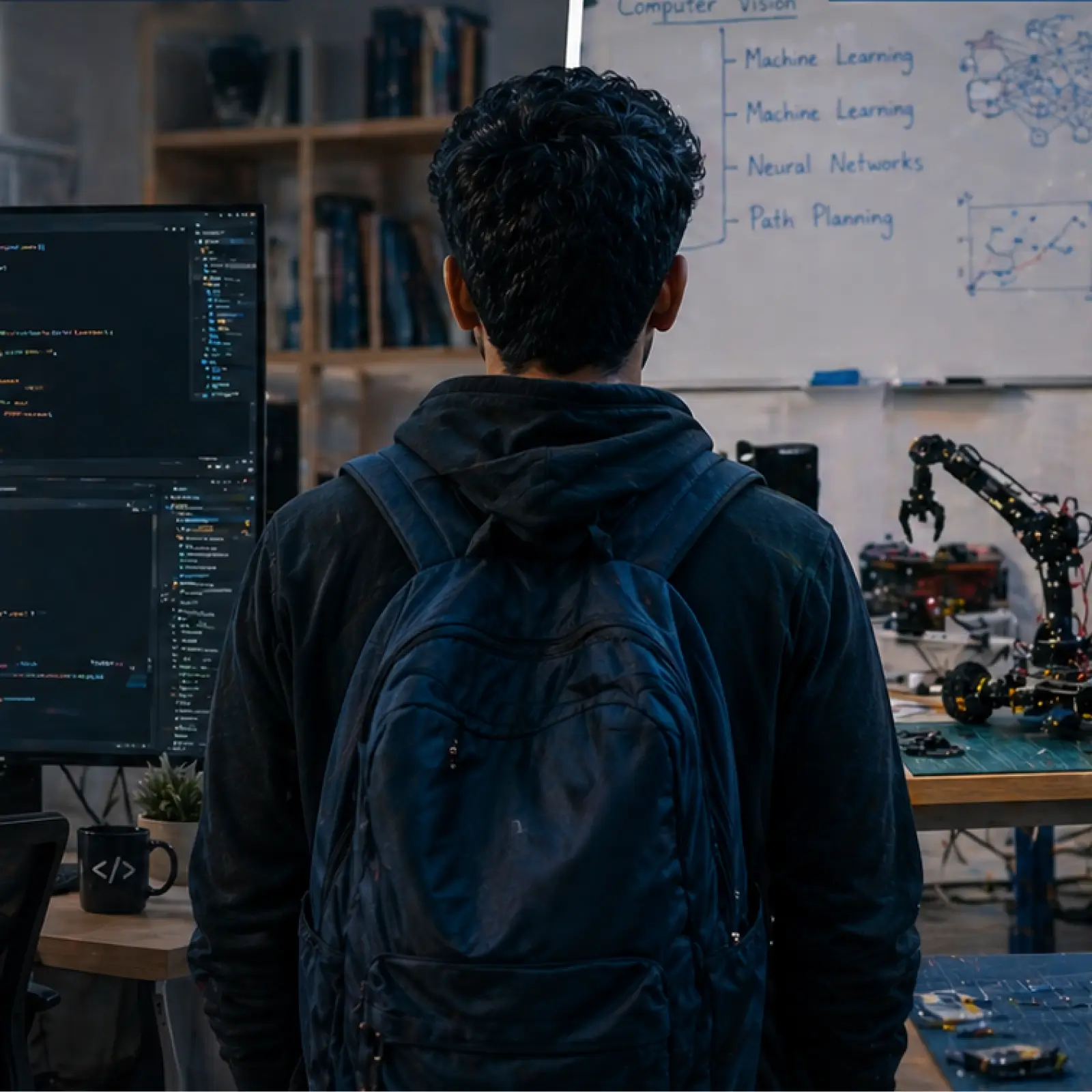
Technology has changed dramatically over the last decade. There was a time when most tech projects revolved around building websites, mobile apps, software platforms, or managing IT systems. The focus was on writing clean code, maintaining databases, securing networks, and making digital systems run faster and better. These skills are still taught in BTech in CS AI and Robotics and continue to power much of the digital world.
But technology is no longer limited to screens and software.
Today, machines are being built to see, listen, learn, and respond. Cars can detect obstacles and drive themselves. Robots can assist in surgeries with precision. Warehouses use automated machines to sort and move products. Even customer service tools can understand questions and generate responses in real time. This is where the shift begins.
The industry is moving from traditional IT and software-based projects to building intelligent systems that can make decisions and interact with the physical world. Instead of only creating software for humans to use, engineers are now creating systems that can work alongside humans or, in some cases, independently. That's why engineering education is changing too.
A traditional BTech in CS or B Tech in Computer Science still gives students a strong foundation in programming, software development, and computing systems. It remains one of the most valuable and flexible degrees in technology. At the same time, newer programs like BTech in CS, AI and Robotics are becoming increasingly relevant because they reflect where the industry is headed. These programs go beyond coding. They combine computer science with machine learning, automation, robotics, and intelligent systems. Students don't just learn how to build software. They learn how to build technology that can think, predict, and perform actions in the real world.
So the choice is no longer simply about picking the "best" degree. It's about understanding where technology is going and choosing a path that matches the kind of problems you want to solve.
Before artificial intelligence, robotics, and automation began transforming industries, the technology landscape was largely driven by traditional computing and IT systems. The biggest focus was on building software, managing infrastructure, securing data, and making digital systems faster and more reliable. Businesses needed enterprise software to run operations, banks relied on secure systems to process transactions, hospitals shifted to digital records, and retail brands built e-commerce platforms. In many ways, this was the era of software-first innovation.
To meet this demand, BTech in CS or B Tech in Computer Science became one of the most sought-after engineering degrees. It was designed to create professionals who could build and manage the digital backbone of modern industries. Students learned programming, data structures, algorithms, database management, operating systems, and computer networks. Over time, areas like cloud computing, cybersecurity, and software engineering became equally important parts of the curriculum.
What made computer science so valuable was its versatility. Graduates could work across industries like finance, healthcare, entertainment, and logistics as software engineers, developers, system architects, and IT specialists. Computer science became the foundation of the internet economy.
Even today, its relevance remains strong. Artificial intelligence and robotics still depend on core computer science principles like coding, data infrastructure, networking, and system design. But the nature of innovation is changing. Companies are no longer just building systems that process information. They are building systems that can learn from data, make decisions, and interact with the physical world. This is where traditional computer science begins to expand into fields like artificial intelligence, machine learning, and robotics.
Also read: Can I Do BTech in Artificial Intelligence after 12th Without Coding?
A traditional BTech in CS has long been the backbone of the technology industry. It teaches students how to build software, manage systems, and solve computational problems. These skills continue to be highly valuable and relevant. But technology is solving a very different set of problems today.
Companies are no longer only looking for engineers who can build websites, applications, or enterprise software. They increasingly need professionals who can create systems that think, adapt, and interact with the real world. Machines are now expected to do more than follow instructions. They are expected to understand context, learn from data, and make decisions in real time. For many modern roles, traditional computer science alone may not cover the full spectrum of skills required.
Today's intelligent systems often need to:
Think about the technologies shaping the world right now. A self-driving car needs to process visual data, predict movement, make decisions instantly, and physically navigate roads. A warehouse robot needs to identify objects, map routes, and move efficiently. A healthcare AI tool needs to analyze medical scans and detect patterns faster than humans. This is where traditional computer science begins to merge with artificial intelligence and robotics. To meet this shift, engineering education is evolving through programs like BTech in CS, AI and Robotics , which combine software expertise with intelligent systems and automation.
A BTech in CS, AI and Robotics is an interdisciplinary program designed for students who want to work at the intersection of computing, intelligence, and machine-driven action. Instead of focusing only on software systems, it prepares students to build technologies that can analyze, learn, and respond.
The course typically combines three key areas:
This remains the core of the program and gives students strong technical fundamentals.
Students learn:
This is why the program still carries the strength of a traditional B Tech in Computer Science degree.
This layer adds intelligence to software systems.
Students explore concepts such as:
This overlaps with a specialized BTech in Artificial Intelligence , B Tech Artificial Intelligence , or even B Tech CSE AI and ML / CSE AI ML curriculum.
This area focuses on bringing intelligence into the physical world.
Students learn about:
This makes it similar in scope to a BTech in Robotics , B Tech in Automation and Robotics , or BTech in Robotics and Artificial Intelligence program. Together, these disciplines create engineers who can do more than just write code. They can build systems that understand the world, make decisions, and take action. As industries continue to adopt automation and intelligent machines, AI and Robotics courses in India are becoming increasingly relevant for students looking to build future-ready careers.
For years, robots were designed to perform repetitive, rule-based tasks. They worked in controlled environments and followed fixed instructions programmed by humans. In factories, robotic arms assemble products with speed and precision. In warehouses, machines moved items from one point to another along predefined routes. These systems were efficient, but they were not intelligent. They could not adapt to change, make decisions, or respond to unexpected situations on their own. That is changing rapidly with the rise of AI in robotics .
Artificial intelligence is giving robots the ability to go beyond automation. Instead of simply following commands, robots can now analyze data, understand their surroundings, learn from patterns, and make real-time decisions. Through technologies like machine learning, computer vision, and natural language processing, robots are becoming smarter, more flexible, and far more useful in dynamic environments.
For example, warehouse robots today can detect obstacles, optimize routes, and manage inventory with minimal human intervention. Surgical robots can assist doctors with high precision by analyzing movements and improving accuracy during complex procedures. Delivery drones can calculate efficient flight paths and avoid obstacles in real time. Humanoid robots are being developed to communicate, understand commands, and perform tasks designed for human environments. Autonomous vehicles use AI to process road signs, detect pedestrians, predict traffic behavior, and navigate safely.
This shift is changing industries across the board. Manufacturing is becoming more efficient through smart automation. Healthcare is using robotic assistance for surgery and patient care. Logistics is being transformed by intelligent sorting systems and autonomous deliveries. Agriculture is adopting robots for crop monitoring and harvesting. Even defense and space exploration are increasingly dependent on AI-driven robotic systems.
As this technology continues to grow, the demand for professionals who understand both artificial intelligence and robotics is rising sharply. This is one reason why AI and Robotics courses in India , including programs like BTech in Robotics and Artificial Intelligence , are gaining so much attention. These programs prepare students not just to work with machines, but to build the next generation of intelligent systems that can operate in the real world.
Choosing between a traditional BTech in CS and a specialized BTech in CS, AI and Robotics often comes down to the kind of technology you want to work with and the kind of problems you want to solve. Both programs share a strong technical foundation, but their focus and career direction can be quite different.
A traditional B Tech in Computer Science is built around software, systems, and computation. It prepares students to design, develop, and manage digital products and platforms. A BTech in CS, AI and Robotics goes a step further by combining software development with machine intelligence, automation, and robotics. It is designed for students who want to work on technologies that can learn, adapt, and interact with the physical world.
Here's a clearer comparison:
BTech in CS
BTech in CS, AI and Robotics
BTech in CS
Students primarily work with:
BTech in CS, AI and Robotics
Students work with:
This makes it closer to programs like B Tech CSE AI and ML , CSE AI ML , or BTech in Robotics and Artificial Intelligence .
BTech in CS
Common career paths include:
BTech in CS, AI and Robotics
Common career paths include:
BTech in CS
Prepares students for industries focused on:
BTech in CS, AI and Robotics
Prepares students for industries such as:
So, which one should you choose?
There is no single "better" option. The right choice depends on your interests and long-term career goals. If you want a broad foundation in technology, BTech in CS remains a strong choice. If you want to work on the next generation of intelligent systems, BTech in CS, AI and Robotics can give you a more specialized edge.
The future of technology will not be built by specialists working in isolation. The most impactful innovations today are created where multiple disciplines come together. A self-driving car, for example, is not just a software project. It needs computer science for coding and system architecture, artificial intelligence for decision-making, robotics for movement and navigation, design for user interaction, and business strategy for market adoption. The same applies to smart healthcare devices, automated factories, intelligent logistics systems, and even AI-powered consumer apps.
As technology becomes more integrated into everyday life, companies are looking for professionals who can think beyond one area of expertise. They need engineers who understand software but can also work with data, automation, hardware, and intelligent systems. These hybrid engineers are often better equipped to solve complex real-world problems because they can connect ideas across domains and collaborate effectively with cross-functional teams.
This is why interdisciplinary learning is becoming increasingly important. The future will favor professionals who are not only technically skilled, but also adaptable, innovative, and comfortable working at the intersection of technology, design, and business.
Technology is no longer evolving in isolated streams. The lines between software, artificial intelligence, automation, and robotics are becoming increasingly blurred. While a traditional BTech in CS continues to offer a strong and versatile foundation in computing, programs like BTech in CS, AI and Robotics reflect the direction in which the industry is moving. They prepare students to build not just software, but intelligent systems that can learn, adapt, and interact with the world around them.
The right choice ultimately depends on your interests, strengths, and career goals. If you are passionate about coding, software systems, and broad career flexibility, B Tech in Computer Science remains a valuable path. If you are drawn to emerging technologies, intelligent machines, and the future of automation, a specialized program in AI and robotics may offer a stronger edge.
As industries continue to adopt smarter technologies, the need for engineers who can think across disciplines will only grow. Choosing a program that combines strong fundamentals with future-ready skills can make all the difference.
For students exploring an education that goes beyond conventional engineering and embraces innovation, interdisciplinary learning, and real-world application, institutions like ATLAS University's UGDx School of Technology are shaping the next generation of problem-solvers and creators in technology.
BTech in CS, AI and Robotics is an interdisciplinary engineering program that combines core computer science with artificial intelligence and robotics. Students learn how to build software systems, train machine learning models, and develop intelligent machines that can sense, think, and act in real-world environments. It blends coding, automation, and hardware interaction into one integrated course.
The main difference lies in focus. BTech CS AI and Robotics includes both software intelligence and physical systems like robots, sensors, and automation. It prepares students to work on machines that interact with the real world. On the other hand, BTech CS AI and ML focuses more on data, algorithms, and building intelligent software systems, without much emphasis on hardware or robotics.
The program usually covers a mix of computer science fundamentals, artificial intelligence, and robotics. Key subjects include programming, data structures, algorithms, machine learning, deep learning, computer vision, natural language processing, embedded systems, sensors, control systems, and automation. This combination helps students understand both software logic and physical system design.
Graduates can explore careers in multiple high-growth areas such as AI engineering, robotics engineering, machine learning engineering, automation engineering, computer vision roles, and IoT development. Opportunities also exist in industries like healthcare technology, smart manufacturing, autonomous systems, logistics automation, and research and development.
Yes, robotics engineering is a strong and growing career option in India in 2025. With increasing use of automation in manufacturing, logistics, healthcare, and even consumer technology, demand for robotics professionals is rising steadily. Companies are investing in intelligent systems that can reduce manual effort and improve efficiency, making skilled robotics engineers highly relevant in the current job market.