


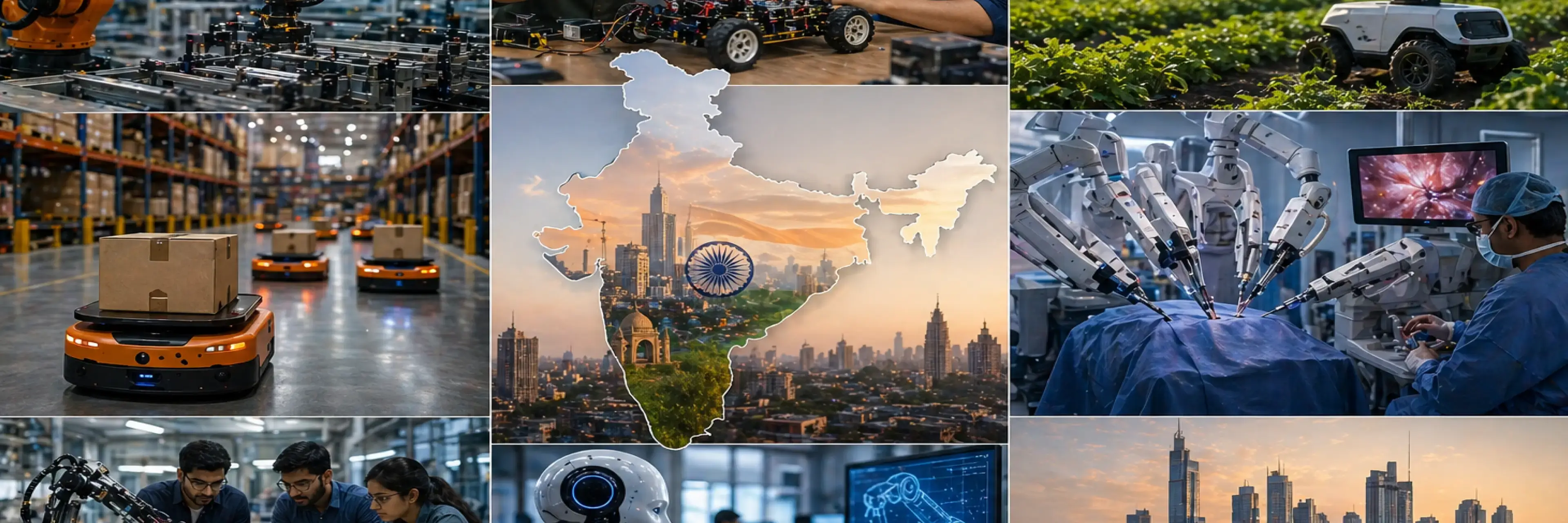
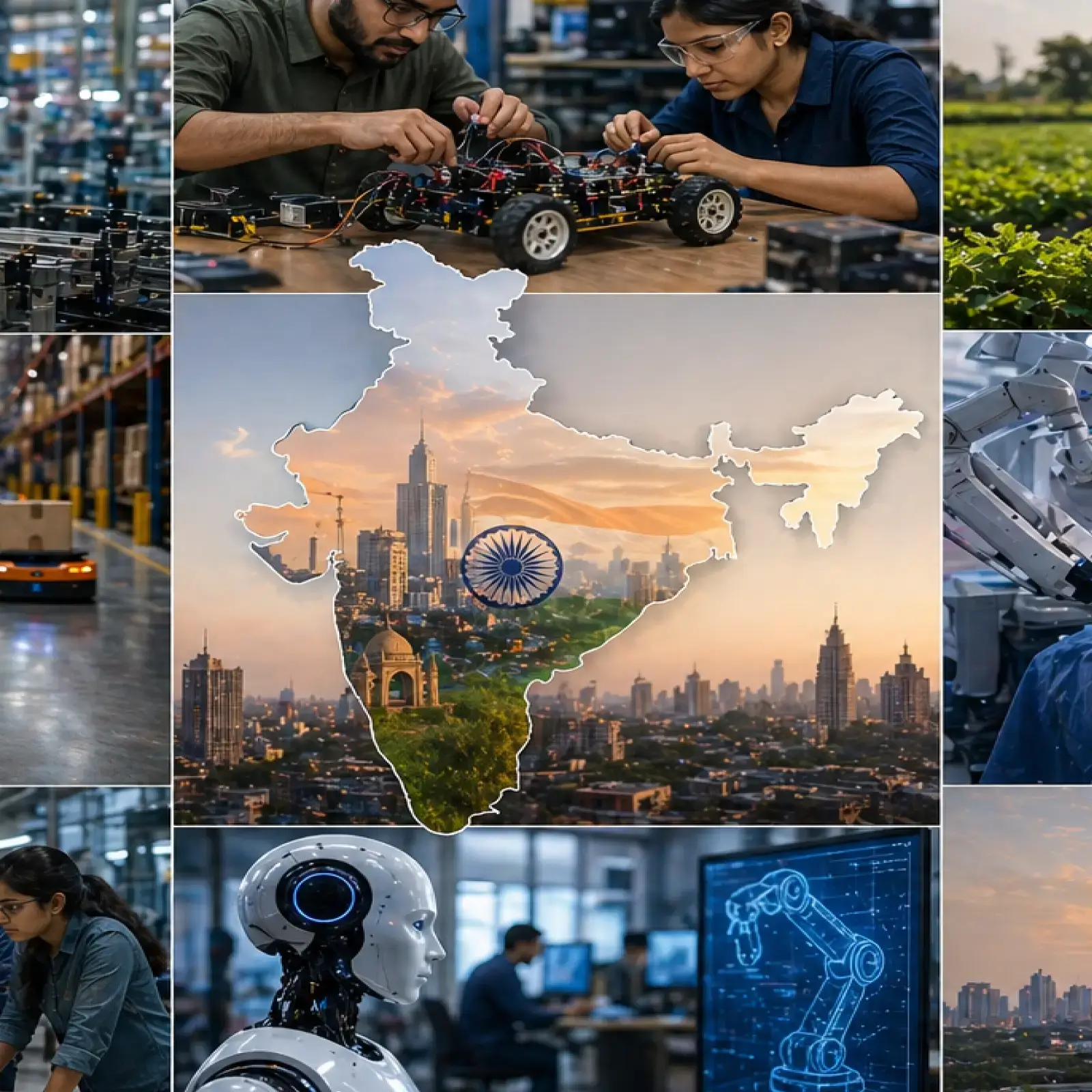
Btech in Robotics in India is no longer a distant concept discussed in innovation labs or futuristic boardrooms. It is already becoming central to the country's industrial and economic transformation. By 2026, robotics is not just about automating repetitive tasks. It is about building smarter, faster, and more resilient systems across industries.
Take manufacturing, for example. Indian factories are increasingly adopting robotic systems for assembly, packaging, welding, and quality control to improve precision and reduce downtime. In healthcare, robotic-assisted surgeries, AI-powered diagnostics, and automated monitoring systems are improving both accuracy and efficiency. In logistics and e-commerce, robotics is streamlining warehousing operations through automated sorting, picking, and inventory management to meet rising delivery demands. Even sectors like agriculture, defense, and infrastructure are integrating robotics for surveillance, monitoring, and operational support.
This shift is being driven by necessity as much as innovation. India is one of the world's fastest-growing digital economies, and industries are under pressure to deliver faster, reduce costs, and operate with greater precision. Robotics helps businesses optimize productivity, address labour shortages in specialized roles, and improve safety in high-risk environments. What makes India's robotics growth story compelling is the convergence of multiple forces.
First, India has one of the world's largest pools of young engineering talent. As students increasingly pursue programs such as btech in robotics , btech in robotics and artificial intelligence , btech in ai and robotics , b tech automation and robotics , and b tech robotics engineering , the workforce is becoming more aligned with future industry needs.
Second, artificial intelligence is expanding the capabilities of robotics systems. Traditional automation could only perform predefined actions. Today, robotics and AI engineering and robotics and artificial intelligence engineering allow machines to process data, adapt to changing environments, and make decisions in real time.
Third, initiatives like Make in India, Digital India, and PLI schemes are accelerating local innovation and supporting the rise of robot manufacturing companies in India .
The real perspective is this: India is not just adopting robotics to catch up. It is entering a phase where it can shape the future of robotics innovation. With its scale, talent pool, startup ecosystem, and industrial demand, India has the potential to become a global hub for robotics development and deployment. For students exploring the robotics and automation engineering scope in 2026 and beyond, this is more than a career path. It is an opportunity to be part of a field that will redefine industries and everyday life in the years ahead.
For years, automation in India was largely limited to repetitive, rule-based industrial tasks such as assembly-line production, packaging, and machine operations. These systems were efficient, but they lacked flexibility and intelligence. They could perform predefined functions, but they could not adapt, learn, or respond to changing environments.
Today, that reality is changing rapidly. Robotics in India is moving beyond simple automation into a new era of intelligent, adaptive, and data-driven systems. Modern robots are no longer just programmed to execute commands. They are designed to analyse data, learn from patterns, predict failures, and improve efficiency over time. This shift is transforming robotics from a support tool into a strategic business asset.
For instance, in manufacturing, AI-enabled robots can identify defects in real time and adjust operations instantly. In logistics, autonomous robots can optimize warehouse routes based on demand fluctuations. In healthcare, robotic systems assist in precision surgeries and AI-led diagnostics. These applications show how robotics is no longer limited to performing tasks, but is now enabling smarter decision-making. This transformation is being powered by the convergence of robotics and AI engineering and robotics and artificial intelligence engineering . Robotics is no longer a purely mechanical discipline. It now sits at the intersection of software development, machine learning, electronics, sensor technologies, and real-time decision systems.
As industries embrace intelligent automation, the demand for skilled professionals is rising steadily. Students pursuing programs such as btech in robotics , btech in ai and robotics , btech in robotics and artificial intelligence , b tech automation and robotics , and b tech robotics engineering are entering a field with growing relevance across industries.
India's robotics moment is not just about replacing manual work. It is about creating smarter systems, unlocking industrial efficiency, and positioning the country as a leader in the next generation of intelligent technology.
The robotics and automation engineering scope in India is expanding rapidly as industries adopt smarter, faster, and more efficient systems. What was once seen as a niche branch of engineering is now becoming central to how businesses operate, innovate, and scale.
Today, robotics is not limited to factory floors or assembly lines. It is influencing sectors as diverse as healthcare, logistics, agriculture, automotive, aerospace, defense, and smart infrastructure. As automation becomes more intelligent and AI-driven, the role of robotics engineers is evolving from machine operators to system architects and innovation leaders.
A degree in robotics and AI engineering or robotics and artificial intelligence engineering opens doors to a wide range of career opportunities across technical, strategic, and entrepreneurial roles.
Some of the most in-demand career paths include:
Beyond job roles, robotics is also creating opportunities in emerging areas such as:
For students pursuing btech in robotics , btech in robotics and artificial intelligence , btech in ai and robotics , b tech automation and robotics , or b tech robotics engineering , the future is no longer limited to traditional engineering jobs.
The real opportunity lies in becoming a problem-solver who can combine software, hardware, data, and design to build intelligent systems for the real world. In the coming years, the robotics and automation engineering scope will continue to expand as India strengthens its position as a global innovation and manufacturing hub.
Robotics is no longer confined to a single branch of engineering. Building intelligent systems today requires expertise across multiple disciplines, from mechanical design and electronics to coding, artificial intelligence, data analytics, and automation. A robot may have a physical structure built through mechanical engineering, sensors powered by electronics, software developed through computer science, and decision-making capabilities driven by AI. Without understanding how these systems work together, innovation remains limited.
This is why interdisciplinary learning has become essential in modern education. A successful professional in robotics and AI engineering must think beyond technical silos and approach problems with a broader, solution-oriented mindset. They need to understand not only how to build technology, but also how to apply it in real-world business and industrial environments.
At institutions like ATLAS SkillTech University, students pursuing btech in robotics , btech in ai and robotics , or btech in robotics and artificial intelligence are exposed to this integrated way of learning. Through hands-on projects, industry collaborations, and experiential learning, they gain practical skills that prepare them to lead in the fast-evolving world of intelligent technology.
As India accelerates toward a more technology-driven economy, robotics is expected to evolve far beyond industrial automation. By 2026 and beyond, the focus will shift toward smarter, more intelligent, and more accessible robotic systems that can transform industries at scale. Three major trends are likely to shape the next phase of growth.
The future of robotics is not about replacing human workers but enhancing their capabilities. Collaborative robots, or cobots, are being designed to work alongside people in factories, warehouses, hospitals, and even offices. These systems can handle repetitive, physically demanding, or high-risk tasks, allowing humans to focus on decision-making, creativity, and complex problem-solving. This collaboration can improve productivity, reduce workplace injuries, and create more efficient operations.
The next generation of robots will be powered by artificial intelligence. Instead of simply following programmed instructions, these systems will analyse data, adapt to changing environments, and make decisions in real time. From autonomous warehouse robots to AI-assisted surgical systems and self-operating vehicles, robotics and AI engineering is driving a shift toward machines that are smarter, faster, and more responsive.
India's startup ecosystem is playing a major role in shaping the future of robotics. A growing number of deep-tech startups are building specialized solutions for industries such as healthcare, agriculture, logistics, defense, and manufacturing. As investment and demand increase, these startups will drive innovation, create jobs, and expand the robotics and automation engineering scope across emerging sectors.
Together, these trends position India to become not just a user of robotics technology, but a global leader in developing and deploying intelligent systems.
Robotics in India is no longer an emerging trend waiting for adoption. It is already transforming industries, redefining operations, and shaping the future of work. From manufacturing and healthcare to logistics, defense, and agriculture, intelligent robotics is creating faster, safer, and more efficient systems across sectors.
As technologies like artificial intelligence, machine learning, and automation continue to evolve, the demand for professionals with expertise in robotics and artificial intelligence engineering will only grow stronger. For students exploring the robotics and automation engineering scope , this is more than just a career path. It is an opportunity to contribute to innovations that can solve real-world challenges and shape the future of industries.
Building a successful career in this space requires more than technical knowledge. It requires interdisciplinary thinking, practical exposure, and an understanding of how technology intersects with business and society. Institutions that combine experiential learning with industry relevance can help bridge that gap.
For students looking to take the next step, UGDx at ATLAS SkillTech University offers a future-focused learning environment designed to prepare young innovators for careers in technology, design, and entrepreneurship. In a field moving as fast as robotics, the right foundation can make all the difference.
Several robot manufacturing companies in India are driving innovation across industrial automation, healthcare, logistics, and AI-led robotics. Companies like Tata Elxsi, Systemantics, Addverb Technologies, GreyOrange, and Gridbots are developing advanced robotic solutions for both Indian and global markets.
Robotics is widely used in manufacturing, healthcare, logistics, agriculture, defense, and automotive sectors. The growing robotics and automation engineering scope in these industries is driven by the need for efficiency, precision, and smarter operations.
Yes, robotics and artificial intelligence engineering is a promising career in India in 2026 due to rising demand for automation, AI integration, and smart systems across industries. It offers opportunities in design, development, AI, and industrial automation roles.
The future of robotics and AI engineering in India looks strong, with increasing adoption in smart manufacturing, healthcare, autonomous systems, and startup-led innovation. India has the potential to become a major global hub for robotics development.
For students pursuing btech in robotics, btech in robotics and artificial intelligence, or btech in AI and robotics, India's robotics industry offers roles in automation engineering, AI development, machine learning, robotics design, and research across fast-growing sectors.