


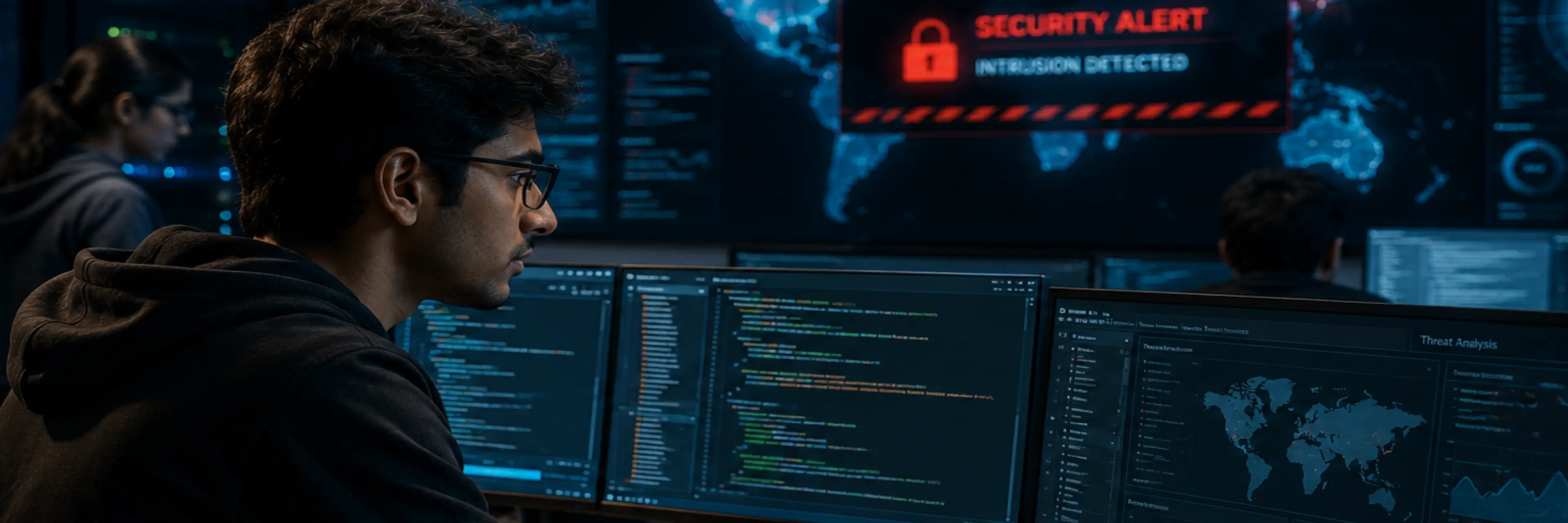

For years, technology was largely viewed as a tool for convenience and efficiency. Today, it has become the foundation of how economies function, businesses operate, and societies stay connected. From banking and healthcare to AI systems and smart infrastructure, nearly every sector now depends on digital ecosystems. But as digital dependence increases, so do digital risks. Btech Cybersecurity is no longer a niche IT function operating quietly in the background. A single cyberattack today can disrupt businesses, expose sensitive data, affect public trust, and create large-scale financial consequences. As a result, organizations are beginning to view cybersecurity not just as technical protection, but as a critical part of long-term resilience and growth. This shift is also changing how students think about technology careers.
Interest in programs like BTech in Cybersecurity has grown rapidly because the field sits at the intersection of technology, problem-solving, digital ethics, and innovation. In India especially, the demand is accelerating alongside the country's expanding digital economy. As fintech, AI, cloud computing, and connected systems continue to scale, the scope of cyber security in India is becoming significantly broader across industries.
This has led many students to explore specialized programs such as B Tech CSE Cyber Security and emerging interdisciplinary fields like B Tech CSE Cyber Security and Forensics , where cybersecurity combines with digital investigation and threat intelligence. What makes the field particularly dynamic is that cybersecurity education today goes far beyond traditional coding. Modern cyber security subjects in BTech increasingly include ethical hacking, cloud security, cryptography, digital forensics, AI-driven security systems, and cyber law. These evolving B Tech cyber security subjects reflect how rapidly the industry itself is changing.
Naturally, this raises an important question for students and parents alike: Is cyber security a good career in India? The answer lies not only in rising job demand, but in the growing reality that every digital industry now depends on secure systems to function and scale.
India's digital economy is expanding at a remarkable pace. From digital payments and cloud computing to AI-driven platforms and smart infrastructure, technology is becoming deeply embedded in how businesses and institutions function. But with this rapid transformation comes a parallel challenge: securing digital ecosystems that are becoming larger, more complex, and more vulnerable.
This is one of the biggest reasons why the scope of cyber security in India is growing so quickly across industries.
Cybersecurity today is no longer limited to preventing isolated data breaches. Organizations now need professionals who can protect systems, monitor threats in real time, secure customer data, and respond to increasingly sophisticated cyberattacks. As businesses continue digitising operations, cybersecurity is shifting from an IT requirement to a business-critical priority.
This rising demand is also influencing higher education, with more students exploring programs like BTech in Cybersecurity to build future-ready technology careers.
India is among the world's fastest-growing digital markets. Millions of users rely on online banking, e-commerce, healthcare apps, cloud platforms, and connected devices every day. Enterprises are also rapidly adopting automation and AI-powered technologies to improve efficiency and scale operations. However, greater connectivity also creates more entry points for cyber threats.
Every payment gateway, mobile application, enterprise server, or cloud database carries potential security risks if not protected properly. This growing dependence on digital infrastructure has significantly increased the demand for trained cybersecurity professionals. As a result, many students are now considering specialized programs like B Tech CSE Cyber Security , which combine core computer science knowledge with advanced digital security concepts.
Cyberattacks today are far more advanced than they were a decade ago. Businesses are dealing with ransomware attacks, AI-generated phishing scams, identity theft, cloud vulnerabilities, and large-scale data breaches. Modern cybersecurity professionals are therefore expected to do much more than basic system monitoring. They need to think strategically, investigate threats, anticipate vulnerabilities, and understand how digital systems interact across industries.
This shift is also influencing engineering education. Modern cyber security subjects in BTech now increasingly include ethical hacking, cloud security, cryptography, malware analysis, and threat intelligence to prepare students for evolving industry demands.
As digital platforms handle larger volumes of sensitive consumer and business data, conversations around privacy, compliance, and digital trust are becoming more important. Organizations today are expected not only to store data securely, but also to comply with evolving cybersecurity frameworks and regulations. This has created growing demand for professionals who understand digital governance, cyber law, risk assessment, and cyber forensics.
That is why interdisciplinary programs like B Tech CSE Cyber Security and Forensics are attracting increasing attention. These programs combine technical cybersecurity expertise with investigative and analytical skills that are becoming highly valuable in today's digital economy.
One of the biggest reasons students are considering cybersecurity seriously is because the field is expected to remain relevant for decades. As emerging technologies like AI, IoT, blockchain, and cloud computing continue evolving, the need for secure systems will only increase.
This has also expanded the range of career opportunities available after studying B Tech cyber security subjects in modern engineering programs. Students today can explore roles in ethical hacking, cloud security, digital forensics, cyber intelligence, compliance, and AI-driven security systems. For many students evaluating future-ready technology careers, the question is no longer simply "Is cyber security a good career in India?" Increasingly, the conversation is shifting toward how essential cybersecurity will become to the future of every digital industry.
Also Read : Programming Languages in B Tech CSE Cyber Security
The conversation around cybersecurity is no longer limited to whether the industry is growing. The more important question today is how deeply cybersecurity is becoming integrated into the future of every sector. As India rapidly expands its digital infrastructure across finance, healthcare, e-commerce, manufacturing, governance, and AI-driven technologies, the need for secure digital systems is increasing at an equally fast pace. This is one of the biggest reasons why more students are now asking: Is cyber security a good career in India?
The answer lies in both industry demand and long-term relevance.
Unlike many technology trends that fluctuate with market cycles, cybersecurity has become a foundational requirement for modern businesses. Every organization that operates digitally, whether it is a startup, multinational corporation, bank, or government institution, needs professionals who can secure networks, protect sensitive information, identify vulnerabilities, and respond to evolving cyber threats.
What also makes the field particularly attractive is the diversity of opportunities it offers. Students pursuing a BTech in Cybersecurity or related programs such as B Tech CSE Cyber Security are no longer restricted to conventional IT roles. Today, the industry includes career pathways in ethical hacking, cyber forensics, cloud security, digital risk management, threat intelligence, compliance, AI security, and cybersecurity consulting.
Another reason the field stands out is its dynamic nature. Cybersecurity evolves continuously because technology itself evolves continuously. Professionals working in this domain are constantly adapting to new tools, attack patterns, regulations, and digital systems. For students who enjoy analytical thinking, problem-solving, and working with emerging technologies, this creates a career path that remains intellectually engaging over time.
At the same time, industry expectations are changing. Companies are increasingly looking for professionals who not only understand technical systems but can also think strategically, collaborate across teams, and solve real-world security challenges. This is why modern engineering programs are integrating advanced cyber security subjects in BTech curricula with practical exposure, interdisciplinary learning, and industry-driven experiences.
In many ways, cybersecurity is no longer simply another engineering specialization. It is becoming one of the key pillars supporting the future digital economy.
Also Read : Top Emerging Careers in Commerce after 12th
A modern BTech in Cybersecurity goes far beyond traditional computer science education. As digital systems become more interconnected and cyber threats more sophisticated, universities are increasingly designing programs that combine technical expertise with practical problem-solving and real-world exposure. Students pursuing B Tech CSE Cyber Security are not only taught how digital systems function, but also how to secure them against evolving risks across industries. The curriculum is designed to build both foundational engineering knowledge and specialized cybersecurity capabilities through subjects and experiences such as:
These evolving cyber security subjects in BTech programs reflect how dynamic the industry has become. Alongside technical knowledge, students are also encouraged to develop analytical thinking, adaptability, and strategic problem-solving skills, which are increasingly important in modern cybersecurity roles.
As India continues building a digitally connected economy, cybersecurity is becoming far more than a specialized technology function. It is emerging as a critical pillar that supports business continuity, digital trust, innovation, and national resilience. From AI systems and cloud infrastructure to fintech platforms and smart technologies, every sector today depends on secure digital ecosystems to operate and grow responsibly.
This is what makes a BTech in Cybersecurity particularly relevant for the next generation of technology professionals. The field offers not only strong career potential, but also the opportunity to work on real-world challenges that shape how the digital future functions. With the growing scope of cyber security in India , students entering this domain are stepping into an industry that is expected to remain essential across sectors for years to come.
At the same time, the future of cybersecurity will require more than technical expertise alone. It will demand interdisciplinary thinking, adaptability, ethical awareness, and the ability to solve complex problems in fast-changing environments. This is where institutions like ATLAS SkillTech University stand out by combining experiential learning, industry integration, innovation, and future-focused education to prepare students for evolving technology careers.
In many ways, cybersecurity is no longer just about protecting systems. It is about enabling the future to function securely, responsibly, and at scale.
Yes, cybersecurity is expected to remain one of the fastest-growing tech careers in India in 2026. As businesses, banks, healthcare systems, and government services become more digital, the demand for cybersecurity professionals continues to rise. The growing scope of cyber security in India is creating opportunities across ethical hacking, cloud security, cyber forensics, and threat intelligence.
After completing a BTech in Cybersecurity or B Tech CSE Cyber Security, students can explore roles such as Cybersecurity Engineer, Ethical Hacker, Security Analyst, Penetration Tester, Cloud Security Specialist, Cyber Forensics Analyst, SOC Analyst, and Information Security Consultant. These roles are in demand across IT, fintech, healthcare, consulting, and government sectors.
A traditional CSE degree offers broader computer science exposure, while a BTech in Cybersecurity focuses specifically on digital security, ethical hacking, and cyber defense. For students interested in security-focused careers, programs like B Tech CSE Cyber Security or B Tech CSE Cyber Security and Forensics can provide more specialized industry knowledge.
Entry-level cybersecurity professionals in India may earn around ₹4–8 LPA depending on skills, certifications, and company type. Professionals with expertise in cloud security, cyber forensics, or ethical hacking often see strong salary growth as they gain experience.
Government organizations hiring cybersecurity graduates include CERT-In, DRDO, NIC, ISRO, public sector banks, MeitY, and defence and cybercrime agencies. As digital security becomes a national priority, demand for cybersecurity professionals in the public sector is also growing.