






Apply NowSchedule a visit

B.Tech in CS, AI & ML

Build intelligent systems and shape the future of technology.
Next Cohort
July 2026
Format
4 Years, Full time

The ATLAS uGDX B.Tech Experience

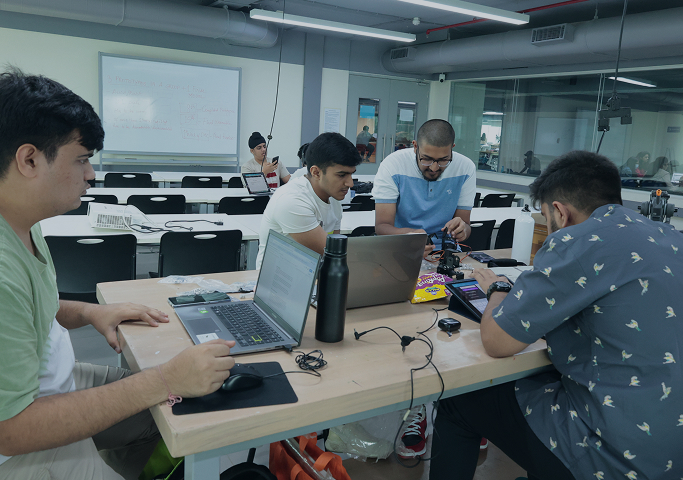
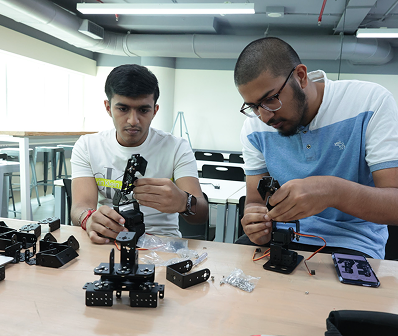
The B.Tech programs in ATLAS immerses you in technology from day one - through hands-on coding, real-world projects, and industry-integrated learning that build the skills to innovate and lead in the digital world.

Multidisciplinary
Tech Education
Learn AI/ML alongside electives in design and management, applying your skills through a semester-long internship.
Master classes by industry leaders
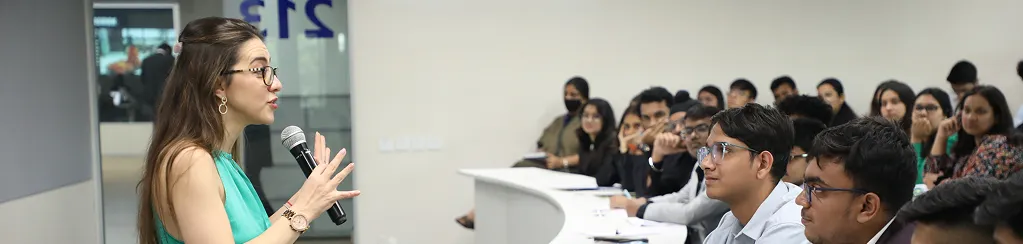
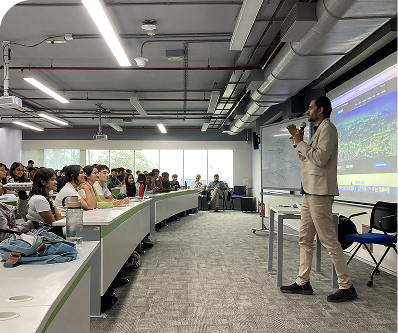
Learn directly from global technology experts, CTOs, and industry innovators.
NEP 2020
Integrated
Hundreds of hours of coding practice and training to master writing clean, scalable code.
Experiential &
Hands-on learning
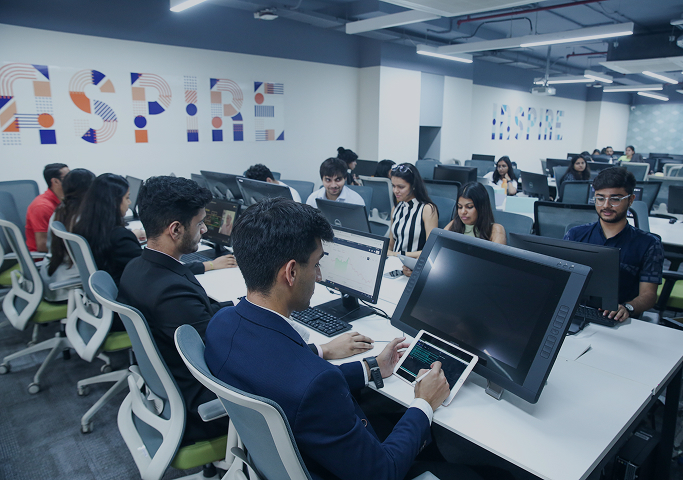
Apply classroom concepts to live projects and real-world problem solving.
Curriculum co-created with industry
Study a curriculum designed with leading CTOs to stay aligned with industry needs.
Entrepreneurship hub
Get mentorship and support from Venture Labs to build and launch your own tech startup.
Urban campus experience
Thrive in a modern, high-tech learning environment with state-of-the-art infrastructure.
Career services
Apply classroom concepts to live projects and real-world problem solving.

Why Choose B.Tech in CS, AI & ML at ATLAS uGDX

Master Advanced AI & ML Skills

Learn to program intelligent algorithms and develop solutions that power automation, prediction, and decision-making across industries.
01

Develop competencies to build tech startups

Understand how technology, innovation, and entrepreneurship intersect - and how to turn ideas into viable ventures.
02

Create compelling tech experiences through design

Apply design thinking to craft intuitive, user-centered digital products that solve complex problems.
03

Learn to apply technology in real industry contexts

Work on live projects and challenges with leading companies, gaining practical exposure and problem-solving experience.
04

Learn to lead in a global AI-driven world

Graduate with the technical depth, business acumen, and global perspective to shape the future of technology.
05

A Curriculum Designed for the Future

Built on the ‘Goal for Each Term’ (GET) philosophy, our curriculum ensures every semester has a clear, outcome-driven focus; continuously evolving with emerging technology trends and the learning needs of our students.

Semester 1

Become a Game Developer
This semester introduces the foundational principles of programming, mathematics, and digital communication essential for aspiring game developers. Students build analytical skills, explore computation, and begin creative problem-solving through simulation and game design.
Introduction to Computer Science & Programming 1
Provides a hands-on introduction to computational thinking and programming fundamentals.
Calculus 1
Introduces foundational mathematical concepts and techniques for modeling and problem-solving in AI and design.
Foundations of Statistics & Probability for AI & ML
Covers statistical reasoning and probabilistic methods essential for machine learning and AI applications.
Databases & SQL
Teaches principles of database design, querying, and management using SQL for data-driven projects.
Chemistry
Explores basic chemical principles and their applications in technology, materials, and interactive systems.
Communication Skills for Digital World
Enhances written and verbal communication tailored for digital, academic, and professional contexts.
ATLAS Electives
Offers interdisciplinary elective courses that combine technology, design, and creative innovation.
Simulation/Computer Game Design (Pinnacle I)
Develops computational design skills through interactive simulations blending programming, logic, and visual storytelling.

Semester 2

Become a Data Analyst
This semester strengthens computational, mathematical, and analytical thinking skills essential for data-driven decision-making. Students explore algorithms, modeling, and applied projects that bridge science, programming, and real-world data interpretation.
Introduction to Computer Science and Programming 2
Advances coding proficiency through structured programming, data types, and modular problem-solving.
Mathematics for Computer Science
Explores discrete mathematics, logic, and combinatorics vital for computational systems design.
Calculus 2
Extends integral and differential calculus applications in modeling and engineering systems.
Physics
Covers mechanics, electromagnetism, and thermodynamics to strengthen scientific grounding in computational systems.
Statistical Modeling
Focuses on building and interpreting predictive models using regression and probabilistic analysis.
Indian Health Sciences
Examines traditional health knowledge systems and their relation to technology, ethics, and data innovation.
Expository Writing
Develops clarity, structure, and critical reasoning in technical and analytical writing.
ATLAS Electives
Offers cross-domain learning to build interdisciplinary competence and creativity.
Data Analyst Project (Pinnacle II)
Applies statistical and computational techniques to analyze real datasets and visualize insights.

Semester 3

Become a Data Scientist
This semester delves into the computational and mathematical core of data science, emphasizing machine learning, data structures, and large-scale storage systems. Students build a strong foundation in algorithmic thinking and learn to derive insights from structured and unstructured data through practical, interdisciplinary applications.
Machine Learning Foundations
Covers supervised and unsupervised learning algorithms, model training, and evaluation techniques.
Computer Organization and Architecture
Explores system architecture, hardware components, and memory organization for computational efficiency.
Linear Algebra
Builds conceptual understanding of matrices, vectors, and transformations used in machine learning.
Data Structures
Introduces efficient data storage, manipulation, and algorithm optimization for problem-solving.
Unstructured Data, NoSQL, and Storage Techniques
Focuses on handling big data using NoSQL databases and distributed storage solutions.
Model Thinking
Applies mathematical and conceptual models to understand patterns in data and complex systems.
Foundational Literature of Indian Civilization
Examines Indian philosophical, cultural, and intellectual traditions with modern contextual relevance.
ATLAS Electives
Applies machine learning to advanced scientific domains through real-world research projects.
Machine Learning: Astrophysics, Particles, Drug Design (Pinnacle III)
Applies machine learning to advanced scientific domains through real-world research projects.

Semester 4

Become an ML Engineer
This semester advances machine learning mastery with a focus on scalable systems, algorithms, and automated data operations. Students gain hands-on experience integrating DevOps and MLOps practices while developing enterprise-level AI solutions that address real-world business and technological challenges.
Advanced Machine Learning
Explores deep neural networks, reinforcement learning, and optimization techniques for complex AI systems.
Introduction to Algorithms
Builds understanding of algorithmic logic, efficiency, and problem-solving strategies in computing.
Operating Systems and Networks
Covers fundamentals of OS architecture, process management, and computer networking protocols.
Large-Scale Data Storage
Teaches distributed databases, cloud storage, and scalable data management techniques.
Software Development Lifecycle, DevOps and MLOps
Integrates DevOps practices into ML workflows to enhance deployment and reliability.
Data Engineering Operations
Focuses on pipeline automation, data cleaning, and transformation for ML readiness.
Business Plan Writing
Develops entrepreneurial thinking through strategic, financial, and innovation-driven project planning.
ATLAS Electives
Encourages multidisciplinary exploration to expand creative and technical skill sets.
An Enterprise Grade AI Application: Recommendation Engines for OTT Platforms (Pinnacle IV)
Applies ML algorithms to build intelligent recommendation systems for personalized media platforms.

Semester 5

Become a Digital Technology Engineer
This semester integrates AI, cloud systems, and digital innovation to prepare students for high-impact engineering roles. Learners explore intelligent automation, entrepreneurship, and modern computing applications, culminating in the design of connected autonomous systems using deep learning and real-world data.
Reinforcement Learning and NLP
Master the art of making big-picture decisions. Learn how to evaluate competition, allocate resources, and plan for long-term business success in volatile environments.
Computer Vision and Deep Learning
Focuses on enabling machines to interpret and process visual information from the world.
Advanced Algorithms
Develops efficiency and complexity analysis skills for solving high-level computational problems.
Emerging Technologies
Explores next-gen digital trends like IoT, quantum computing, and immersive tech ecosystems.
Cloud Application Development
Explores cloud infrastructure, APIs, and deployment pipelines for scalable AI-based applications.
Entrepreneurship Development
Encourages innovation through idea validation, resource planning, and tech-based business creation.
Academic Research Writing
Builds research methodologies and technical writing skills for academic and industrial use.
Enterprise Grade Connected Device Application: Self-Driving Cars (Pinnacle V)
Applies AI, robotics, and cloud systems to develop functional models for autonomous vehicles.

Semester 6

Become a Cyber Security Engineer
This semester focuses on building expertise in system security, blockchain, and ethical coding. Students gain the ability to develop, optimize, and secure digital systems through encryption techniques, AI integration, and real-world cybersecurity practices. It combines advanced coding, data protection, and digital literacy to create future-ready security professionals.
Secure Coding
Emphasizes writing robust code that prevents vulnerabilities, exploits, and data breaches.
Project Life Cycle Management
Covers planning, execution, and evaluation stages in engineering and software projects.
Numeric Optimization Techniques
Teaches mathematical optimization methods used in algorithms, AI, and data modeling.
Recent Advances and Challenges in AI
Explores breakthroughs in AI technologies with focus on ethics and implementation barriers.
UI/UX Development
Introduces principles of user-centered design for intuitive digital interfaces and systems.
Cybersecurity and Blockchain
Explains cryptographic systems, network defense, and blockchain’s role in secure transactions.
Digital Culture and Language
Examines the intersection of digital communication, societal change, and global connectivity.
Build Your Own Encryption Software (Pinnacle VI)
Applies cryptographic principles to design and deploy a custom encryption solution.

Semester 7

Become an AI Entrepreneur
This semester empowers students to merge artificial intelligence with innovation and entrepreneurship. It builds advanced technical, ethical, and strategic skills to develop AI-driven products, protect digital assets, and manage security challenges — preparing students to lead startups in the intelligent automation era.
AI in Engineering
Applies artificial intelligence to solve complex engineering challenges and optimize design processes.
Network Security
Covers secure networking principles, cryptographic methods, and protection against cyber threats.
Knowledge Graphs and Minor Project
Introduces semantic data modeling to build intelligent systems through connected knowledge structures.
Prompt Engineering
Focuses on designing effective AI prompts for optimal model performance and interaction outcomes.
Agentic AI
Explores autonomous AI agents capable of dynamic reasoning, decision-making, and multi-task execution.
Ethical Hacking
Teaches penetration testing, vulnerability assessment, and ethical approaches to cybersecurity.
Intellectual Property and Innovation in AI
Examines patent law, copyright, and intellectual property rights within AI-based innovation ecosystems.
Constitution of India
Promotes understanding of constitutional values, justice, and legal frameworks in technological development.

Semester 8

Internship and Project
This final semester emphasizes applied learning through research, innovation, and professional execution. Students synthesize their AI and engineering expertise into a product-based dissertation while gaining real-world exposure to human-centered design and accelerated AI development.
Internship and Project and Dissertation (Product Based)
Applies AI and data science principles to develop, test, and deploy real-world product solutions.
Federated Learning and Distributed AI (MOOC)
Explores decentralized machine learning frameworks enabling collaborative intelligence while preserving data privacy.
Cognitive Systems and Human-AI Interaction (MOOC)
Studies intelligent systems that interpret, adapt, and respond to human behavior for seamless AI collaboration.

Program Outcomes

Strong Computational Foundations
Build strong skills in programming, algorithms, and problem-solving.
Mastery in AI and Machine Learning
Learn to design and train intelligent, adaptive systems.
Robotics & Automation
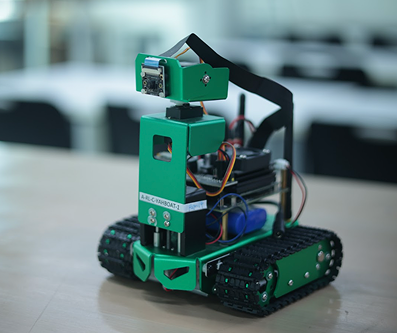
Apply AI to real-world robotics and mechatronic systems.
Product Innovation & Development
Prototype and develop practical, AI-driven solutions.
Ethical & Interdisciplinary Thinking
Understand technology’s social and ethical impact.
Career & Research Readiness
Graduate prepared for advanced careers or further studies.

Ready to Build What’s Next?Let’s Get Started.

Get a glimpse - where future engineers and innovators areshaped through technology, industry, and inspiration.

Career Pathways

Explore diverse career pathways across AI, data science, and emerging technologies

AI Scientist
Data Scientist
ML Engineer
Business Intelligence Researcher
AI Engineer
Big Data Analyst
AI Consultant

Student Voices: Real Voices from the Program

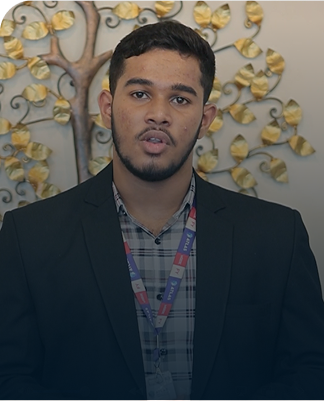
Unlike many other B.Tech programs, we have an outcome defined for every semester.
Ayush Gharat
2nd year student, uGDX
At uGDX, I have started viewing the world in a different way.
Leisha Totani
2nd year student, uGDX
We get endless opportunities here at ATLAS uGDX.
Mohit Bhimrajka
2nd year student, uGDX
What I love about uGDX B.Tech program is that every semester has specific goals and outcomes.
Adarsh Mukherjee
2nd year student, uGDX

Your guide to joining B.Tech in CS, AI & ML at ATLAS uGDX

Eligibility
Indian Boards (ISC / CBSE / State Boards)
Minimum 50% in Class XII
Mathematics and Physics are mandatory

A-Levels (UK)
Minimum grades A/B/C in 2 subjects
Grade B or above in Mathematics.
Mathematics and Physics are mandatory

International Baccalaureate (IB)
Minimum of 24 points in 3 HL & 3 SL subjects
Mathematics and Physics are mandatory

Questions? We can read your mind

How is ATLAS ISME?
Do ATLAS ISME offer bachelors or UG programs and what are the specialisations available?
Are ATLAS ISME undergraduate programs UGC‑certified?
What is the Multidisciplinary Approach at ATLAS ISME?
Do ATLAS ISME really provide industry immersions?
What are the top career opportunities after a BBA from ATLAS ISME?
What are the top career opportunities after a BSC in Finance from ATLAS ISME?
How are ATLAS ISME’s future-focused programs, like BBA in Digital Branding or AI & Emerging Tech, different from a traditional BBA degree?
What kinds of real-world simulations and decision-making scenarios are included in the ATLAS ISME academic curriculum?
Can ATLAS ISME undergraduate students launch real startups while earning credits, and how do these ventures receive support?
Do ATLAS ISME students get global exposure during their undergraduate studies?
Does ATLAS ISME have campus placements for its students? What are some real career outcomes of ATLAS ISME students?
Do ATLAS ISME offer experiential learning? What is the teaching methodology at ATLAS ISME?
View More
More questions?
Let our AI Assistant answer your queries