

Apply NowSchedule a visit

B.Tech in IT, AI & Cybersecurity

Build intelligent systems and shape the future of technology.
Next Cohort
July 2026
Format
4 Years, Full time

The ATLAS uGDX B.Tech Experience

The B.Tech programs in ATLAS immerses you in technology from day one - through hands-on coding, real-world projects, and industry-integrated learning that build the skills to innovate and lead in the digital world.

Multidisciplinary
Tech Education
Learn AI/ML alongside electives in design and management, applying your skills through a semester-long internship.
Master classes by industry leaders
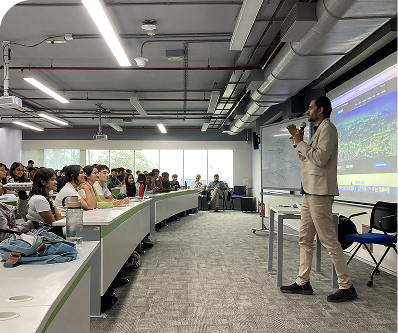
Learn directly from global technology experts, CTOs, and industry innovators.
NEP 2020
Integrated
Hundreds of hours of coding practice and training to master writing clean, scalable code.
Experiential &
Hands-on learning
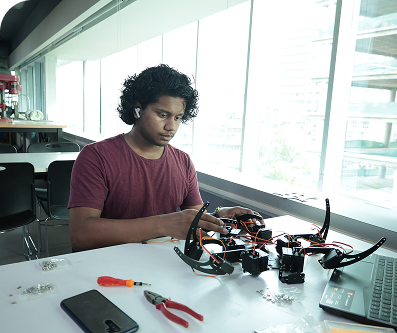
Apply classroom concepts to live projects and real-world problem solving.
Curriculum co-created with industry
Study a curriculum designed with leading CTOs to stay aligned with industry needs.
Entrepreneurship hub
Get mentorship and support from Venture Labs to build and launch your own tech startup.
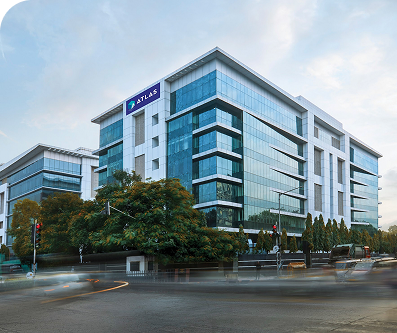
Urban campus experience
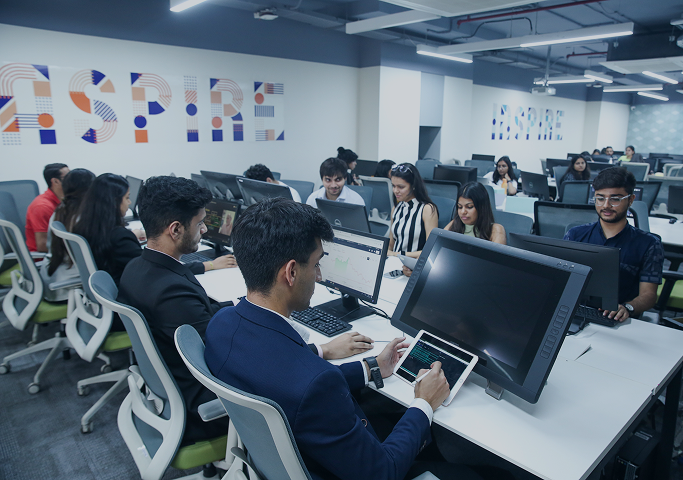
Thrive in a modern, high-tech learning environment with state-of-the-art infrastructure.
Career services
Apply classroom concepts to live projects and real-world problem solving.

Why Choose B.Tech in CS, AI & Cybersecurity at ATLAS uGDX

AI-Driven Cybersecurity Learning

Unlike typical IT programs, students learn to build AI-powered defense systems - detecting, predicting, and preventing cyber threats using next-gen algorithms and analytics.
01

Real-World Cyber
Range Training

Understand how technology, innovation, and entrepreneurship intersect - and how to turn ideas into viable ventures.
02

Specialized Cyber
Domains & Labs

Gain applied expertise across multiple tracks - Digital Forensics, Cloud Security, Adversarial AI, Cryptography, and Threat Intelligence - supported by advanced lab setups.
03

Cybersecurity
Leadership Pathways

Work on live projects and challenges with leading companies, gaining practical exposure and problem-solving experience.
04

Global Exposure to
Cyber Policy & Ethics

Through the ATLAS Global Week and international faculty exchange, students also explore cyber law, global digital ethics, and data privacy frameworks, broadening their professional horizon.
05

A Curriculum Designed for the Future

Built on the ‘Goal for Each Term’ (GET) philosophy, our curriculum ensures every semester has a clear, outcome-driven focus; continuously evolving with emerging technology trends and the learning needs of our students.

Semester 1

Building the Digital Foundation
The first semester introduces the language of computing, analytical thinking, and digital creativity. Students explore the fundamentals of programming, logic, mathematics, and emerging technologies while developing essential professional and communication skills.
Introduction to Computer Science & Programming 1
Gain a solid foundation in computational thinking and programming through hands-on coding exercises that strengthen logical reasoning and algorithmic problem-solving.
Calculus 1
Explores limits, derivatives, and integrals to build a strong mathematical foundation for modelling and analysis.
Foundations of Statistics and Probability for AI & ML
Covers key concepts of statistics and probability essential for AI and machine learning applications.
Databases and SQL
Teaches database design, management, and querying using SQL for efficient data organization and analysis.
Chemistry
The Chemistry program explores the principles of matter and its interactions through theory and hands-on labs, linking molecular science to real-world applications. It builds analytical, research, and problem-solving skills for careers in science and innovation.
Fundamentals of CT, AI, ML, Robotics & Data Science
Applies data science techniques to real-world AI, machine learning, and robotics contexts for intelligent problem-solving.
Communication Skills for Digital World
Builds digital communication, presentation, and collaboration skills for effective engagement in tech-driven environments.
ATLAS Elective
Broaden your worldview by exploring a course beyond your core discipline.
Simulation/Computer Game Design (Pinnacle I)
Introduces game design principles, simulation concepts, and storytelling through interactive digital experiences.

Semester 2

From Code to Data Thinking
This semester deepens computational fluency and introduces data-centric problem-solving. Students move from writing code to understanding how data flows, connects, and powers innovation.
Introduction to Computer Science & Programming II
Master the art of making big-picture decisions. Learn how to evaluate competition, allocate resources, and plan for long-term business success in volatile environments.
Mathematics for Computer Science
Explore the grey areas of business decisions. This course challenges you to think critically about corporate responsibility, ethical dilemmas, and the role of values in leadership.
Calculus 2
From ChatGPT to data-driven insights, understand how modern AI tools are transforming industries. Learn how to work with them—not against them—for smarter, faster outcomes.
Physics
Another chance to explore an interest area more deeply. These electives help you round out your core learnings with a skillset that fits your ambitions.
Statistical Modeling
Understand what drives consumer decisions and how to build brands around real human needs. Learn the fundamentals of marketing strategy, audience segmentation, and behaviour-based targeting.
Indian Health Sciences
Understand how binary logic and hardware circuits form the basis of computational devices.
Expository Writing
Strengthen your multidisciplinary learning portfolio.
ATLAS Elective
Strengthen your multidisciplinary learning portfolio.
Data Analyst Project (Pinnacle II)
Applies data analysis, visualization, and storytelling to real-world problems through an integrated capstone project.

Semester 3

Intelligence Meets Security
Students begin merging artificial intelligence with secure system design. They build smart algorithms while learning how to safeguard the digital systems that host them.
Machine Learning Foundations (Pinnacle)
Introduces core ML concepts, algorithms, and model-building techniques through hands-on applications and projects.
Computer Organization and Architecture
Explores how computers work from the inside—covering hardware components, memory systems, and instruction execution.
Linear Algebra
Builds mathematical foundations for AI and data science through vector spaces, matrices, and transformations.
Data Structures and Algorithms
Covers efficient data organization and algorithmic design for solving computational problems effectively.
Foundation of Cybersecurity
Examines key principles of digital security, encryption, and network protection to safeguard information systems.
Model Thinking
Teaches how to use mathematical and conceptual models to understand complex systems and real-world behaviors.
Foundational Literature of Indian Civilization
Explores classical Indian texts, philosophies, and cultural narratives that shaped the subcontinent’s intellectual heritage.
ATLAS Elective
Continue exploring electives outside your technical domain.
Digital System's Security Design (Pinnacle II)
Applies advanced ML techniques to scientific domains like astrophysics, particle physics, and drug discovery.

Semester 4

Becoming a Game Developer
This semester emphasizes infrastructure — how computers communicate, share data, and stay resilient against threats.
Advanced Machine Learning (Pinnacle as Laboratory)
Explores advanced machine learning techniques and architectures through hands-on experimentation, emphasizing real-world data modelling, optimization, and algorithmic innovation in laboratory settings.
Ethical Testing and Penetration Testing
Covers principles and practices of ethical hacking, focusing on identifying system vulnerabilities, conducting penetration tests responsibly, and strengthening cybersecurity defences.
Operating Systems and Networks
Introduces operating system concepts, process management, and computer networking fundamentals, building understanding of system-level interactions and data communication.
Cybersecurity Risk Management
Examines how artificial intelligence enhances cybersecurity through threat detection, anomaly identification, and automated defense strategies against evolving digital attacks.
Software Engineering Principles
Covers software design methodologies, development lifecycles, and quality assurance techniques to equip students with practical tools for building scalable, maintainable systems.
Cryptography
Explores cryptographic algorithms, encryption techniques, and security protocols essential for protecting digital information and ensuring data integrity.
Business Plan Writing
Develops skills to conceptualize, structure, and present business plans, integrating market analysis, financial planning, and strategic thinking.
ATLAS Elective
Interdisciplinary courses encouraging exploration across technology, arts, logic, and applied sciences to foster well-rounded, cross-domain perspectives.
AI Systems Security Design (Pinnacle VI)
Applies advanced AI and data science to build large-scale recommendation systems for streaming platforms, integrating user behavior analysis, machine learning, and business logic.

Semester 5

Securing the Intelligent Web
Students explore how artificial intelligence enhances digital security. The semester blends analytics, blockchain, and forensics with leadership and communication training.
Reinforcement Learning and NLP
Introduces reinforcement learning and natural language processing, focusing on training intelligent agents, language models, and conversational AI systems through data-driven techniques.
Computer Vision and Deep Learning
Covers deep learning architectures for visual recognition, image processing, and video analysis, emphasizing convolutional networks and real-world computer vision applications.
Web Technologies and Application Security
Explores modern web development frameworks, protocols, and secure coding practices to design robust, scalable, and secure web-based systems.
Networks, Protocols and Security
Examines computer network architectures and communication protocols with an emphasis on network security, data protection, and secure transmission practices.
Cloud and Virtualization Security
Focuses on securing cloud environments and virtual infrastructures, covering cloud architecture, identity management, and risk mitigation strategies.
Entrepreneurship Development
Builds entrepreneurial mindset and business planning skills through opportunity identification, innovation strategies, and venture creation exercises.
Cultural and Intellectual Heritage of English
Explores key works and ideas from English literary and philosophical traditions, emphasizing their influence on contemporary thought and global culture.
Enterprise Grade Connected Device Application: Self-Driving Cars (Pinnacle V)
Applies AI, machine learning, and IoT technologies to design and simulate self-driving systems, integrating sensor data processing, control algorithms, and ethical decision-making frameworks.

Semester 6

Ethical Hackers & Cloud Defenders
Learners evolve into ethical security specialists through immersive labs and industry exposure.
Secure Coding
Focuses on designing and implementing software with robust security practices, teaching techniques to prevent vulnerabilities and defend against cyberattacks through real-world coding projects.
Security for Database Systems
Covers methods for securing databases, including encryption, access control, auditing, and protection against SQL injection and data breaches.
Cyber Forensics, Investigation and Incident Response
Introduces digital forensics tools and processes for identifying, analyzing, and responding to cybersecurity incidents and data compromises.
AI and Cybersecurity
Explores how artificial intelligence enhances threat detection, risk analysis, and automated defense, while also addressing AI-driven security challenges.
Adversarial Machine Learning
Examines techniques for attacking and defending AI models, focusing on robustness, model integrity, and the evolving landscape of adversarial threats.
Language of Science and Technology (English)
Develops advanced communication and analytical writing skills for technical and scientific contexts, emphasizing clarity and precision.
Introduction to Indian Mathematics & Astronomy
Explores India’s rich heritage in mathematics and astronomy, tracing foundational concepts and their influence on global scientific thought.
Digital Forensics
Provides hands-on professional experience, enabling students to apply academic learning in real-world technical and research environments.

Semester 7

Cyber Leadership & Advanced Defense
This semester cultivates strategic thinkers capable of designing, auditing, and managing security at an organizational scale.
Threat Intelligence & Modelling
Covers methods to collect, analyze, and model cybersecurity threats, enabling proactive defense through data-driven intelligence and prediction.
Core Elective 1
Enables students to specialize in advanced areas within cybersecurity, artificial intelligence, or data science, fostering technical depth through applied projects and analytical research.
Core Elective 2
Provides domain-specific expertise through focused coursework in cybersecurity, AI, or data analytics, emphasizing problem-solving, experimentation, and implementation of real-world solutions.
Core Elective 3
Encourages professional specialization by integrating theoretical learning with project-based applications across cybersecurity, AI, or data science, refining both strategic and technical proficiency.
Secure Operating Systems
Focuses on the design and architecture of secure operating systems, emphasizing access control, kernel protection, and system hardening techniques.
Constitution of India (Audit Course)
Introduces students to the principles, rights, and governance structures outlined in the Indian Constitution, fostering civic and ethical awareness.
Research Methodology
Equips students with tools for systematic inquiry, covering research design, data collection, analysis, and academic writing for technical studies.
Intrusion Detection and Secure Systems
Explores techniques for identifying, monitoring, and responding to unauthorized system access, integrating IDS frameworks and preventive strategies.

Semester 8

Innovate, Lead, and Launch
The final semester prepares students for professional or entrepreneurial success through research, innovation, and global perspective.
Internship and Project and Dissertation (Product Based)
Provides hands-on industry experience through a product-based project, integrating research, innovation, and practical problem-solving.
Cyber Laws & Ethics (MOOC)
Covers global and Indian cyber laws, digital rights, and ethical frameworks governing data use, privacy, and online conduct.
Data Privacy, Security and Protection (MOOC)
Explores principles and regulations of data protection, focusing on privacy frameworks, compliance, and secure data management practices.

Program Outcomes

Design AI-Driven Security Systems
Build intelligent defense mechanisms that detect, predict, and prevent cyber threats using AI and analytics.
Protect Networks & Digital Infrastructure
Secure communication systems, cloud networks, and IoT devices with advanced cybersecurity protocols.
Apply Ethical Hacking & Forensic Practices
Identify vulnerabilities, perform penetration tests, and investigate cyber incidents responsibly.
Build Resilient & Compliant Cyber Architectures
Design enterprise-level security frameworks using zero-trust principles and cryptography.
Integrate Multidisciplinary Problem Solving
Blend AI, data science, and design thinking to create effective cybersecurity solutions.
Lead Innovation in Digital Defense
Drive research, entrepreneurship, and innovation in emerging areas of cybersecurity and policy.

Ready to Build What’s Next?Let’s Get Started.

Get a glimpse - where future engineers and innovators areshaped through technology, industry, and inspiration.

Career Pathways

Explore diverse career pathways across AI, Data Science, and Emerging Technologies

Cybersecurity Analyst
Ethical Hacker / Penetration Tester
Cyber Forensics &Incident Response Expert
Threat Intelligence Specialist
Cloud Security Architect
Malware Analyst
Data Privacy &
Compliant Officer

Student Voices: Real Voices from the Program

Unlike many other B.Tech programs, we have an outcome defined for every semester.
Ayush Gharat
2nd year student
At uGDX, I have started viewing the world in a different way.
Leisha Totani
2nd year student
We get endless opportunities here at ATLAS uGDX.
Mohit Bhimrajka
2nd year student
Programming will become a second language to you. You'll understand it in a deeper sense.
Adarsh Mukherjee
2nd year student

Your guide to joining B.Tech in CS, AI & Cybersecurity at ATLAS uGDX

Eligibility
    Indian Boards (ISC / CBSE / State Boards)
    Minimum 50% in Class XII
    Mathematics and Physics are mandatory

    A-Levels (UK)
    Minimum grades A/B/C in 2 subjects
    Grade B or above in Mathematics.
    Mathematics and Physics are mandatory

    International Baccalaureate (IB)
    Minimum of 24 points in 3 HL & 3 SL subjects
    Mathematics and Physics are mandatory

    Questions? We can read your mind

    How is ATLAS ISME?
    Do ATLAS ISME offer bachelors or UG programs and what are the specialisations available?
    Are ATLAS ISME undergraduate programs UGC‑certified?
    What is the Multidisciplinary Approach at ATLAS ISME?
    Do ATLAS ISME really provide industry immersions?
    What are the top career opportunities after a BBA from ATLAS ISME?
    What are the top career opportunities after a BSC in Finance from ATLAS ISME?
    How are ATLAS ISME’s future-focused programs, like BBA in Digital Branding or AI & Emerging Tech, different from a traditional BBA degree?
    What kinds of real-world simulations and decision-making scenarios are included in the ATLAS ISME academic curriculum?
    Can ATLAS ISME undergraduate students launch real startups while earning credits, and how do these ventures receive support?
    Do ATLAS ISME students get global exposure during their undergraduate studies?
    Does ATLAS ISME have campus placements for its students? What are some real career outcomes of ATLAS ISME students?
    Do ATLAS ISME offer experiential learning? What is the teaching methodology at ATLAS ISME?
    View More
    More questions?
    Let our AI Assistant answer your queries