

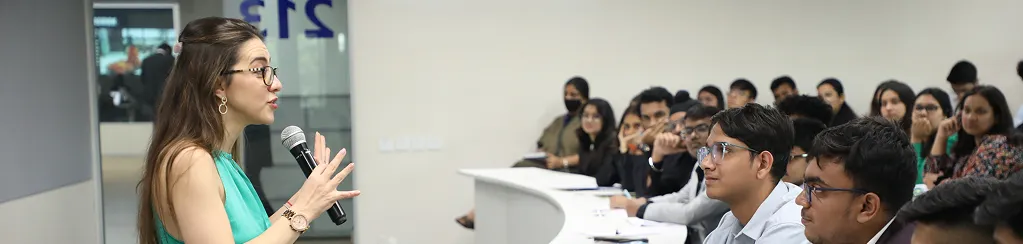


India is in the middle of a real entrepreneurship wave. Startups are no longer limited to tech hubs or venture-backed founders. Today, entrepreneurship spans creative studios, independent law practices, design consultancies, digital agencies, product startups, and purpose-driven ventures. For many young Indians, becoming a student entrepreneur is no longer an exception. It is a serious, respected career path that parents and institutions are beginning to support.
But this shift has also created confusion. Social media often makes entrepreneurship look fast, glamorous, and instinct-driven. The reality is far more demanding. Entrepreneurship is not just about having a great idea. It is about navigating uncertainty, making decisions with incomplete information, managing people and money, and learning from failure. This is where the difference between entrepreneur and business becomes clear, a business can follow a system, but an entrepreneur must build, adapt, and evolve that system over time.
This is why entrepreneur education matters more than ever. Aspiring founders don't just need motivation. They need structured learning that builds judgment, discipline, and clarity. Effective entrepreneurship training focuses on real-world exposure, problem-solving, and decision-making, not just theory. It also aligns closely with the objectives of training in entrepreneurship, which include building resilience, financial understanding, leadership skills, and the ability to convert ideas into sustainable ventures.
More importantly, strong entrepreneur education develops the right way of thinking. An entrepreneur mindset is not about constant risk-taking. It is about calculated decisions, adaptability, and long-term vision. When supported by a thoughtful entrepreneur mindset curriculum, students learn how to evaluate opportunities, validate entrepreneur business ideas, and respond intelligently to market changes instead of reacting emotionally.
In today's economy, entrepreneurship does not operate in silos. A viable business idea needs management insight, design sensibility, technological awareness, and legal clarity. This is where entrepreneurial thinking becomes essential, the ability to connect dots across disciplines and build solutions that are both innovative and practical. For a student entrepreneur , early exposure to multiple fields creates stronger instincts and better decision-making later on.
Drawing insights from management, design, technology, and law, the very pillars ATLAS SkillTech University is built on, the sections ahead break down the 10 must-have entrepreneurship skills in India. These skills are shaped by real entrepreneur experience , not theory alone, and reflect what it truly takes to build ventures that are relevant, resilient, and built to last in the Indian context.
At the core of every successful founder is the way they think and respond to uncertainty. An entrepreneur mindset is not about blind risk-taking. It is about seeing problems as opportunities, staying resilient during setbacks, and making clear decisions even when outcomes are uncertain. In India, entrepreneurs operate in volatile markets, navigate regulatory shifts, and compete in crowded spaces. A strong entrepreneur mindset helps founders adapt instead of panic, think long term instead of reacting impulsively, and stay focused through constant change.
This mindset is built, not inherited. That is why modern institutions focus on an entrepreneur mindset curriculum that goes beyond theory. Such learning develops confidence, judgment, and accountability through real-world problem solving, not just classroom instruction. For a student , building this mindset early creates the foundation for sustainable growth. Skills may evolve, but a well-developed entrepreneur mindset remains a lifelong advantage.
Ideas only turn into businesses when they solve problems people actually care about. Entrepreneurial thinking is the ability to look beyond assumptions and identify genuine gaps in the market. It involves understanding customer behaviour, questioning why existing solutions fall short, and spotting opportunities that others overlook.
For many aspiring founders, especially those still studying, this skill becomes the starting point for developing strong entrepreneur business ideas . Instead of chasing trends, entrepreneurial thinkers learn to observe, listen, and validate. They test assumptions early, gather feedback, and refine their ideas before investing significant time or money. This approach reduces risk and increases the chances of building something that is both relevant and scalable.
Strong problem solving also requires structure. Design-led thinking, user research, and iterative experimentation help entrepreneurs move from vague ideas to clear solutions. By studying how users interact with products, services, or spaces, founders can make informed decisions rather than relying on intuition alone. These methods are often strengthened in creative and design-focused learning environments, where students are encouraged to prototype, fail, learn, and improve continuously.
For a student entrepreneur , developing entrepreneurial thinking early builds sharper instincts and better judgment. It teaches them to focus on real needs, not just ideas, and to create solutions that are practical, differentiated, and ready for the real world.
Many startups struggle not because the idea lacks potential, but because the foundational skills needed to run and grow a business are missing. Strong business fundamentals give entrepreneurs the ability to make informed decisions, manage resources responsibly, and scale without losing control.
A working knowledge of finance, operations, marketing, and strategy is essential at every stage of a venture. Founders need to understand cash flow, pricing, cost structures, and basic financial planning. They must also know how to manage teams, streamline operations, and position their brand effectively in the market. This is where structured programmes such as BBA entrepreneurship or MBA-level management education add real value. These programmes provide clarity, frameworks, and exposure that help students move from ideas to execution with confidence.
Understanding the difference between entrepreneur and business is equally important. A business can function on established processes and routines. An entrepreneur, however, is responsible for building those processes, refining them as the venture grows, and adapting them when market conditions change. This distinction helps founders avoid the trap of working only in the business instead of working on it.
For a student entrepreneur , early exposure to business fundamentals builds discipline and strategic thinking. It ensures that creativity and ambition are supported by structure, allowing ideas to grow into sustainable and well-managed ventures.
In today's crowded market, how a product, service, or space looks, feels, and communicates can influence decisions just as much as price or performance. Creativity is no longer a nice-to-have skill for entrepreneurs. It is a business advantage that helps brands stand out and connect meaningfully with their audience.
Entrepreneurs need creative confidence across multiple touchpoints. This includes the ability to shape a clear brand identity, design products that are intuitive to use, create engaging customer experiences, and communicate value visually and emotionally. Exposure to design education sharpens this sensibility and trains founders to think from the user's perspective rather than only from an operational one.
For many entrepreneurs, design sensibility plays a direct role in:
Indian consumers today are increasingly design-aware and experience-driven. They notice details, compare experiences, and form emotional opinions quickly. Businesses that balance function with aesthetics often build stronger trust, deeper engagement, and long-term loyalty. For a student entrepreneur, early exposure to creative thinking helps develop sharper instincts and a more holistic approach to building businesses that people remember and choose.
No modern entrepreneur can afford to ignore technology. Digital tools shape how businesses operate, reach customers, and scale in competitive markets. Technology is no longer limited to product development. It influences decision-making, efficiency, and long-term growth across every function.
From data analytics and automation to AI tools and digital platforms, tech fluency helps founders work smarter and move faster. Even non-tech founders benefit from understanding how technology can simplify operations, improve customer experience, and support better business decisions. Knowing what to use, when to use it, and why it matters is often more important than knowing how to code.
For a student entrepreneur, early exposure to emerging technologies builds confidence and clarity. It helps them identify opportunities, test ideas quickly, and create future-ready ventures that are aligned with how consumers and industries are evolving.
Legal awareness is one of the most commonly overlooked skills among first-time founders, yet it plays a critical role in long-term business stability. Many early-stage entrepreneurs focus heavily on growth and innovation, while underestimating the risks that come from unclear agreements, weak compliance, or poorly structured partnerships.
A basic understanding of contracts, intellectual property, regulatory compliance, and business law helps entrepreneurs protect what they build. It allows founders to safeguard ideas, negotiate fair terms, and avoid disputes that can drain time, money, and focus. Legal knowledge also brings confidence during key moments such as signing partnerships, onboarding investors, or expanding into new markets.
Risk management goes beyond avoiding legal trouble. It helps founders think ahead, assess consequences, and make decisions with clarity rather than urgency. When entrepreneurs understand their legal responsibilities and rights, they are less likely to act reactively and more likely to build businesses that are secure, credible, and prepared for growth.
For a student entrepreneur, early exposure to legal fundamentals builds discipline and foresight. It encourages responsible decision-making and creates a strong foundation for scaling ventures in a structured and sustainable way.
Entrepreneurs are constantly communicating, whether they realise it or not. They sell ideas to investors, vision to teams, value to customers, and confidence to partners. The ability to communicate clearly and persuasively often determines whether an idea moves forward or stalls.
Strong communication goes beyond speaking well. It includes storytelling, listening, and understanding what different stakeholders care about. Entrepreneurs must be able to pitch ideas concisely, present plans with clarity, negotiate terms confidently, and handle disagreements without damaging relationships. These skills become especially important as businesses grow and involve larger teams and external partners.
In the Indian business ecosystem, trust plays a central role. Decisions are often influenced by credibility, clarity, and personal connection. Entrepreneurs who communicate transparently and consistently are more likely to build long-term relationships with clients, employees, and investors. Clear communication also reduces misunderstandings, aligns expectations, and helps teams move in the same direction.
For a student entrepreneur, developing communication and persuasion skills early builds confidence and leadership presence. It prepares them not just to speak, but to influence, align, and inspire. Over time, this ability becomes a powerful asset that supports growth, negotiation, and sustained business success.
Theory builds understanding, but it is real-world exposure that shapes entrepreneurs. Classrooms can introduce concepts, but only experience teaches founders how to apply them under pressure. This is where entrepreneur experience becomes essential to long-term success.
Internships, live projects, industry interactions, and exposure to startup environments help aspiring founders understand how businesses actually function. These experiences teach lessons that textbooks cannot. They show how to deal with ambiguity, manage people with different expectations, handle setbacks, and make decisions without complete information. Over time, this builds confidence and practical judgment.
Hands-on exposure also helps students test ideas early. They learn what works, what does not, and why. This reduces fear of failure and encourages experimentation, which is critical for innovation. For many students, real-world learning becomes the bridge between academic knowledge and practical execution.
That is why progressive institutions integrate hands-on learning into their approach to entrepreneurship training. By combining theory with experience, they prepare students to enter the entrepreneurial world with clarity, resilience, and the ability to adapt. For a student entrepreneur, early exposure to real business environments creates a strong foundation for building ventures that are grounded, informed, and ready for growth.
Sustainable entrepreneurship goes beyond short-term profit. In today's business environment, founders are expected to build ventures that are responsible, transparent, and mindful of their impact on society. Customers, employees, and investors increasingly evaluate businesses not only on what they sell, but on how they operate.
Indian entrepreneurs in particular are under growing pressure to balance growth with integrity. Ethical decision-making influences reputation, brand trust, and long-term viability. Businesses that prioritise responsibility are more likely to build loyalty, attract talent, and sustain success over time. This shift in expectations has made ethics and accountability central to entrepreneurial education.
Responsible entrepreneurship often involves:
This broader perspective is now a key part of the objectives of training in entrepreneurship across progressive institutions. By integrating ethics and long-term thinking into education, students learn to create value that lasts. For a student entrepreneur, this mindset helps build businesses that earn trust, withstand scrutiny, and grow with purpose rather than pressure.
Markets evolve constantly. Consumer behaviour shifts, technologies advance, and entire industries are reshaped in short periods of time. In this environment, adaptability is not optional for entrepreneurs. It is a core survival skill.
Successful founders understand that learning does not stop once a business is launched. They continuously upgrade their skills, question assumptions, and let go of methods that no longer work. This willingness to learn, unlearn, and relearn allows entrepreneurs to respond to change with confidence rather than resistance.
Adaptability also helps founders spot new opportunities early. By staying curious and informed, they can pivot when required, refine their strategies, and stay relevant in competitive markets. Over time, this ability to evolve separates ventures that experience short-term success from those that build lasting impact.
For a student entrepreneur, developing a habit of lifelong learning creates resilience and future readiness. It prepares them to navigate uncertainty, embrace change, and build businesses that grow with the world around them.
Entrepreneurship in India is no longer driven by instinct alone. It demands preparation, perspective, and the ability to think across disciplines. From mindset and problem-solving to legal awareness, technology fluency, ethics, and adaptability, successful founders are shaped by the skills they build long before they launch their first venture.
For every aspiring student entrepreneur, the goal should not simply be to start a business, but to develop the thinking, discipline, and experience required to sustain one. Strong ideas matter, but the ability to execute, adapt, and grow responsibly matters far more. This is where meaningful entrepreneur education plays a decisive role, bridging the gap between ambition and action.
At ATLAS SkillTech University, entrepreneurship is approached as a holistic journey. By bringing together management, design, technology, and law, ATLAS equips students with the mindset, skillset, and real-world exposure needed to build ventures that are relevant, resilient, and future-ready. For students who want to lead, create, and innovate in India's evolving economy, ATLAS offers a foundation that goes beyond degrees and prepares them for impact.
Entrepreneurial thinking is inspired by exposing students to real-world problems, not just classroom theory. When students work on live projects, interact with founders, and are encouraged to question assumptions, they start thinking independently. Creating a safe space to experiment and fail also builds confidence and initiative.
Entrepreneurial thinking improves through practice, reflection, and exposure. Students should be encouraged to observe markets, understand customer needs, and test ideas early. Structured feedback and interdisciplinary learning help sharpen decision-making and problem-solving skills.
The 5 C's of entrepreneurship are creativity, courage, commitment, competence, and collaboration. Together, they help entrepreneurs generate ideas, take calculated risks, stay consistent, build skills, and work effectively with others. These qualities support both startup success and long-term leadership.
The 3 C's of an entrepreneurial mindset are curiosity, confidence, and consistency. Curiosity drives problem discovery, confidence supports decision-making, and consistency helps founders push through uncertainty. Together, they form the foundation of sustainable entrepreneurial behaviour.
Access to quality education, exposure to real-world experience, availability of resources and funding, supportive ecosystems, and a culture that encourages innovation promote entrepreneurship. Mentorship and industry networks also play a key role in guiding new founders. When these factors come together, they reduce risk and increase the chances of success.