ATLAS ISME Students Experience Transformative Learning at IIM Ranchi Summer School
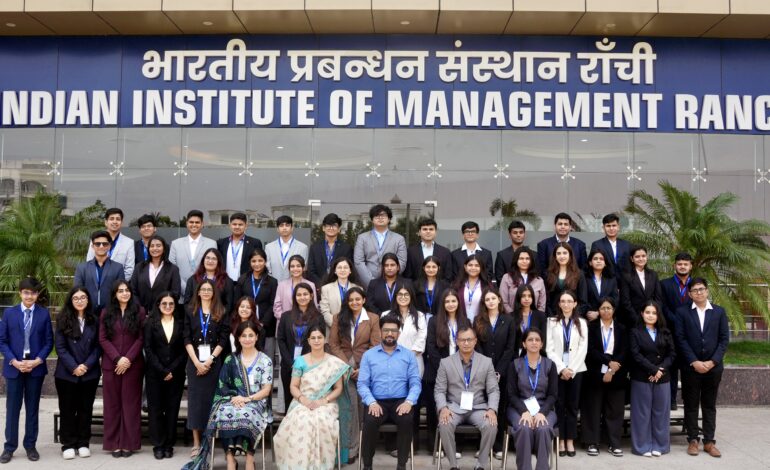

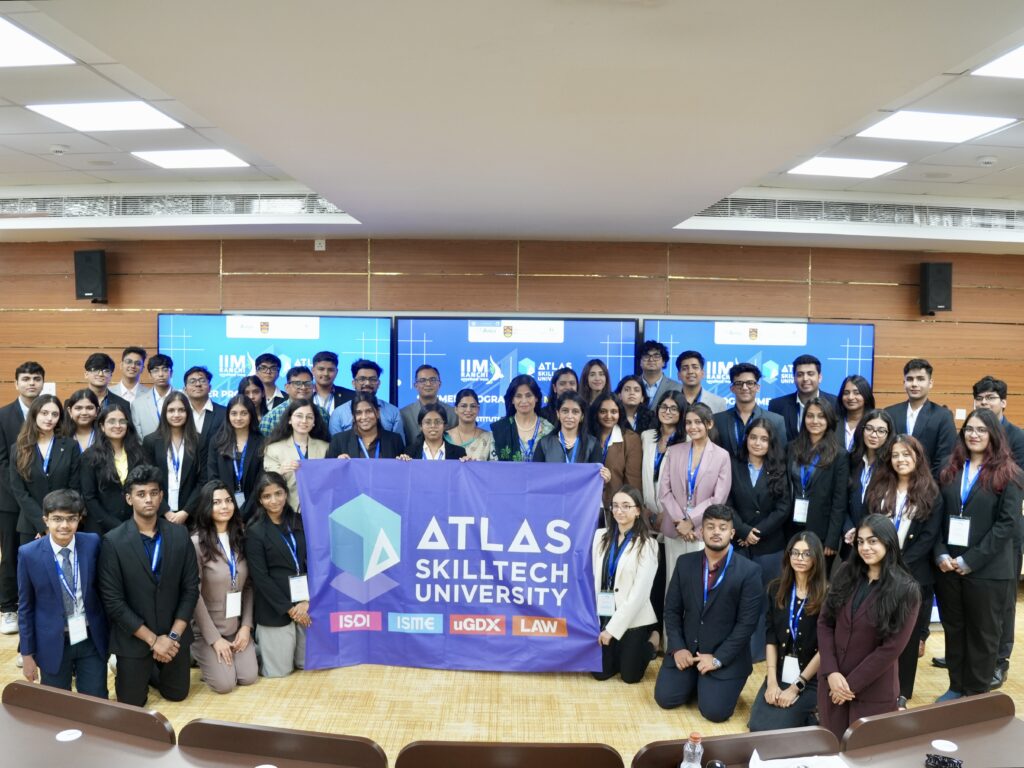
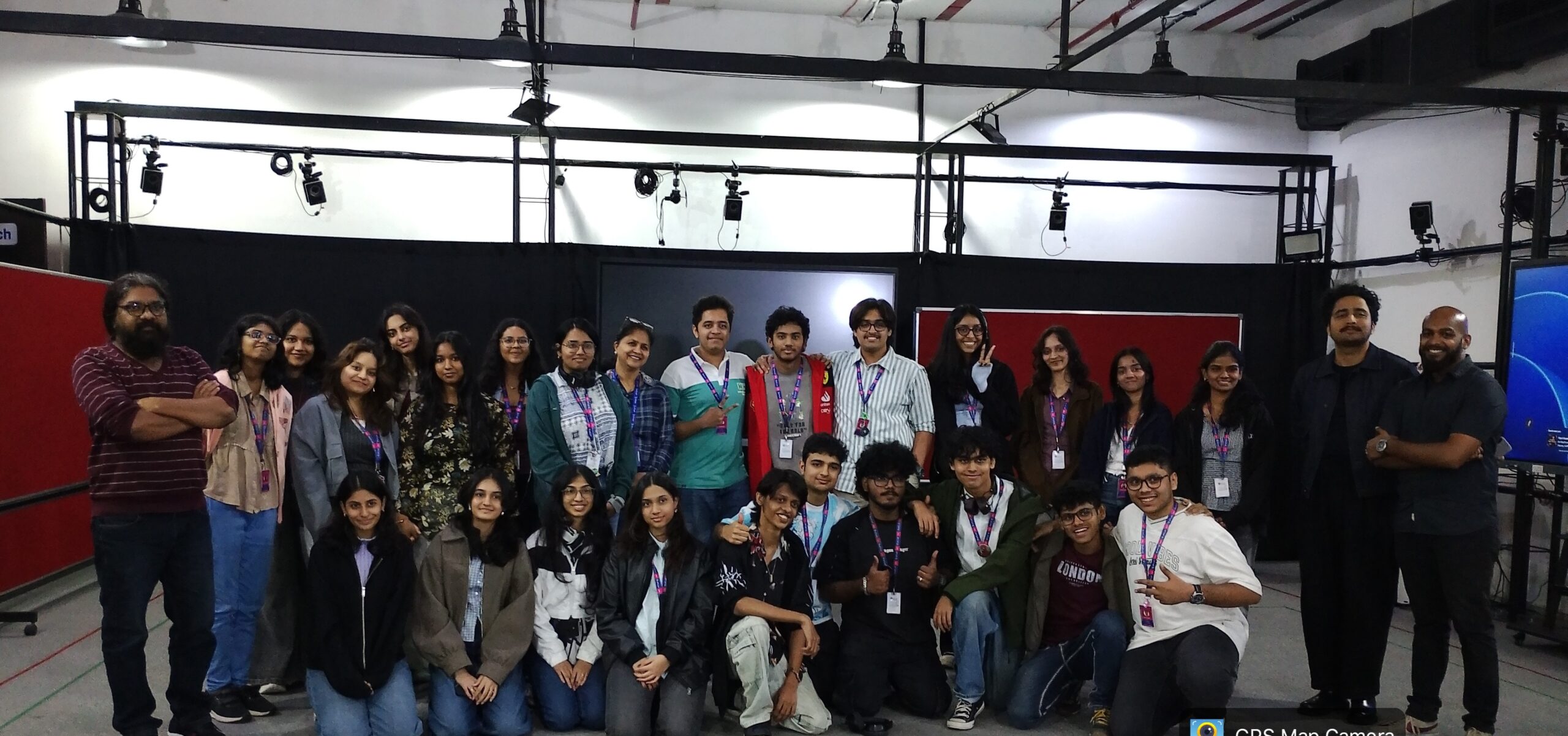
In a significant milestone for experiential management education, ATLAS ISME partnered with the Indian Institute of Management (IIM) Ranchi for its first-ever Summer School Program exclusively curated for ISME students. This pioneering collaboration provided 42 students with an immersive five-day academic experience at one of India’s premier management institutions.
Designed to bridge classroom learning with real-world business challenges, the program brought together expert faculty, industry-relevant case studies, interactive simulations, leadership exercises and experiential learning activities. The academic immersion, it offered students a unique opportunity to experience the rigour, culture and collaborative learning environment of an IIM campus while gaining exposure to contemporary business practices and managerial thinking.
Building a Management Mindset from Day One
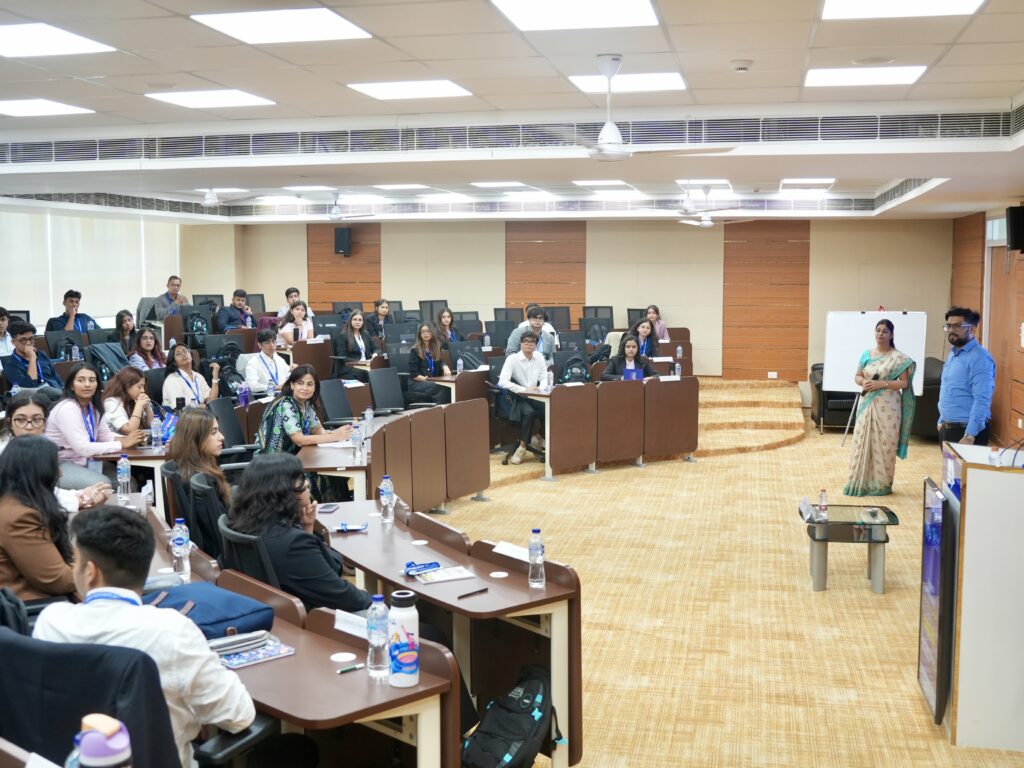
From the inaugural session, students were encouraged to embrace curiosity, critical thinking and active participation through a “question-per-class” approach. Faculty members highlighted the importance of viewing management as an interconnected discipline, where strategy, finance, technology, people management and innovation work together to create organisational success. The immersive environment encouraged students to move beyond passive learning and develop the mindset of future managers capable of navigating complex business challenges.
Understanding Strategy, Culture and AI-Driven Organisations
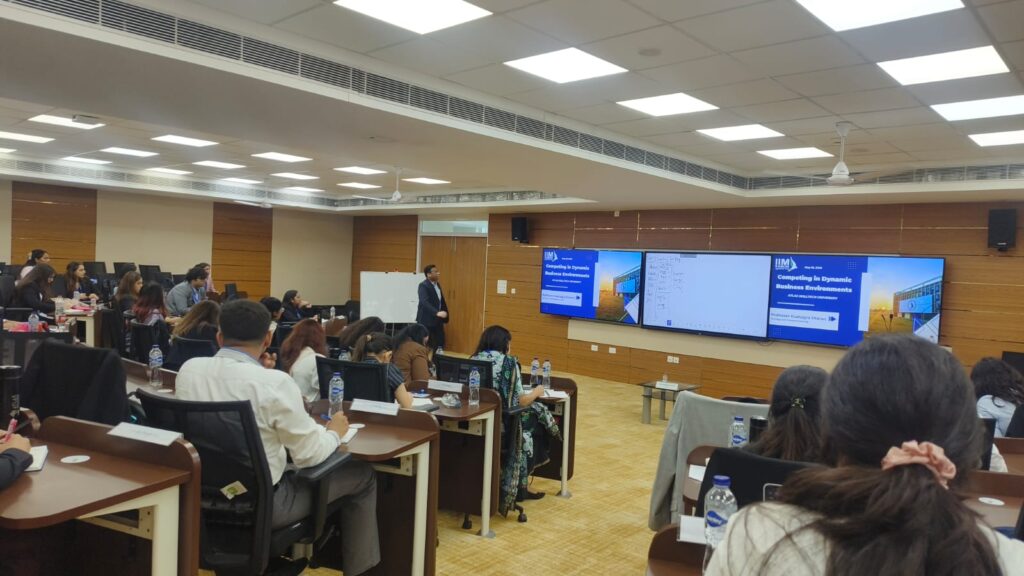
One of the early highlights was a session on competing in dynamic business environments, where students analysed the rise and challenges of Byju’s. Through frameworks such as ERRC (Eliminate, Reduce, Raise, Create), students learned how businesses create sustainable competitive advantages and navigate market disruptions.
Students also explored organisational culture and leadership, understanding how trust, employee engagement, psychological safety, and workplace values influence performance. Case studies helped them examine different organisational cultures and their impact on productivity and innovation.
The discussion on AI-enabled organisations offered valuable insights into how artificial intelligence is transforming functions such as operations, finance, HR, manufacturing and customer experience. Students gained a deeper understanding of responsible AI, ethics, sustainability and the importance of balancing technological advancement with human values.
Developing an Entrepreneurial and Leadership Mindset
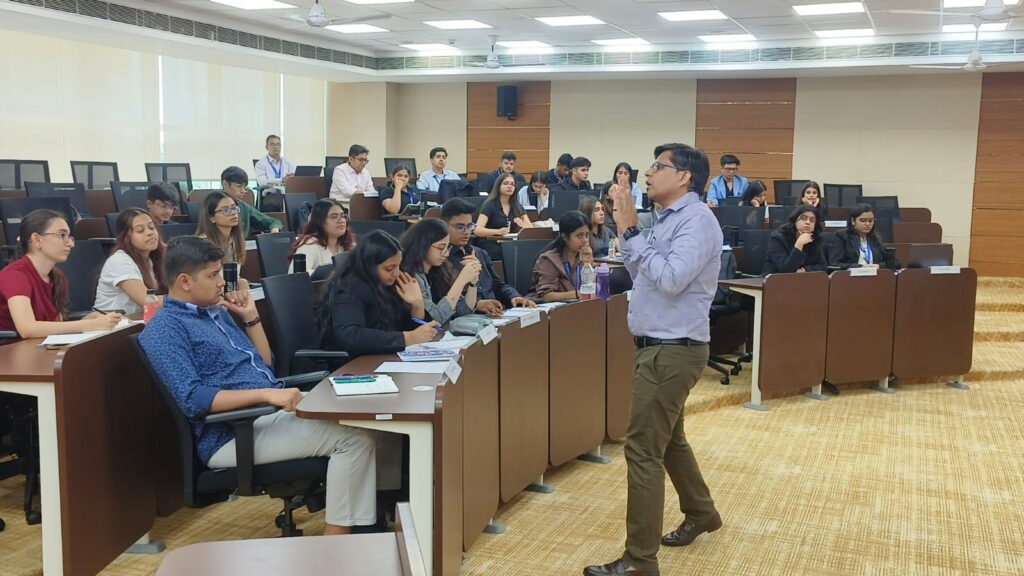
The program placed significant emphasis on entrepreneurship and innovation. Through sessions on entrepreneurial thinking and startup validation, students learned that successful businesses are built by solving genuine customer problems rather than simply generating creative ideas.
Using examples of companies such as Airbnb, Uber, RedBus, and OYO, students explored how founders identified market gaps and transformed everyday challenges into scalable ventures. Workshops on assumption mapping taught students how to validate business ideas, assess risks, and understand customer behaviour before launching products.
Leadership development formed another key pillar of the program. Through classroom discussions, role plays, and experiential exercises, students examined the differences between managers and leaders, the importance of trust and communication and the role of emotional intelligence in building effective teams. Lessons drawn from the leadership journey of Dr. A.P.J. Abdul Kalam and Satish Dhawan reinforced the importance of accountability, humility, and people-centric leadership.
Gaining Real-World Business and Financial Acumen
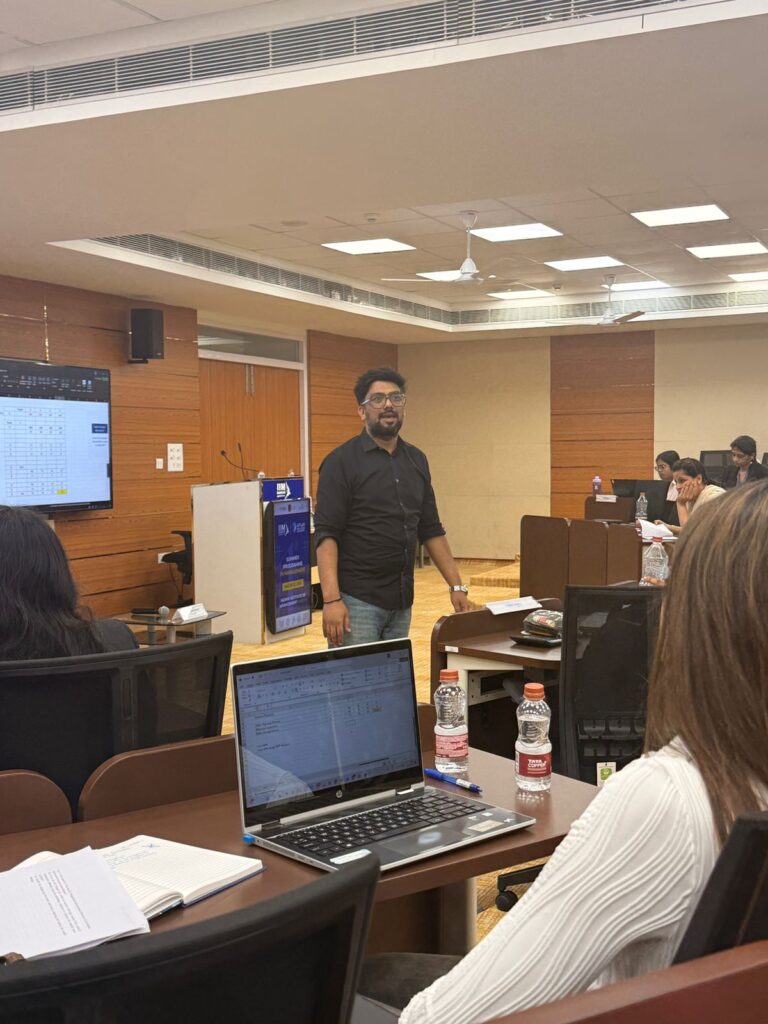
A major learning outcome of the program was the development of financial literacy and strategic decision-making skills. Students learned how to decode financial statements, analyse profitability, evaluate cash flows and assess business performance using metrics such as EPS, P/E Ratio, dividend payouts and retention ratios.
Real-world case studies involving organisations such as PVR INOX, IRCTC and Wirecard helped students understand corporate governance, ethical decision-making and financial fraud detection. Discussions on stakeholder management further strengthened their understanding of balancing diverse business interests while maintaining transparency and trust.
Sessions on investment decisions, capital structures, debt management and working capital introduced students to practical financial concepts used by business leaders when making strategic decisions.
Exploring Marketing, Consumer Behaviour and Supply Chains
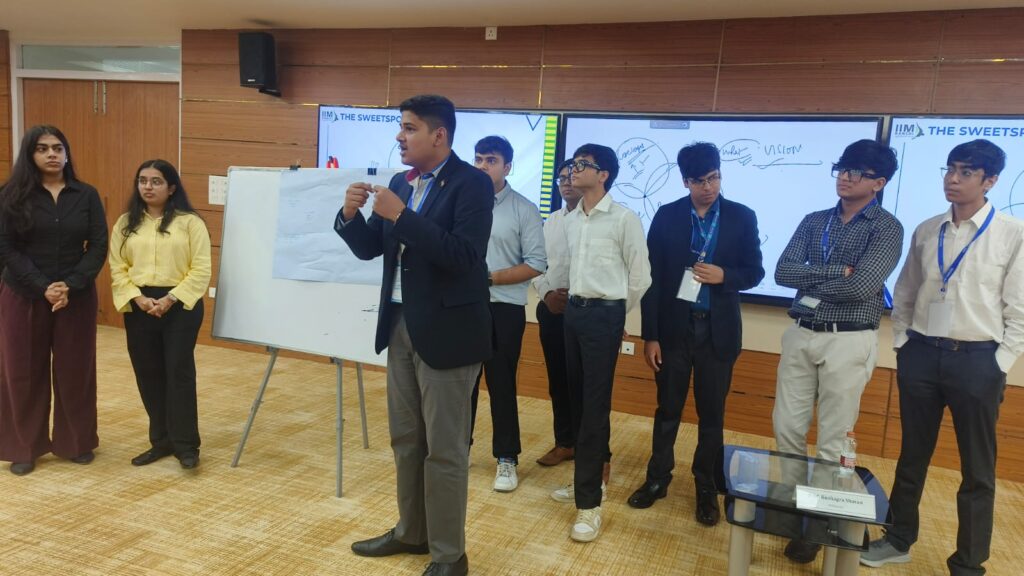
Students also gained exposure to modern marketing and customer engagement strategies. Through sessions on digital marketing, they explored the evolution from traditional advertising to interactive digital ecosystems driven by influencers, communities, and customer-generated content.
Frameworks such as the Digital Marketing Funnel helped students understand how brands build awareness, engagement, conversion, and loyalty. Additional discussions on consumer psychology revealed how emotions, branding, communication, packaging, and social media shape purchasing decisions.
A dedicated session on supply chain management provided insights into lean production, Just-In-Time systems, procurement strategies and operational efficiency. Students learned how value is created from raw materials to final customer delivery and how businesses optimise resources to remain competitive.
Learning Beyond the Classroom
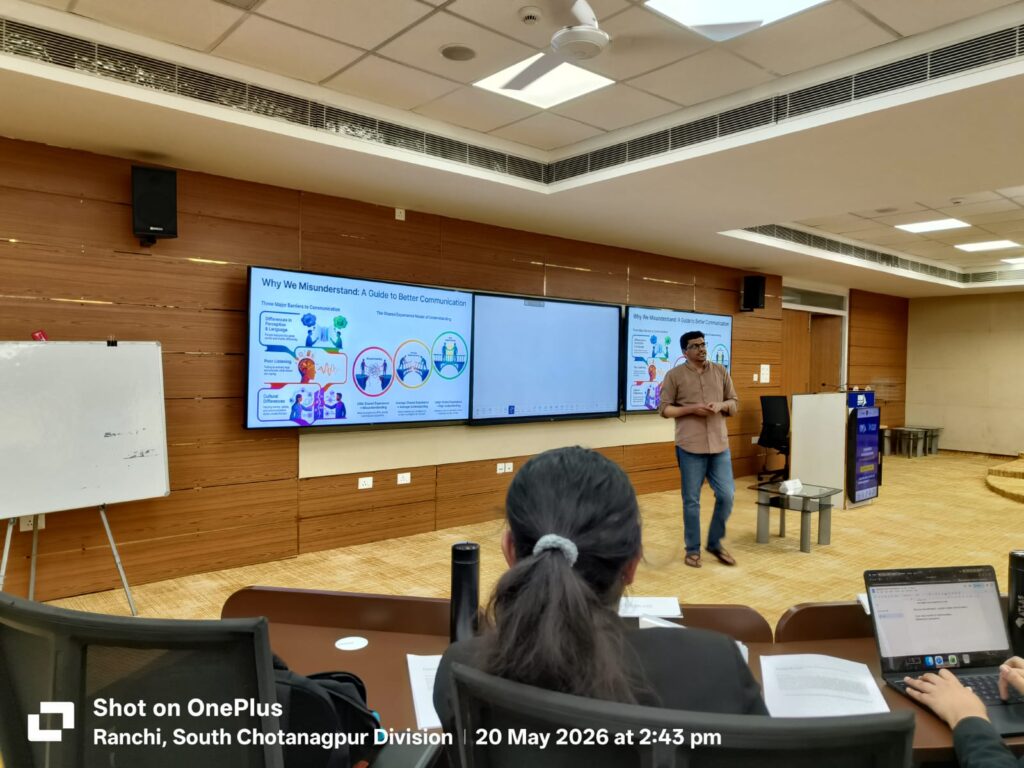
The program’s experiential component brought management concepts to life. Business games, team challenges, negotiation simulations, and stakeholder role plays enabled students to apply classroom learning in practical scenarios.
Students explored concepts such as BATNA, ZOPA, conflict management, negotiation strategies, collaboration, and teamwork. Outdoor activities reinforced the importance of communication, trust, adaptability and collective problem-solving.
A drum circle and reflection session provided an opportunity for students to unwind, connect with peers and engage in self-reflection, creating a balanced learning experience that nurtured both professional and personal growth.
A Transformational Learning Experience
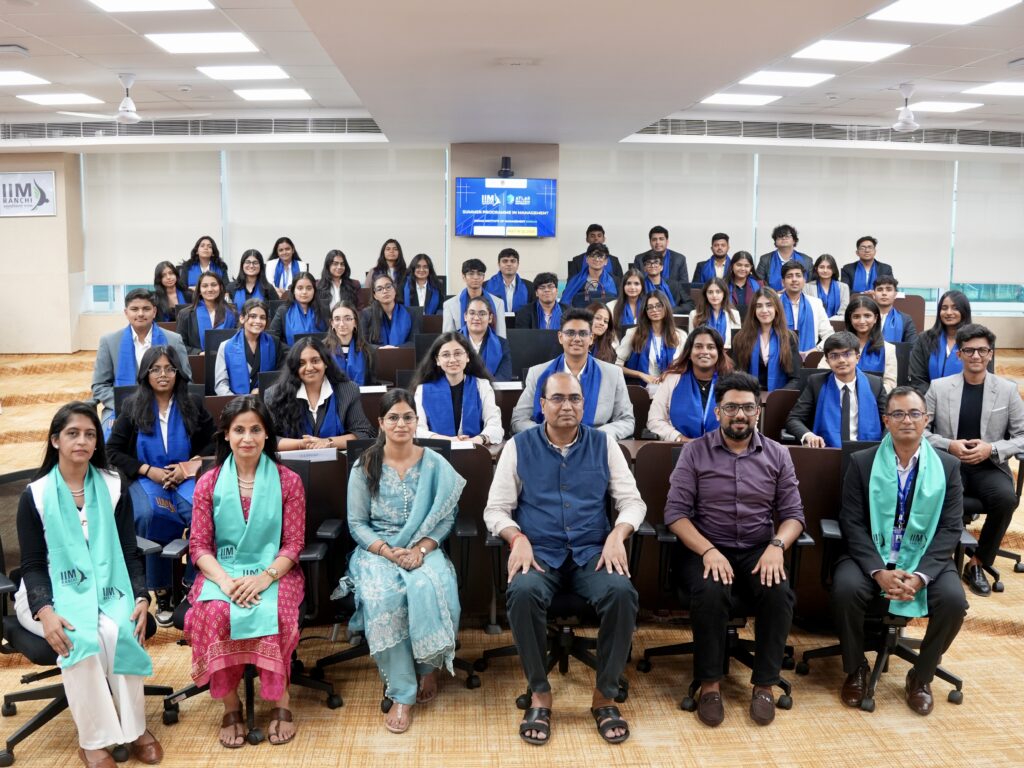
The IIM Ranchi Summer School Program represented an important milestone in ATLAS ISME’s commitment to creating transformative learning opportunities that extend beyond the classroom. By bringing students closer to industry practices, contemporary management frameworks and experiential learning environments, this pioneering collaboration has set a strong foundation for nurturing future-ready business leaders equipped to thrive in an increasingly dynamic global economy.