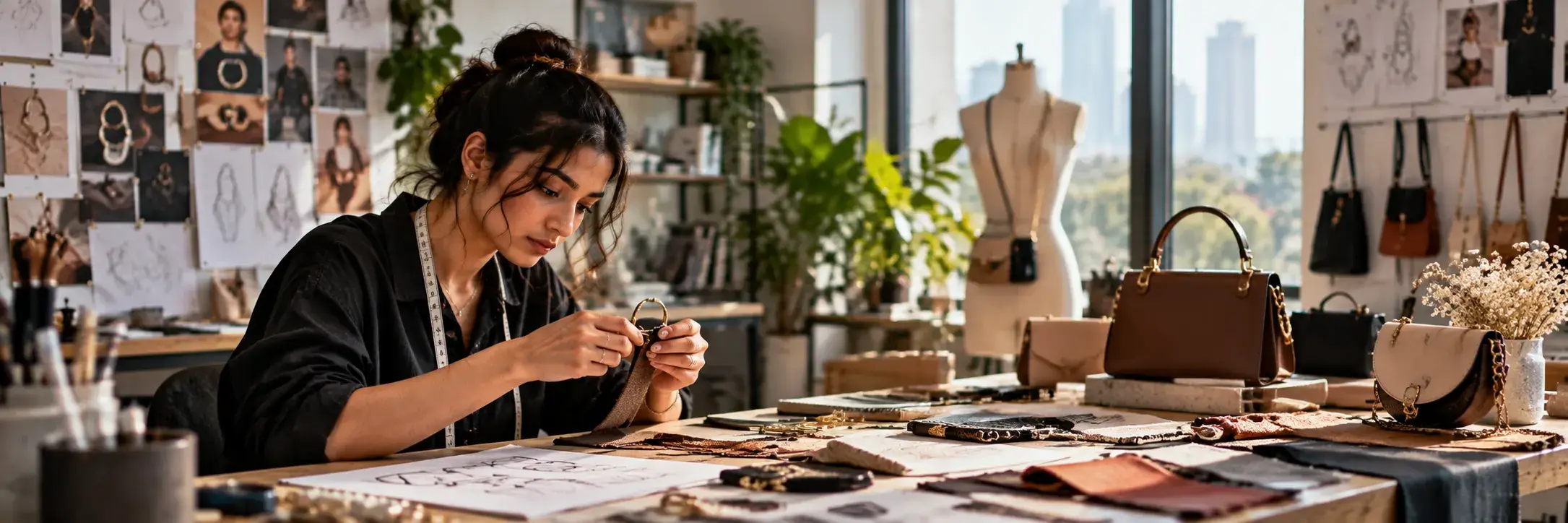
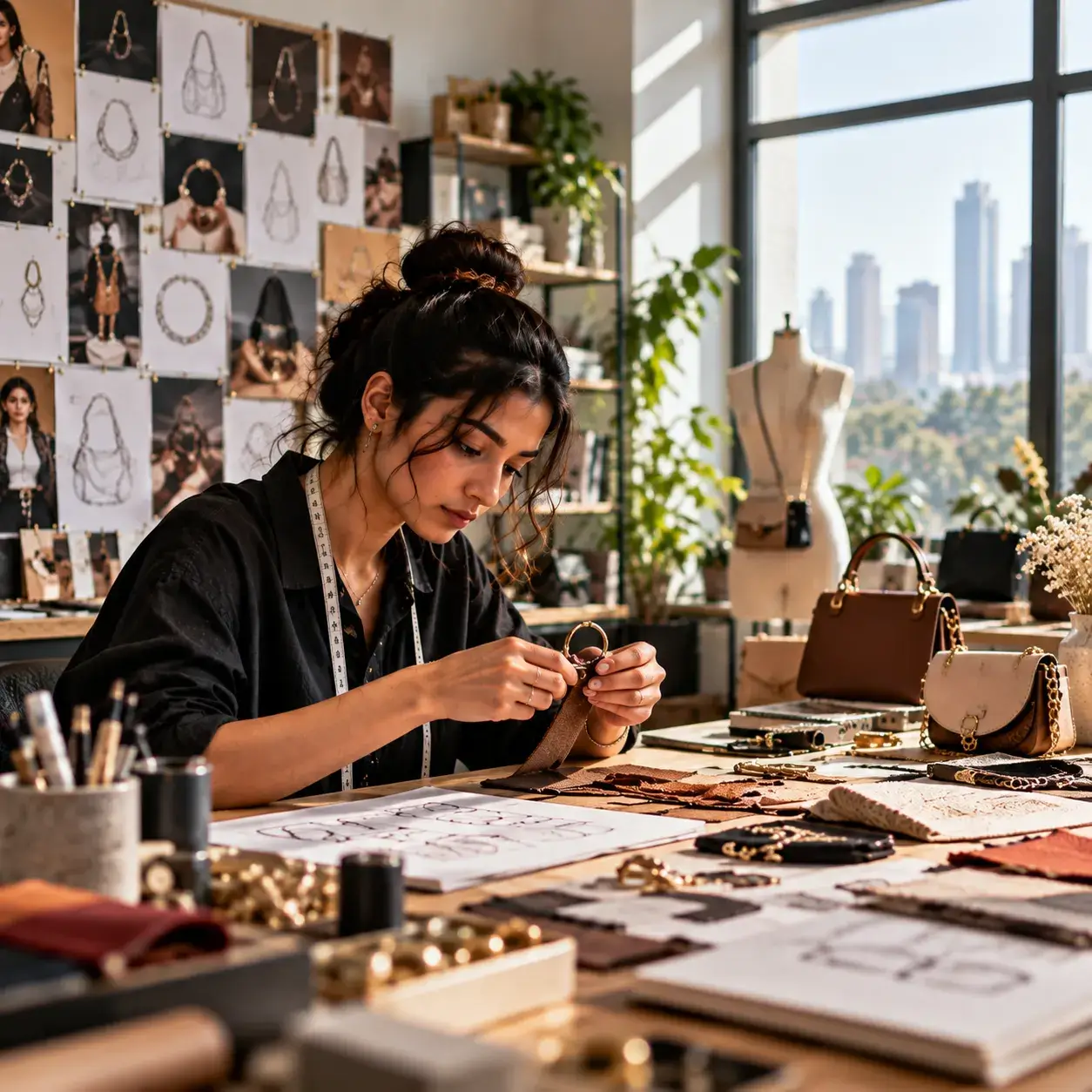
An accessory may be small in size, but designing one involves much more than aesthetics.
A handbag must balance form, function, material and usability. Shoes need to consider movement and comfort. Jewellery can express culture, identity and personality. Even watches now sit at the intersection of fashion, technology and personalisation. This is what makes accessory design an increasingly relevant field. It has moved beyond products that simply complete an outfit and now intersects with lifestyle, technology, sustainability, product innovation and consumer behaviour.
So, what is accessory design really about?
At its core, it involves understanding people, identifying opportunities and turning insights into products that are useful, desirable and meaningful. The process can span research, trend analysis, material exploration, prototyping, manufacturing and product development.
In 2026, an accessory designer may work on a luxury collection, experiment with sustainable materials, develop wearable products or use 3D modelling to test ideas. The boundaries between fashion, product and lifestyle design are becoming increasingly fluid, making knowledge of technology, sustainability and consumer behaviour as relevant as creative ability. This evolution also changes what students should look for in an accessory design course. Strong programmes should combine design fundamentals with practical exposure to materials, digital tools, emerging technologies, sustainability and real-world projects.
For students comparing accessory design courses with fashion programmes, the distinction is worth understanding. A bachelor of fashion design typically focuses more deeply on apparel and textiles, while accessory-focused education explores products such as jewellery, footwear, bags and other lifestyle objects. A broader fashion designing degree may offer exposure to several areas before students specialise.
Career opportunities extend across jewellery, footwear, handbags, eyewear, luxury, lifestyle products, retail and product development, with opportunities in design research and entrepreneurship as well. Factors such as portfolio quality, specialisation and experience can significantly influence accessory design salary and career progression. Students should also look beyond tuition when evaluating course fees. Materials, workshops, software, prototyping and project expenses can add to the overall investment. More importantly, the value of a programme lies in the skills, industry exposure and creative confidence it helps develop.
This guide explores accessory design courses in 2026—from curriculum and fees to skills, emerging technologies and career opportunities—and examines how the discipline is evolving beyond traditional fashion categories.
The role of accessories has evolved as fashion becomes increasingly connected with lifestyle, technology and individual expression. Consumers no longer see accessories only as decorative additions. A bag can be designed around how someone works or travels, footwear can combine style with performance, and jewellery can incorporate technology. This has expanded accessory design into areas such as product innovation, sustainability, technology and lifestyle.
Several trends are shaping this evolution:
This is where lifestyle and accessory design becomes particularly relevant. Designers are increasingly expected to understand not just how an object looks, but how it fits into people's routines, solves a problem and creates an experience.
For students, this means an accessory design course needs to go beyond drawing and aesthetics. Research, material knowledge, digital skills, manufacturing, sustainability and consumer understanding are becoming equally important.
As a result, accessory design in 2026 can lead beyond traditional fashion brands into product development, luxury, lifestyle, wearable technology and entrepreneurship. The field is becoming less about designing an object in isolation and more about designing how that object fits into people's lives.
Also Read: Design School in Mumbai 2026: Fashion, Interior, Animation
An accessory design course goes beyond teaching students how to create attractive products. A B.Des programme typically combines design fundamentals, materials, technology and practical application, helping students understand the journey from an initial idea to a finished product. While the curriculum varies across institutions, the focus is generally on developing both creative thinking and practical design skills.
Students begin by developing core skills in drawing, colour, form, proportion and visual communication. These foundations are complemented by research into consumer behaviour, culture, lifestyle and trends. Together, they help students understand not just how an accessory should look, but who it is being designed for and why it should exist.
Understanding materials is central to accessory design . Students may work with leather, textiles, metals, wood, plastics and newer sustainable materials while learning how different materials behave and can be manufactured. They then apply this knowledge through concept development, experimentation, prototyping, testing and refinement to turn ideas into functional products.
Technology has become an important part of contemporary design education. Depending on the programme, students may explore CAD, 3D modelling, digital rendering and prototyping. These tools allow designers to visualise concepts, experiment with forms and make changes before moving into physical production.
Design becomes more meaningful when students can apply it to real-world problems. Live briefs, workshops, internships and industry collaborations can introduce students to production constraints, client requirements, deadlines and professional feedback. These experiences can also help students build a portfolio that demonstrates their creative process, technical understanding and individual design perspective.
A well-rounded B.Des programme should ultimately help students move from learning how to design accessories to learning how to think like designers—with curiosity, experimentation, practical understanding and an awareness of the people and lifestyles their products are designed around.
The cost of accessory design courses in 2026 can vary considerably depending on the institution, programme structure, location, facilities and level of industry exposure. Students should also remember that the published tuition fee may not represent the complete cost of studying design. A realistic estimate should account for:
However, comparing accessory design B.Des courses purely on their fees can give an incomplete picture. Students should also consider what the programme offers in return, including studio infrastructure, industry projects, internships, faculty expertise, interdisciplinary learning, technology exposure and opportunities to build a strong portfolio. The more useful question is therefore not simply “How much does the course cost?” but “What kind of learning and professional exposure does that investment provide?”
Technology is changing accessory design at almost every stage, from the first concept to prototyping and production. For students entering the field, digital skills are increasingly becoming an extension of traditional design capabilities rather than a replacement for them. The most important shift is that designers can now experiment faster, test ideas earlier and explore forms that may have been difficult to develop using conventional methods alone.
3D modelling allows designers to visualise accessories digitally before creating physical samples. They can test proportions, forms and details, make iterations quickly and identify potential design issues earlier in the development process.
AI tools are increasingly being used to explore visual directions, generate references and accelerate early-stage ideation. However, the designer remains responsible for interpreting these outputs, refining concepts and ensuring that the final product is original, useful and appropriate for its intended audience.
3D printing has made rapid prototyping more accessible, particularly for complex forms and experimental designs. Designers can create and test physical models faster, while digital manufacturing can also support greater customisation and smaller production runs.
The boundaries between fashion accessory design and technology are becoming increasingly fluid. Smartwatches, connected jewellery, technology-enabled eyewear and other wearable products require designers to think about both visual identity and user interaction.
The growing role of technology does not make traditional design skills less relevant. Observation, material understanding, research, creativity and problem-solving remain at the heart of good design. Technology simply gives designers new ways to explore and communicate those ideas.
For students choosing an accessory design course , therefore, exposure to digital tools matters—but it should ideally sit alongside strong foundations in materials, making, research and human-centred design.
Accessory design is evolving from a specialised fashion discipline into a broader field shaped by lifestyle, technology, sustainability and changing consumer expectations. A handbag, piece of jewellery or pair of shoes is no longer judged only by how it looks. Increasingly, designers are expected to consider how a product is used, what it communicates, how it is made and how it fits into everyday life.
For students exploring accessory design courses in 2026, this creates a much wider range of possibilities. A career can span fashion accessory design, jewellery, footwear, lifestyle products, luxury, product development, wearable technology or entrepreneurship. The strongest foundation, however, comes from learning to combine creative thinking with research, material knowledge, technology and an understanding of people.
A B.Des in accessory design can therefore be viewed as more than a route to a specific job title. It can be a way to develop the ability to identify opportunities, experiment with ideas and turn them into products with purpose.
The future accessory designer may not simply design objects that people wear or carry. They may design products at ATLAS ISDI that respond to how people live, move, work, communicate and express themselves . That is where the real scope of accessory design lies and why the discipline continues to evolve beyond the boundaries of traditional fashion.
It is an undergraduate design programme focused on creating accessories using design, craft, materials, technology and product development.
Eligibility generally requires completing Class 12 or an equivalent qualification. Students should check the latest programme-specific admission criteria before applying.
Graduates can pursue careers in jewellery, footwear, bags, lifestyle products, fashion accessory design, product development, design research and entrepreneurship.
Salaries vary based on experience, portfolio, specialisation, employer and location. Entry-level designers typically start in junior roles and progress with experience.
Yes. Accessory Design & Craft can cover multiple product categories, including bags, footwear, jewellery and other lifestyle accessories, depending on the programme curriculum.