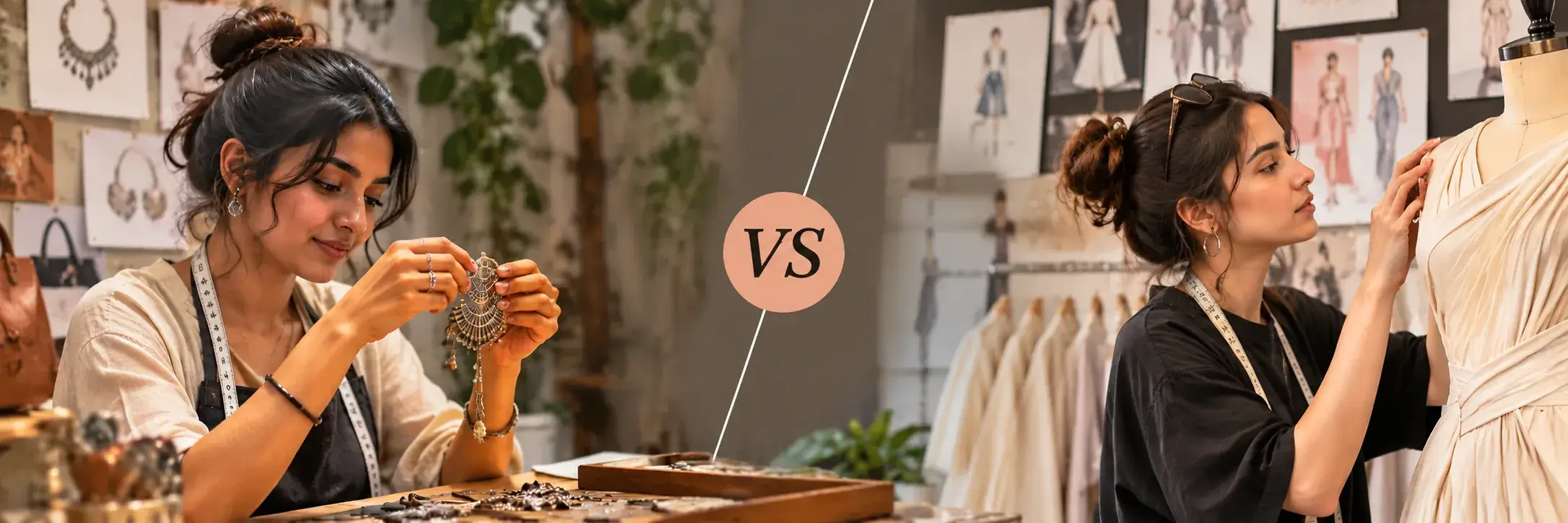
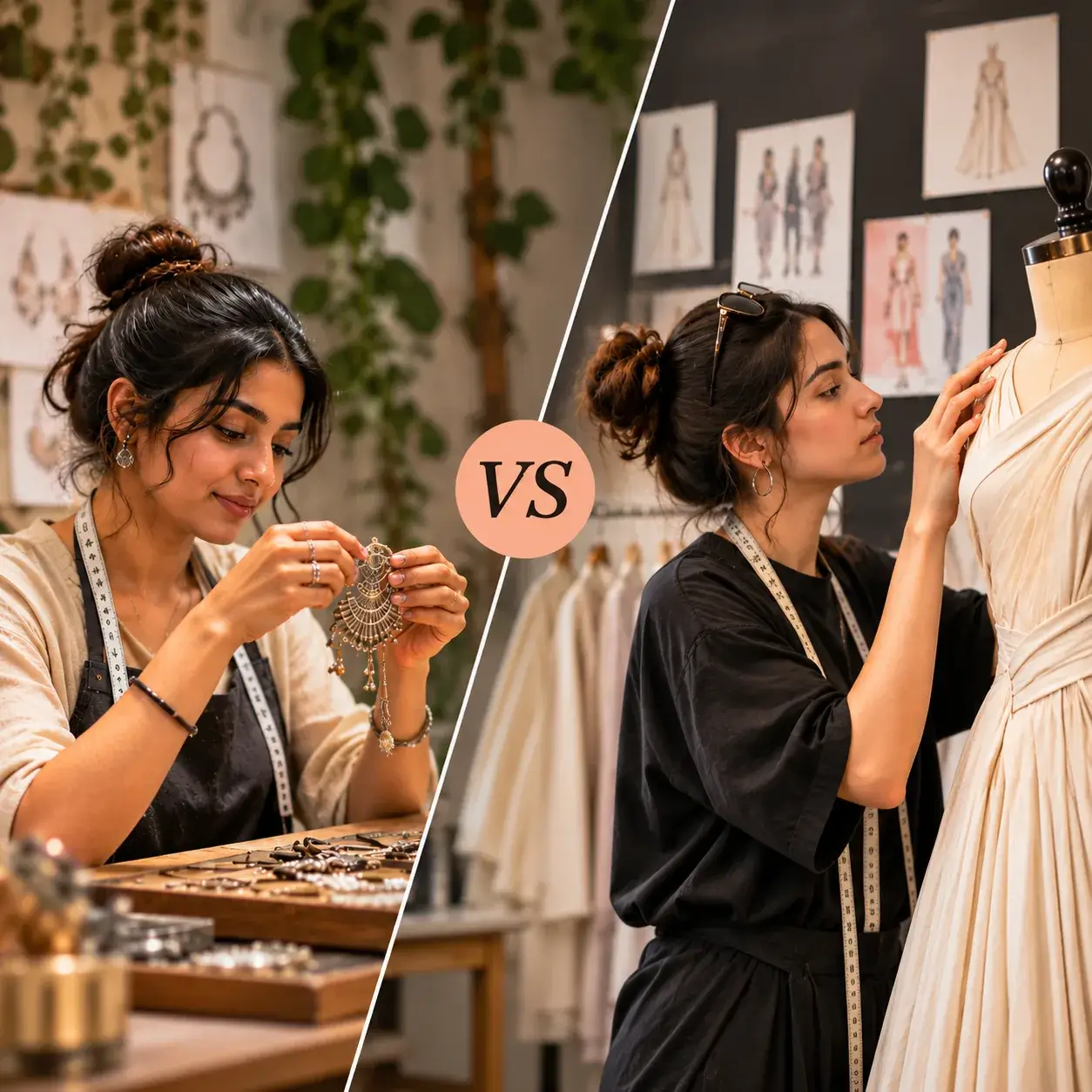
Choosing between accessory design and fashion design is not simply a decision between designing bags and creating clothes. Both disciplines belong to the larger world of fashion and lifestyle, but they approach design from different perspectives. One explores how objects complement personal style, serve functional needs and express cultural identity. The other focuses on clothing, silhouettes, textiles and the relationship between garments and the human body.
For students exploring creative careers after Class 12, understanding this distinction can make the decision between a B.Des Accessory Design programme and a fashion design degree much clearer. Both offer opportunities to experiment, develop a design language and build commercially relevant skills. However, the materials students work with, the problems they solve, the technical knowledge they acquire and the industries they can enter may differ considerably.
The distinction becomes even more important as consumer preferences evolve. Accessories are increasingly recognised as independent design categories rather than finishing touches to an outfit. Meanwhile, fashion design continues to expand beyond apparel into areas shaped by sustainability, digital production, material innovation and changing ideas of personal expression.
Understanding these differences requires looking beyond course names. Students need to consider what each discipline involves, how its curriculum develops design capabilities, what career opportunities it offers and which approach aligns with their interests.
Accessory Design & Craft and Fashion Design share a foundation in creativity, research and material exploration. However, they approach design from different perspectives. While accessory design focuses on developing functional and expressive products, fashion design centres on clothing, textiles and the relationship between garments and the human body.
For students considering a design degree after Class 12, understanding these differences can help them identify which discipline better aligns with their interests and career aspirations.
Accessory Design & Craft involves conceptualising and developing products such as handbags, footwear, jewellery, eyewear and lifestyle accessories. It combines aesthetics with functionality, requiring designers to consider how a product looks, feels, performs and is manufactured.
Understanding what is accessory design means looking beyond accessories as styling elements. Each product involves decisions about materials, construction, usability and durability. An accessories design course helps students explore these factors while learning to translate creative ideas into practical products.
Key areas of accessory design include:
A B.Des Accessory Design programme may suit students who enjoy working with tangible objects, experimenting with materials and solving problems through product development. The exact curriculum depends on the institution and its areas of specialisation.
Also Read: A Complete Guide to Accessory Design B.Des Courses Fees
Fashion Designing Degree focuses on creating garments that combine aesthetics, comfort, functionality and cultural expression. It involves understanding fabrics, silhouettes, patterns and how clothing interacts with the human body.
A fashion design course typically combines creative exploration with technical learning, helping students develop garment concepts and translate them into wearable products. The process involves understanding both the visual identity of a design and the practical requirements of its construction.
Key areas of fashion design include:
Fashion design may appeal to students who enjoy working with textiles, developing clothing collections and exploring how garments communicate identity, culture and personal style.
Also Read: Fashion Designing Degree After 12th: Complete Career Guide
Design education goes beyond visual creativity. Whether students pursue a B.Des Accessory Design programme or fashion design, they need to understand materials, interpret user needs and translate ideas into practical solutions. These capabilities help designers make informed decisions throughout the process, from initial research to the final product.
Material knowledge is central to accessory design because the choice of material influences a product's appearance, durability, functionality and environmental impact. Designers must understand how materials behave, how they can be processed and which construction techniques suit a particular application.
An accessory design course may introduce students to material experimentation, traditional craftsmanship and contemporary manufacturing processes. This knowledge helps them explore creative possibilities while considering texture, strength, flexibility, weight and finish. Understanding responsible sourcing, repairability and material waste also encourages more thoughtful product development.
Effective design begins with understanding the people who will use a product. Designers research consumer preferences, observe everyday behaviour and identify problems that existing products may not adequately address. These insights help them develop concepts grounded in actual needs rather than aesthetics alone.
For students pursuing a B.Des Accessory Design degree, this could mean developing a bag that improves everyday organisation or footwear that addresses specific comfort requirements. Fashion design students apply similar thinking to garment fit, movement and functionality. Both disciplines involve developing concepts, testing prototypes and refining ideas based on feedback. The ability to question assumptions and evaluate alternatives is essential to creating solutions that are both visually compelling and practical.
Digital technologies are changing how designers explore ideas, develop prototypes and evaluate products. Computer-aided design (CAD), 3D visualisation and AI-assisted ideation allow students to experiment with forms, materials and variations before committing to physical production. In a bachelor of design accessory programme, these tools may support product visualisation, detailing and early-stage development, depending on the curriculum and specialisation.
However, technological proficiency must be accompanied by critical judgement. Designers need to assess whether a concept is feasible, functional and appropriate for its intended user. Sustainability adds another dimension to these decisions, encouraging students to consider responsible material sourcing, manufacturing waste, product longevity and repairability. By combining digital exploration with lifecycle thinking, aspiring designers can develop products that respond to contemporary needs without overlooking their wider environmental impact.
Choosing between a B.Des Accessory Design programme and a fashion design degree requires more than identifying which field seems appealing. Students should consider the kind of products they want to create, the technical skills they want to develop and the creative challenges they enjoy solving. Understanding the curriculum, practical learning opportunities and potential career paths can help them make an informed decision based on their interests and long-term goals.
Ultimately, the right design programme is one that aligns with your interests while helping you develop the skills needed to turn creative ideas into practical, well-considered outcomes.
The future of design education lies in the ability to connect creative thinking with technology, sustainability, craftsmanship and business understanding. As consumer expectations evolve, designers need to look beyond aesthetics and consider how products are developed, manufactured, used and experienced. For students pursuing a B.Des Accessory Design degree or fashion design, interdisciplinary learning can provide a broader understanding of these interconnected challenges.
An evolving accessory design course may introduce students to digital prototyping, AI-assisted ideation, innovative materials and responsible production methods. Similarly, fashion design increasingly incorporates digital garment development, sustainable textiles and data-informed consumer research. These developments highlight the importance of combining technical knowledge with creative judgement rather than relying on traditional design skills alone.
Craftsmanship also continues to have a significant role in contemporary design. By bringing traditional techniques into dialogue with modern materials and production technologies, designers can develop products that respect cultural knowledge while responding to present-day needs. This approach creates opportunities for innovation across accessories, apparel and lifestyle products.
For aspiring designers, the value of a bachelor of design accessory programme or a fashion design degree ultimately extends beyond learning to create products. It lies in developing the ability to research thoughtfully, experiment with new approaches, collaborate across disciplines and make informed design decisions. These capabilities can help graduates adapt to changing industry requirements and create solutions that balance creative expression, functionality and responsible design.
Accessory Design & Craft and Fashion Design offer distinct ways to explore creativity, solve problems and shape how people interact with products. While accessory design brings together materials, craftsmanship, functionality and product innovation, fashion design focuses on garments, textiles and the relationship between clothing and personal expression. Both disciplines require a balance of creative vision, technical knowledge and an understanding of evolving consumer needs.
As the design industry continues to embrace new technologies, sustainable practices and interdisciplinary collaboration, students need an education that encourages experimentation and critical thinking alongside practical skills. Understanding these evolving opportunities can help aspiring designers identify the discipline that best aligns with their interests and long-term goals.
Also Read: Best Design Schools in the World: Complete Guide
For those exploring design education, ATLAS ISDI, School of Design and Innovation, offers a starting point to learn more about design programmes and the possibilities within contemporary design practice. Exploring its academic offerings can help students better understand how their creative interests might translate into a future in design.
Accessory Design focuses on products such as bags, footwear and jewellery, emphasising materials, craftsmanship and functionality. Fashion Design centres on garments, textiles, silhouettes and clothing collections. Both involve creativity and research but differ in their technical skills and design outcomes.
Both offer diverse career opportunities. Accessory Design graduates can explore footwear, jewellery and lifestyle product design, while Fashion Design graduates can pursue apparel design and collection development. Career prospects depend on specialisation, portfolio quality, skills and industry demand.
Yes. Skills such as design thinking, visual communication and material exploration are transferable. However, transitioning may require additional knowledge of product construction, prototyping and accessory-specific materials, along with a relevant portfolio.
The extent of curriculum overlap depends on the current programme structure. Both may include foundational subjects such as design thinking, visual communication and material exploration. Students should consult ATLAS ISDI's latest curriculum to confirm the subjects offered.
Accessory Design & Craft may suit students interested in material experimentation, traditional craftsmanship and product construction. Fashion Design may be better suited to those drawn to textiles, fabric manipulation and garment making. Reviewing both curricula can help clarify the right fit.