
Freelancing is having a moment in India. What was once considered an alternative to a conventional job is increasingly becoming a practical way to build a side business, explore an independent career, or turn a skill into a source of income. For students and young professionals especially, it offers a way to start small, test the market, and gradually build something of their own without the overheads of a traditional business.
Graphic design is particularly well suited to this shift.
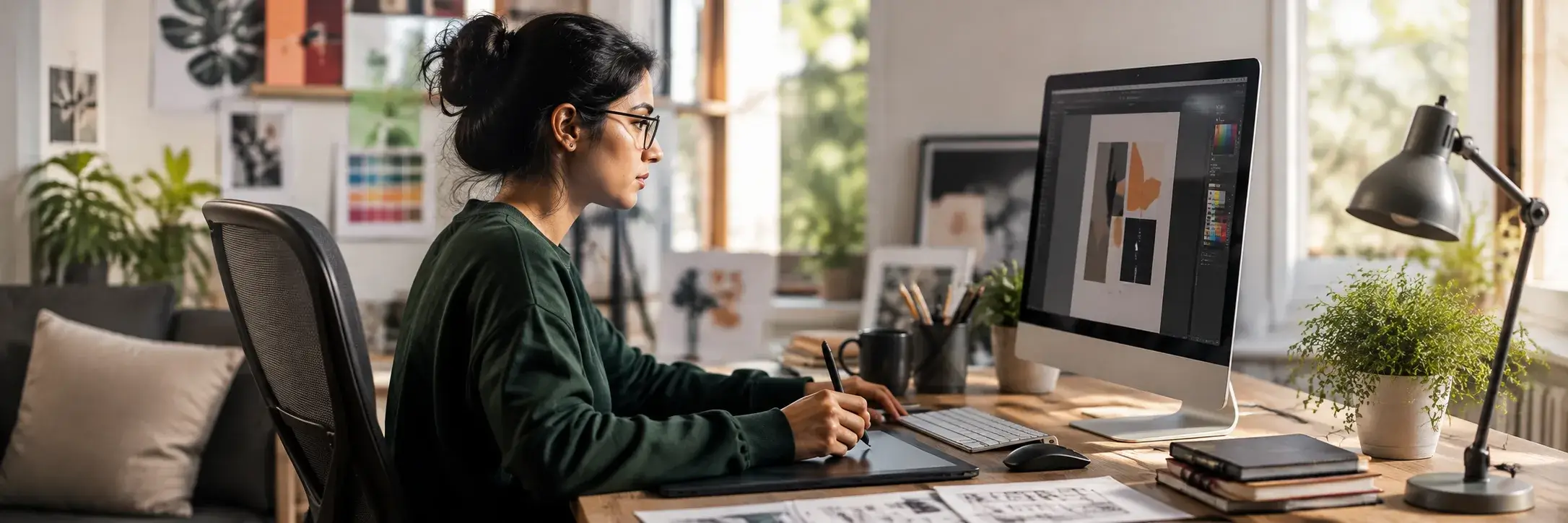
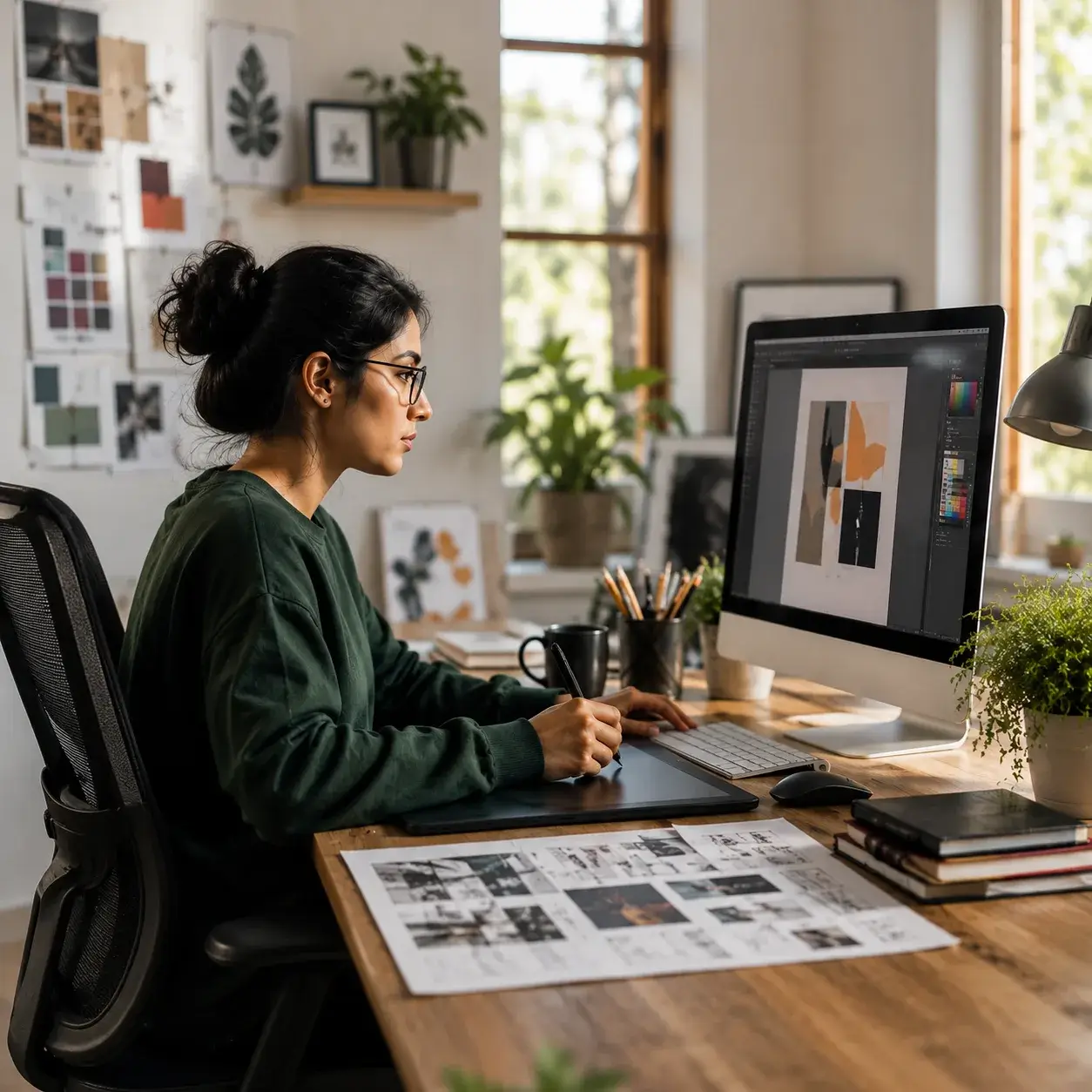
At its core, graphic design degree is a largely desk-based, digitally driven profession. A designer can work from a laptop, collaborate with clients remotely, develop brand identities, create social media campaigns, design presentations, build visual systems, or work on motion graphics without necessarily needing a physical studio or large team. That flexibility makes it possible to take up freelance projects alongside college or a full-time job and eventually turn them into a more substantial independent practice.
But accessibility has also made the field more competitive.
Design software is easier to access than ever. Templates can handle basic creative requirements. AI tools can generate visual concepts within seconds. Clients have more options when looking for design talent, while designers have access to a much larger pool of potential clients across India and overseas.
This means starting a graphic design freelance India career in 2026 is not simply about knowing how to use design software or having an eye for aesthetics. The real opportunity lies in developing the ability to understand a problem, think creatively, communicate an idea, use technology intelligently, and create work that delivers value to a client.
For someone considering a graphic design career , freelancing can therefore be more than a source of side income. It can become a testing ground for entrepreneurship, a way to build a professional network, and eventually a pathway towards a specialised creative practice, studio, or design-led business.
And that raises a bigger question: what does it actually take to build a sustainable freelance graphic design career in India in 2026? From choosing the right education and developing relevant skills to finding clients, understanding earning potential, building a portfolio, and adapting to AI, the path involves considerably more than simply taking on freelance projects.
Also Read: Animation and Graphic Design Degree: Everything You Need to Know
Graphic design was once largely associated with print advertising, brochures, packaging, publications and logos. While these applications remain relevant, the profession now spans websites, social media, mobile applications, digital campaigns, presentations, video and interactive experiences. Designers are increasingly expected to understand not just how something looks, but what it needs to communicate, who it is meant for and where it will be experienced.
This expansion has opened up several directions within a graphic design career:
These areas often overlap. A brand designer may move into art direction, while a graphic designer may add motion or digital skills to expand their capabilities. This makes the profession more flexible than a traditional, linear career path.
Freelancing adds another dimension. Students can take on small projects alongside their education, professionals can freelance alongside a full-time role, and experienced designers can eventually build independent practices. It can also be a low-investment way to test a specialisation, understand client needs and explore entrepreneurship.
A graphic design career can therefore lead to:
The profession is no longer defined simply by knowing design software. It is increasingly about combining creative thinking, communication, technology and business understanding to solve meaningful problems.
As the scope of design expands, the skills needed to build a sustainable graphic design career are changing with it. Software proficiency remains important, but it is increasingly just the starting point. Freelancers need to combine creative thinking with communication, business awareness and digital fluency to stand out. This is also why someone exploring graphic design freelance India opportunities needs to think beyond simply learning a design tool and focus on becoming capable of solving real communication problems.
Strong design begins with fundamentals, regardless of the technology being used. Typography, colour, composition, spacing, hierarchy and visual balance determine how effectively an idea is communicated. These principles remain relevant even as software and AI tools evolve. A designer who understands why a layout works can adapt to new tools far more easily than someone who has only learned how to operate them.
Tools such as Adobe Creative Cloud, Figma and motion design software are important parts of a designer's toolkit. However, access to these tools has become much easier. Templates, automation and generative AI can now produce basic visual outputs quickly. As a result, technical proficiency alone may not be enough to stand out in a competitive market. The greater value lies in knowing how to use technology purposefully to explore ideas, refine concepts and execute a strong creative direction.
The most interesting opportunities increasingly sit at the intersection of design and other disciplines. A designer who understands marketing can create work that supports a campaign, while someone familiar with technology can collaborate more effectively on digital products. Skills in content, storytelling, UX, motion or business can similarly expand the range of projects a designer can take on.
For example, learning motion can open opportunities beyond static visual communication. This is one reason students researching motion graphics salary trends may also want to consider the wider value of developing animation and visual storytelling skills rather than looking at salary figures in isolation.
Freelancing is not only a creative profession; it is also a client-facing one. Designers need to interpret briefs, ask the right questions, explain creative decisions and respond constructively to feedback. They also need to manage timelines, revisions and deliverables. These skills can be particularly important when transitioning from graphic design jobs into independent work, where the designer is responsible for both the creative output and the client relationship.
A strong designer who communicates clearly can often build greater trust and repeat business, which is critical to developing a sustainable freelance practice.
AI is already changing how designers approach ideation, image creation, variations and repetitive production tasks. Rather than treating it only as a replacement for creative work, freelancers can use it as another tool within their workflow. The more important skill will be knowing when to use AI, how to assess its output and where human judgement is necessary.
As production becomes faster, conceptual thinking, originality, editing, cultural understanding and creative direction can become more valuable. For students considering graphic design a good career in 2026, this shift is worth paying attention to: the future may favour designers who can combine technology with judgement rather than compete with technology on execution alone.
Freelancing and self-learning have made graphic design more accessible than ever. While online resources can help beginners build practical skills, formal education can offer something that tutorials often cannot: structured learning, critical thinking, experimentation and exposure to different ways of solving visual communication problems.
For students considering a graphic design degree , the value therefore goes beyond getting a qualification. A strong bachelor of graphic design programme can build a foundation in:
A B Des Communication Design approach can take this further by connecting design with technology, media, culture and communication. This matters as designers increasingly work across websites, social media, packaging, video and digital products.
The distinction is becoming less about knowing how to use design software and more about understanding why a particular visual solution works. As AI makes production faster, creative judgement, originality and problem-solving are likely to become even more valuable.
A degree is not the only route into design. Self-taught designers can build successful careers through consistent practice and strong portfolios. However, formal education can provide the structured learning and interdisciplinary exposure needed to navigate an evolving industry and the changing nature of graphic design jobs .
Also Read: Bdes Communication Design vs Graphic Design: Key Difference?
A successful freelance career is rarely built by simply signing up on a platform and looking for projects. It develops as designers move from practising their craft to understanding their value, building relationships and taking ownership of their work. For someone starting out, the first few projects are often as much about learning how the industry works as they are about earning.
A strong portfolio is central to this transition. Instead of showcasing everything they have created, designers should use it to demonstrate how they think, solve problems and adapt their skills across different briefs. Academic projects, internships, collaborations and self-initiated work can all become valuable portfolio pieces when presented with context and a clear creative rationale.
Over time, freelancing also requires a shift from being a designer to running a small creative practice. This means learning to:
This is where freelancing can become more than a side income. With experience, a designer may specialise in a niche, work with larger brands, collaborate with other creatives or eventually build an independent design studio. The path is not necessarily linear, and that flexibility is one of the biggest advantages of a modern graphic design career .
For students, the opportunity lies in starting early without rushing the process. Education can provide the foundation, while freelance projects, internships and collaborations can help translate that learning into professional experience. Together, they can create a career that is not dependent on a single job title or employment model.
Freelancing may be one of the most accessible ways to enter graphic design, but it is only one part of a much larger career landscape. As design becomes increasingly connected to technology, branding, digital experiences and business, designers who can think beyond execution will have more opportunities to shape what they do and where their careers take them.
For aspiring designers, the priority should therefore be to build strong fundamentals, develop an adaptable skill set and gain enough real-world exposure to understand where their strengths lie. Whether that eventually leads to freelance work, a role with a creative team or an independent design practice, the foundation remains the same: the ability to think, communicate and create with purpose.
For students looking to build that foundation through a contemporary, industry-oriented design education, ISDI School of Design & Innovation offers an environment where design can be explored across disciplines, with an emphasis on creative thinking and real-world application. The right education does not have to define a student's career path, it can give them the skills and perspective to shape one of their own.
Yes. A fresh B.Des graduate can start freelancing by building a strong portfolio, taking on smaller projects and gradually developing client experience. A graphic design degree can provide the foundation, while freelance work helps build practical skills.
Earnings vary based on experience, specialisation, client base and project rates. The graphic designer salary in India per month can range widely, with freelancers having the potential to earn more as they build expertise and long-term clients.
Platforms such as Upwork, Fiverr, Behance and LinkedIn can help designers discover freelance opportunities. However, referrals, networking and a strong portfolio can be equally important for finding quality graphic design jobs.
Neither is universally better. A full-time role can offer structured learning and stability, while freelancing provides flexibility and greater control over clients and projects. Both can contribute to a successful graphic design career.
Strong design fundamentals, communication, portfolio development, client management and proficiency with relevant design tools are essential. Skills in branding, digital design, AI and motion can also expand opportunities, including roles where motion graphics salary potential is higher.