

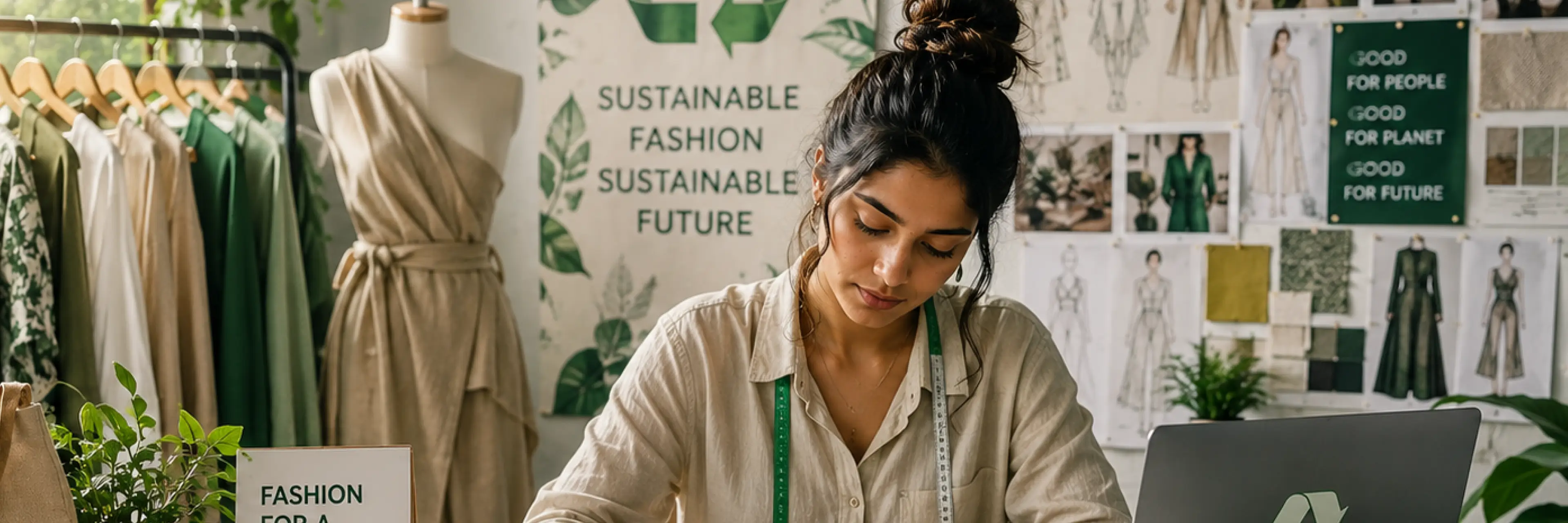
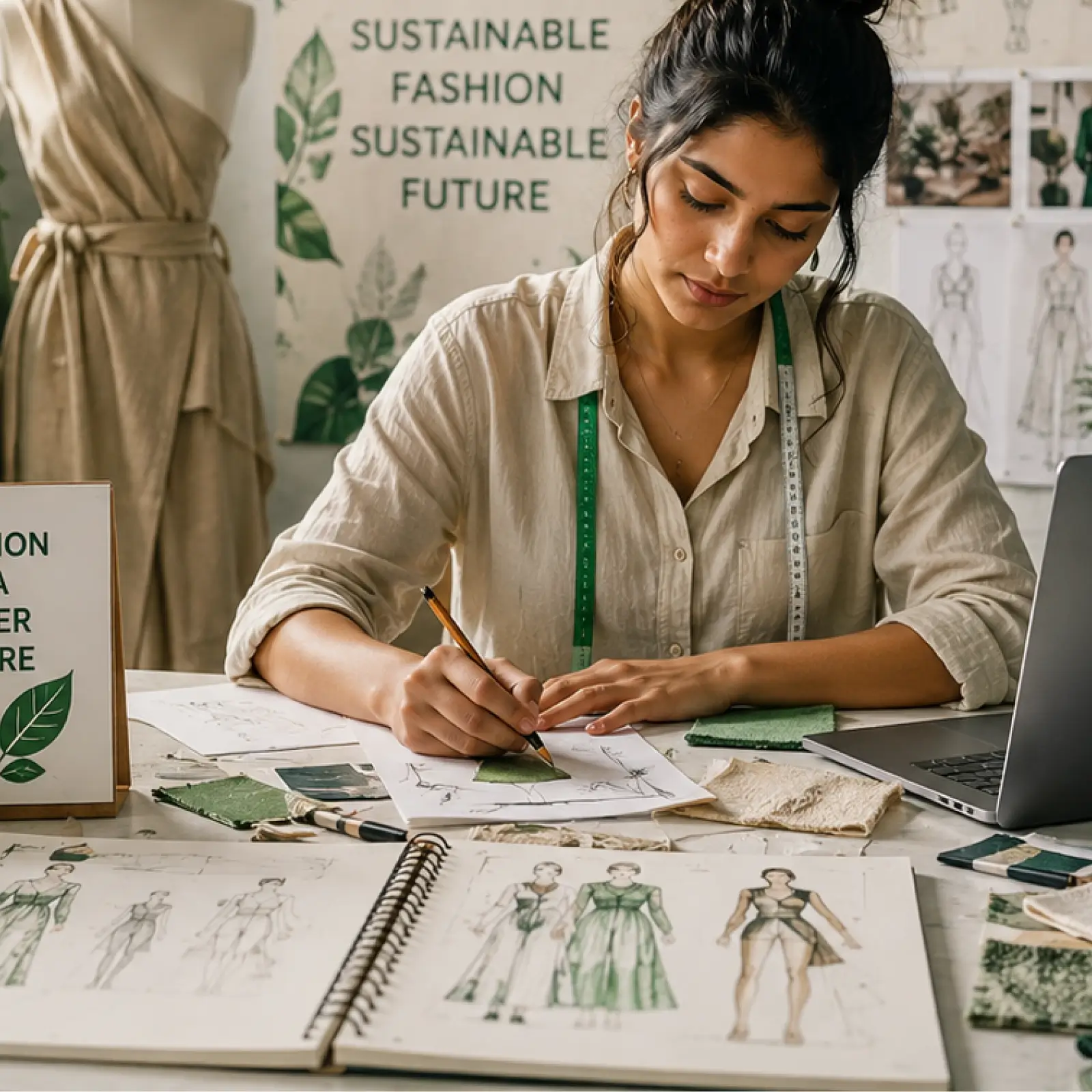
A decade ago, most students pursuing a fashion design degree dreamed of designing collections, working with leading brands, or setting the next big trend. While those opportunities still exist, the fashion industry is undergoing a major transformation. Today, it is being shaped not just by creativity, but also by sustainability, technology, and conscious consumer choices.
Consumers are asking where their clothes come from. Brands are being pushed to reduce waste, adopt ethical practices, and create more transparent supply chains. This shift is redefining the role of designers and creating demand for professionals who understand the broader sustainable fashion meaning beyond fabrics and fashion trends. As a result, Sustainable Fashion Design is emerging as one of the most relevant and future-focused career paths in the industry. Designers today are expected to think about material innovation, responsible production, circular design, and business impact alongside aesthetics.
India is uniquely positioned to lead this change. With its strong textile heritage, growing fashion ecosystem, and increasing focus on sustainable practices, the country is creating exciting opportunities for graduates. This is why leading fashion design schools are expanding their curriculum to offer a more interdisciplinary approach through programs such as a Bachelor of Design in Fashion Design or B Des Fashion Design .
For students, the appeal goes beyond creativity. A sustainable fashion degree can open doors to diverse job opportunities after fashion designing in India , from sustainable fashion consulting and product innovation to entrepreneurship and ethical sourcing. As the industry continues to evolve, specialized skills are also influencing B Des Fashion Design salary prospects and long-term career growth.
Sustainable fashion is no longer a niche trend. It is becoming the future of the industry, and the designers who understand this shift will be the ones shaping what comes next.
The fashion industry is at a turning point. For decades, growth was driven by fast-changing trends, large-scale production, and a culture of frequent consumption. While this model made fashion more accessible and commercially successful, it also exposed challenges related to resource consumption, textile waste, and supply chain transparency. Today, consumers are becoming more conscious of how their clothing is made, where materials are sourced, and what impact their purchases have on the environment.
At the same time, governments, industry bodies, and investors are pushing brands to adopt more responsible practices and demonstrate measurable sustainability efforts. This has significantly expanded the sustainable fashion meaning , which now goes far beyond eco-friendly fabrics or recycled materials. Sustainable fashion encompasses responsible sourcing, ethical manufacturing, waste reduction, circular design, product longevity, and greater transparency across the value chain.
As sustainability moves from being a niche concern to a business imperative, the industry is looking for professionals who can combine creativity with environmental awareness and strategic thinking. For students pursuing a fashion design degree , understanding these challenges is becoming just as important as mastering design itself.
As the global fashion industry embraces sustainability, India is uniquely positioned to lead this transformation. The country combines a rich textile heritage, a strong manufacturing ecosystem, deep-rooted craftsmanship, and a growing culture of innovation, creating an ideal foundation for the future of Sustainable Fashion Design. Unlike many markets that are now adapting to sustainability, India has long practiced principles that align with responsible fashion, from handcrafted textiles and natural dyes to repair, reuse, and low-waste production methods. These traditional approaches are increasingly relevant in an industry looking for more sustainable ways to create and consume fashion.
Several factors strengthen India's position as a future leader in sustainable fashion:
This unique combination of heritage and innovation presents exciting opportunities for students pursuing a fashion design degree . As sustainability becomes a defining force in the industry, graduates who understand both traditional craftsmanship and modern design practices will be well-positioned to contribute meaningfully to its future. This is also why many leading fashion design schools are expanding their focus beyond aesthetics to include sustainability, technology, and business innovation. For students considering a sustainable fashion degree , India offers a dynamic environment where global industry trends intersect with local knowledge systems, creating a powerful platform for learning, experimentation, and long-term career growth.
Also Read: Fashion Styling Degree Beyond Influencers: What Students Miss
The fashion industry is no longer looking for designers who only understand trends, sketches, and garment construction. Today's professionals are expected to navigate sustainability challenges, leverage emerging technologies, understand consumer behavior, and create commercially viable solutions. As a result, the modern fashion design degree is becoming increasingly interdisciplinary, blending creativity with business, technology, and innovation. This shift is redefining what students should expect from leading fashion design schools .
Modern fashion education places greater emphasis on design thinking, encouraging students to approach fashion as a problem-solving discipline rather than purely a creative pursuit. Whether addressing textile waste, changing consumer expectations, or accessibility challenges, students learn to develop solutions that are both innovative and practical. This mindset is becoming increasingly valuable in Sustainable Fashion Design , where designers must balance aesthetics with environmental and social impact.
Technology is transforming every stage of the fashion value chain, from concept development and product visualization to manufacturing and retail. Students pursuing a Bachelor of Design in Fashion Design are increasingly exposed to digital design tools, 3D prototyping, AI-driven trend analysis, and emerging fashion technologies. Understanding these tools not only improves efficiency but also helps future designers create more sustainable and data-informed solutions.
As sustainability becomes a business imperative, it is also becoming a fundamental part of fashion education. A modern sustainable fashion degree equips students with an understanding of responsible sourcing, circular design, material innovation, and ethical production practices. Rather than treating sustainability as a separate subject, leading programs are integrating it into the broader design process, preparing graduates for the realities of a rapidly evolving industry.
Today's fashion graduates are increasingly expected to think like entrepreneurs and innovators. Alongside classroom learning, many fashion design schools emphasize industry projects, live collaborations, internships, and experiential learning opportunities. This exposure helps students understand real-world business challenges while building professional networks and practical skills. It also expands job opportunities after fashion designing in India , enabling graduates to pursue careers across established brands, startups, consulting, and entrepreneurial ventures.
The career landscape for fashion graduates is expanding rapidly. As sustainability becomes a priority for brands, manufacturers, retailers, and startups, the industry is creating new roles that extend far beyond traditional design positions. For students pursuing a fashion design degree or sustainable fashion degree , the future offers opportunities at the intersection of creativity, business, technology, and environmental responsibility. These evolving roles are also transforming the scope of job opportunities after fashion designing in India , making the field more diverse and future-focused than ever before.
Sustainable fashion designers create products with a focus on minimizing environmental impact throughout the design process. This involves selecting responsible materials, reducing waste, designing for durability, and considering a garment's entire lifecycle. As more brands prioritize sustainability, designers who can combine creativity with conscious decision-making are becoming increasingly valuable across both luxury and mass-market segments.
Circular fashion aims to keep products and materials in use for as long as possible. Professionals in this space develop solutions that enable repair, reuse, recycling, and upcycling. They work on creating products that generate less waste and support circular business models. For graduates of a Bachelor of Design in Fashion Design, this emerging field offers the opportunity to shape how fashion products are designed, consumed, and reintroduced into the value chain.
As transparency becomes a business priority, fashion brands are investing more heavily in responsible sourcing and supply chain management. Professionals in these roles work closely with suppliers, manufacturers, and production teams to ensure ethical practices, compliance standards, and sustainable sourcing strategies. Their work plays a critical role in helping organizations build more accountable and resilient supply chains.
Many brands understand the importance of sustainability but require expert guidance on how to implement it effectively. Sustainability consultants help businesses develop environmental strategies, improve operational practices, measure impact, and align with industry standards. This career path is ideal for individuals who enjoy combining design knowledge with research, strategy, and problem-solving.
Product development professionals bridge the gap between design, manufacturing, and business objectives. They oversee the journey from concept to market while ensuring products meet quality, commercial, and sustainability goals. As consumer expectations evolve, brands increasingly seek professionals who can balance innovation, functionality, and responsible production practices.
The rise of conscious consumerism has created opportunities for entrepreneurs to build brands around sustainability, ethical production, and circular fashion principles. Many graduates are launching ventures focused on slow fashion, sustainable materials, rental models, resale platforms, and technology-driven fashion solutions. For students interested in innovation and business, entrepreneurship offers the chance to create meaningful impact while addressing emerging market needs.
Technology is becoming an integral part of the fashion industry, creating exciting opportunities for graduates with interdisciplinary skills. From digital design and 3D visualization to AI-powered forecasting and sustainable manufacturing solutions, fashion-tech roles are growing rapidly. Students from modern B Des Fashion Design programs who understand both design and technology are particularly well-positioned to thrive in this evolving landscape.
As sustainability continues to reshape the industry, the most sought-after professionals will be those who can think beyond products and contribute to broader business, environmental, and consumer challenges. This is why the future of job opportunities after fashion designing in India extends far beyond traditional design careers, opening doors to innovation, leadership, consulting, entrepreneurship, and emerging technology-driven roles.
The future of fashion will be shaped not just by changing trends but by how effectively the industry responds to environmental, technological, and consumer challenges. As brands adopt innovations such as AI-powered demand forecasting, digital product passports, supply chain traceability tools, and circular production systems, sustainability is becoming embedded into every stage of the fashion value chain. Companies are increasingly expected to demonstrate where materials come from, how products are manufactured, and what happens to them after use.
At the same time, sustainable manufacturing practices and circular economy models are gaining momentum as businesses look to reduce waste and improve resource efficiency. For students pursuing a fashion design degree or sustainable fashion degree , this means sustainability can no longer be viewed as a niche specialization. It is rapidly becoming a core industry expectation. Whether working in design, product development, sourcing, technology, or entrepreneurship, future professionals will need to understand how creativity, innovation, and sustainability intersect.
Those who develop these skills early will be better equipped to lead the next generation of fashion businesses and unlock emerging job opportunities after fashion designing in India and beyond.
Fashion is entering a new era, one where success will be defined not only by creativity and commercial appeal but also by responsibility, innovation, and long-term impact. As sustainability moves from the margins to the mainstream, the industry is seeking professionals who can think beyond products and contribute to building more ethical, resilient, and future-ready fashion systems.
For students, this presents an opportunity to be part of one of the most significant transformations the industry has witnessed. A modern fashion design degree is no longer just about learning how to design garments. It is about understanding materials, technology, business, consumer behavior, and sustainability, and bringing these elements together to create meaningful solutions.
As India strengthens its position in the global fashion ecosystem, graduates equipped with these interdisciplinary skills will be well placed to explore diverse career paths and contribute to shaping the industry's future. Institutions such as ISDI School of Design & Innovation , known for their industry-integrated and future-focused approach to design education, are helping prepare students for this evolving landscape by encouraging creativity, critical thinking, and real-world problem-solving.
For those considering a career in fashion, sustainable design is not simply an emerging specialization. It is increasingly becoming the foundation of how the next generation of fashion leaders will create, innovate, and drive change.
Sustainable fashion refers to designing, producing, and consuming clothing in ways that reduce environmental impact and promote ethical practices. It focuses on responsible sourcing, waste reduction, fair labor practices, and creating products that last longer. It matters because the fashion industry is under increasing pressure to address issues such as resource consumption, textile waste, and supply chain transparency.
Yes. As brands, manufacturers, and consumers become more conscious of sustainability, demand for professionals with expertise in Sustainable Fashion Design is growing. India's strong textile industry, rich craft heritage, and expanding sustainable fashion ecosystem make it a promising career path for aspiring designers.
Graduates can explore roles such as Sustainable Fashion Designer, Circular Design Specialist, Ethical Sourcing Manager, Fashion Sustainability Consultant, Product Development Specialist, Fashion Entrepreneur, and Fashion-Tech Professional. These opportunities continue to expand as sustainability becomes a key industry focus.
A sustainable fashion designer should combine creative design skills with knowledge of sustainable materials, circular design principles, ethical sourcing, and responsible production practices. Familiarity with emerging technologies, problem-solving, and an understanding of consumer trends are also valuable.
Several Indian brands are making notable contributions to sustainable fashion, including Fabindia, No Nasties, Doodlage, Nicobar, Okhai, and B Label. These brands focus on ethical production, sustainable materials, artisan-led craftsmanship, and environmentally conscious business practices.
Yes. Fashion designing offers diverse career opportunities across apparel, luxury, retail, styling, sustainability, fashion technology, and entrepreneurship. With India's growing fashion industry and increasing global presence, students pursuing a fashion design degree can explore a wide range of creative and business-oriented career paths.