
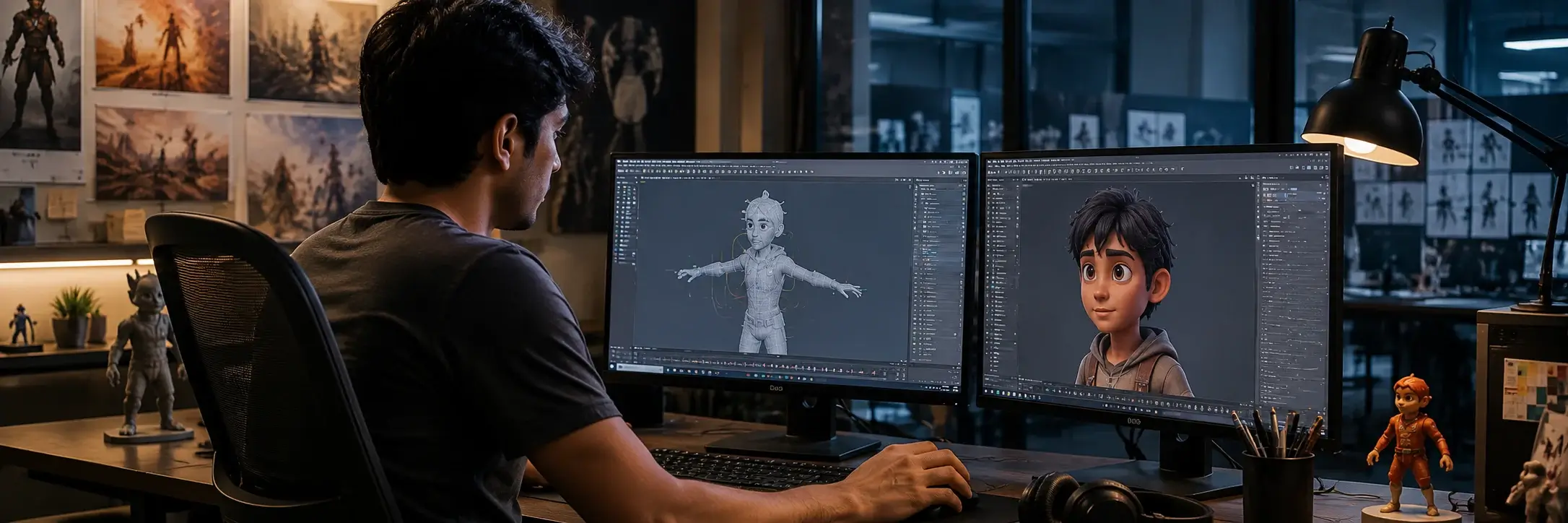
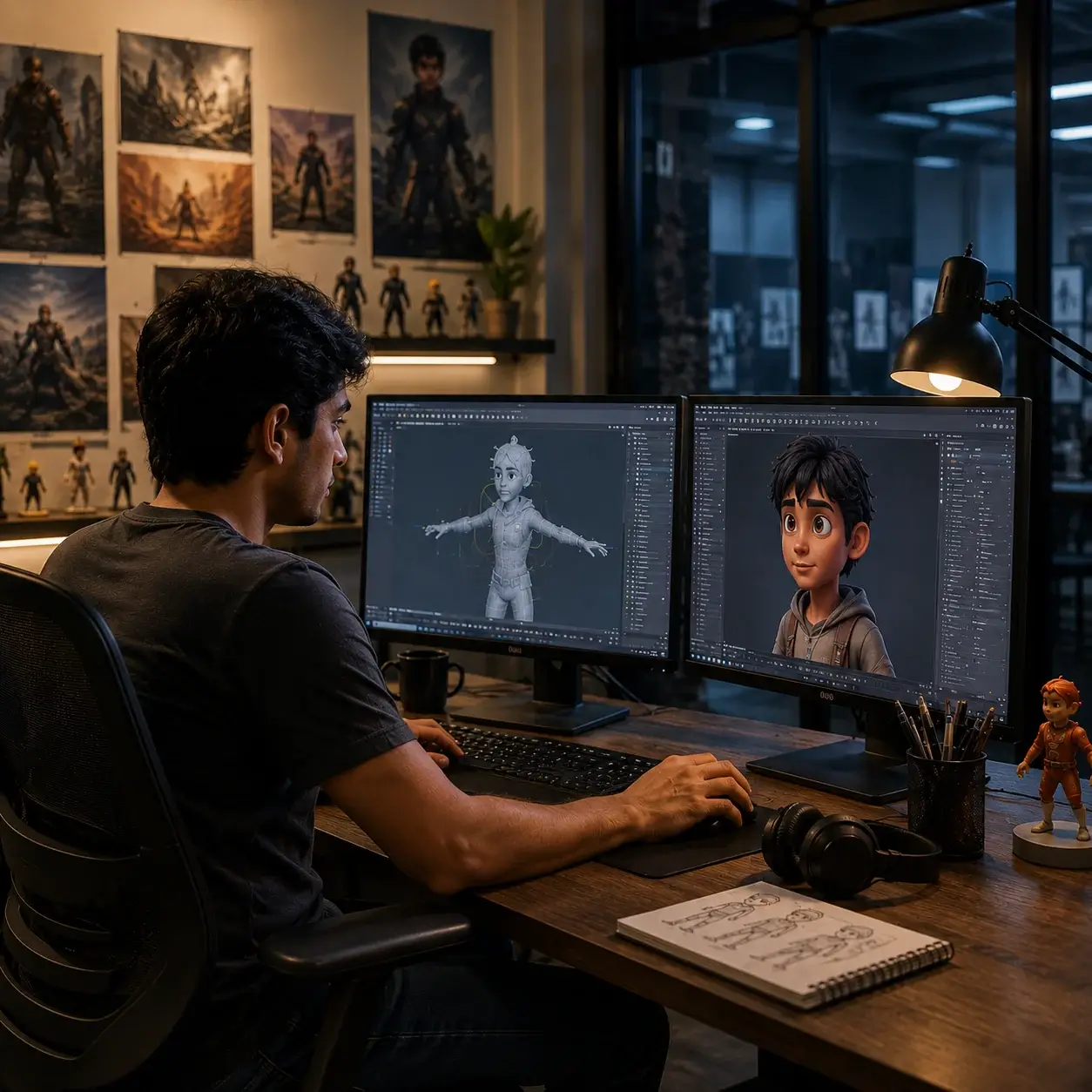
Animation and visual effects are no longer niche careers reserved for film studios or television. In 2026, they sit at the intersection of creativity, technology and digital experiences , making them some of the more rapidly evolving career paths for students interested in visual storytelling and emerging technology.
The growth is being driven by more than the entertainment industry. Streaming platforms, gaming, advertising, virtual production, e-commerce, automotive design, architecture, education and immersive technologies are all creating greater demand for 3D content and digital visual experiences. At the same time, advances in real-time 3D, AI-assisted production, AR and VR are expanding what artists can create and where their skills can be applied.
India is becoming an important part of this expanding ecosystem. The country already has a strong talent base across animation, VFX, gaming and post-production, with Indian professionals contributing to both domestic and international projects. As production pipelines become more sophisticated, the industry is also creating roles that go well beyond traditional animation, including 3D modelling, character animation, environment design, motion graphics, technical art, virtual production and VFX.
For students, this presents a career landscape with considerably more possibilities than the conventional idea of becoming an animator. 3D animation jobs in India can lead into entertainment, technology, design, advertising and other creative industries, depending on the skills and specialisation a student develops.
But what does the industry actually look like in 2026? What roles are available, which skills are employers looking for, where can freshers begin, and what can professionals realistically expect in terms of salary and career growth?
Understanding these questions is essential before choosing bdes in animation as a career—and before deciding which skills to invest in.
The expansion of India's animation, VFX and digital content ecosystem has created a much wider range of 3d animation jobs than the traditional animator role. Production today involves specialists who bring together artistic skills, storytelling and technology across different stages of the creative process. The opportunities within 3d animation companies in India can vary depending on whether they work in films, gaming, advertising, VFX, virtual production or immersive experiences. For students, this means choosing a career path based on their strengths and interests rather than viewing animation as a single profession.
Some of the key career paths include:
Also Read: Animation and Graphic Design Degree: Everything You Need to Know
The idea of the “top” 3d animation companies in India depends largely on what a professional wants to create. A studio known for large-scale VFX may offer a very different learning experience from a gaming company, animation studio or advertising production house. Rather than looking for a definitive ranking, students should understand the different parts of the industry and the kind of work each one offers.
Also Read: B Des in Animation & VFX: Is Game Design the Career
The growing demand for animation professionals naturally raises two questions for students: how much can a career in animation pay, and where is the industry headed? Both are closely connected. As production becomes more specialised and technology-driven, earning potential is increasingly influenced by the kind of skills a professional develops rather than simply the number of years they have worked.
There is no fixed salary for animation professionals. Compensation varies based on experience, specialisation, portfolio quality, studio, location, project complexity and the ability to work within professional production pipelines. Entry-level professionals typically begin in junior or trainee roles, while experienced specialists can progress into better-paying positions as their technical and creative capabilities deepen.
It can. A generalist may be valuable for their versatility, particularly in smaller studios, while specialists with advanced expertise can command greater value for complex production requirements. Areas such as technical art, VFX, character development, real-time 3D and virtual production are examples of fields where deeper technical knowledge can open up more specialised opportunities. For anyone exploring 3d animation jobs in India , building expertise over time can therefore be more important than chasing a particular starting salary.
AI is already becoming part of several creative workflows, helping with ideation, references, procedural processes and repetitive production tasks. However, its growing role does not make creative judgement less important. If anything, professionals need to become better at deciding what should be created, how it should look and whether it communicates the intended idea. The future animator is likely to work with increasingly intelligent tools rather than simply compete against them.
Real-time 3D is bringing animation closer to gaming, filmmaking, AR, VR and virtual production. Digital environments can increasingly be created, modified and experienced in real time, creating opportunities for artists who understand both visual design and technology. This convergence is also expanding the industries in which animation skills can be applied.
The boundaries between animation, graphic design, technology, filmmaking and gaming are becoming less defined. A future creative professional may need to understand animation alongside storytelling, interaction design, programming or real-time technologies. Programmes such as a B.Des in Animation, Bachelor of Design in Animation or BA in Animation and Graphic Design can provide different foundations for students depending on whether their interests lean towards animation, visual communication, technology or a combination of these disciplines.
The most valuable skill may ultimately be adaptability. Software will change, AI capabilities will evolve and production pipelines will continue to develop. Professionals who combine strong creative fundamentals with technical literacy, storytelling, problem-solving and the ability to learn new tools are better positioned to move with that change.
For students considering 3d animation jobs, the long-term opportunity therefore lies beyond learning a particular software package. It lies in developing the ability to think creatively, understand technology and solve visual problems in ways that remain valuable even as the tools evolve.
The animation industry is changing quickly, but the fundamentals of a strong creative career remain remarkably consistent. Curiosity, visual thinking, technical fluency, storytelling and the ability to keep learning will matter long after today's software and production workflows have evolved. For students, this makes animation less about choosing one job title and more about building a versatile creative practice that can move across industries and technologies.
Whether the goal is to become an animator, VFX artist, 3D designer, technical artist or explore an emerging role that does not yet have a defined title, the foundation begins with learning how to observe, create, experiment and solve problems. An education that brings design thinking, technology and real-world projects into the learning process can help students develop that foundation.
For students exploring this intersection of creativity and technology, ATLAS ISDI offers a space to understand design not as a fixed discipline, but as a way of thinking and creating in a rapidly changing world. The larger opportunity is to graduate not simply ready for today's animation industry, but prepared to shape what comes next.
Yes. Opportunities are expanding across animation, VFX, gaming, advertising, virtual production, AR/VR and digital content. The range of roles is also becoming more specialised, creating opportunities beyond traditional animation studios.
3D animators can find opportunities with animation and VFX studios, gaming companies, advertising agencies and digital production houses. Companies such as DNEG, Prime Focus and Red Chillies VFX are part of India's broader animation and VFX ecosystem.
Salary varies significantly based on experience, specialisation, portfolio, location and employer. Freshers typically start at junior levels, while professionals with specialised expertise in areas such as character animation, VFX, technical art or real-time 3D can progress to higher-paying roles.
The right software depends on the chosen specialisation. Tools used across the industry include Autodesk Maya, Blender, 3ds Max, Cinema 4D, Houdini, ZBrush, Unreal Engine and Adobe After Effects. More important than knowing many tools is developing strong fundamentals and becoming proficient in the tools relevant to your career path.
Neither is inherently better. 3D offers opportunities across gaming, VFX, films, virtual production and immersive experiences, while 2D remains relevant to animation, illustration, motion graphics and visual storytelling. The better choice depends on your interests, strengths and the type of work you want to pursue.
A strong foundation in design and animation principles, software proficiency, visual storytelling, problem-solving and collaboration can help. Most importantly, build a focused portfolio that demonstrates what you can create and how you approach a project.
A degree is not the only route into animation, but a structured design education can help develop creative fundamentals, technical skills, collaboration and industry exposure. Ultimately, employers will also look closely at the quality of your portfolio and practical abilities.