


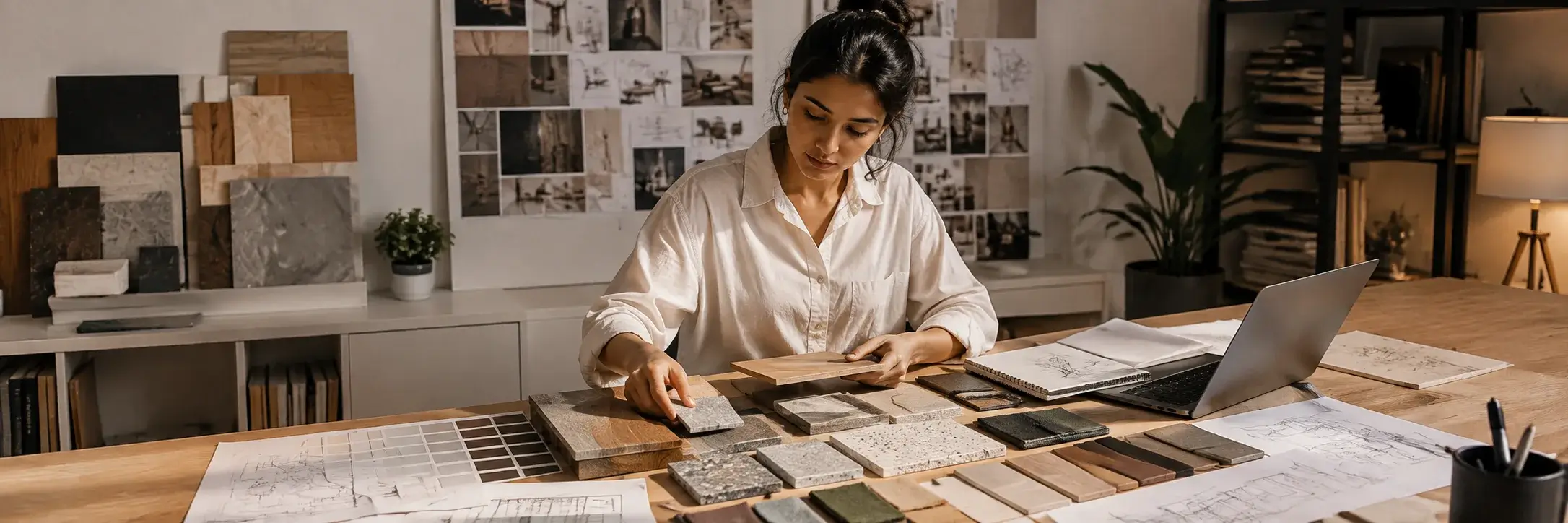

Selecting materials is one of the most practical decisions an interior designer makes. Yet, it is often taught as a matter of knowing different types of wood, stone, glass, fabric, metal and finishes. In practice, the decision is far more complex. A material that works well in a living room may not be suitable for a commercial kitchen. A beautiful flooring option may require more maintenance than a high-traffic space can accommodate. A finish that looks refined may not withstand constant cleaning or exposure to sunlight.
This is why understanding interior design materials is an important part of design education. Students need to know more than what a material looks like. They need to understand its strength, durability, maintenance, cost, availability, environmental impact and suitability for a particular application.
An interior design materials list can help students become familiar with the available options, but memorising materials is only the first step. The real skill lies in knowing how to compare them and make the right choice for a given space. For students pursuing a bachelor of interior design, this way of approaching materials becomes especially important as academic projects become more detailed and closer to professional practice. Every material choice has consequences, from how a space feels and functions to how easily it can be built and maintained.
So, rather than asking which material is best for interior design , students should learn to ask a more useful question: which material is best suited to this space, its users and its purpose? Understanding that difference can turn material selection from a purely visual exercise into a well-informed design decision.
Understanding materials is an essential part of becoming an interior designer, but it should go beyond memorising names and finishes. Knowing the difference between marble, plywood, glass or brass is only the starting point. Students also need to understand where a material works best, how it performs over time and what limitations it may have. Factors such as durability, maintenance, fabrication, cost, aesthetics and the conditions of the space all influence the final choice.
An interior design materials list should therefore be treated as a foundation for exploration rather than a checklist to memorise. Students should become familiar with major material categories and understand their practical applications.
The goal is not to memorise the largest possible catalogue. It is to learn how to compare materials, understand their behaviour and select them according to the needs of a space. That is what transforms material knowledge into a practical design skill.
The role of materials for interior design extends far beyond deciding how a room should look. They influence what people notice when they enter a space, how comfortable they feel while using it and how the interior changes over time. A material can absorb sound, reflect light, retain heat, withstand constant use or develop a distinctive patina. These qualities can become part of the design itself.
For a B.Des student, this makes material selection an exercise in observation and judgement. Instead of beginning with a catalogue of products, it can be more useful to study what materials are already doing in real spaces.
This way of studying materials helps students move from simply identifying them to observing how they behave within an interior. That understanding becomes particularly valuable when developing concepts, creating material palettes and eventually making specifications for real projects.
Also Read: Top Interior Designing Degree Program in India for 2026
An interior design styles list can help students understand the visual language of different spaces, but style is not created by colour or furniture alone. Materials play a major role in establishing the character of an interior. The same room can feel warm, industrial, understated or luxurious depending on the surfaces, textures and finishes used. For a design student, the more useful exercise is to understand why certain materials support a particular design approach rather than simply reproducing a familiar style.
Minimalist interiors often rely on a restrained palette, clean forms and limited visual clutter. This makes the quality of the material particularly important. Natural wood, stone, concrete, glass and muted finishes can create visual interest without adding unnecessary decoration. Here, the grain of timber, texture of stone or subtle variation in a plaster finish can become part of the design instead of being hidden beneath layers of ornamentation.
Industrial interiors often draw from materials associated with construction and manufacturing. Exposed brick, concrete, steel, metal mesh and reclaimed wood can give a space a robust, unfinished quality. What makes the approach effective is not simply using these materials together, but allowing their inherent characteristics to remain visible. Joints, structural elements and signs of wear can become deliberate parts of the interior rather than details that need to be concealed.
Scandinavian-inspired spaces typically use materials to create a sense of warmth while maintaining visual simplicity. Light-toned timber, natural textiles, wool, muted ceramics and soft finishes are commonly used to introduce texture without making the space feel heavy. The material palette works alongside natural light and simple forms, showing how material choices can influence comfort and atmosphere as much as appearance.
In biophilic interiors, materials can help create a stronger connection between occupants and the natural world. Timber, stone, cork, bamboo, natural fibres and other tactile materials can introduce organic textures and variation. However, using natural materials alone does not make an interior biophilic. Their placement, relationship with daylight, vegetation, ventilation and the overall spatial experience also matter.
Also Read: Biophilic Interior Design Degree: Why Students Must Know
Contemporary interiors are less restricted by a fixed material palette. Designers may combine natural stone with engineered surfaces, timber with metal, or glass with textured fabrics. The challenge is to create a sense of coherence despite the variety. This requires an understanding of proportion, texture, contrast and visual hierarchy rather than simply combining materials because they are individually attractive.
The larger lesson for students is that style should inform material selection, but it should not dictate it completely. Understanding the properties and possibilities of a material allows designers to interpret a style in a way that feels considered and relevant rather than copied from a reference image.
Material selection is also becoming a question of responsibility. The environmental impact of an interior does not begin when a material is installed and end when the project is completed. It is connected to where the raw material comes from, how it is manufactured, how far it travels, how long it lasts and what happens when it is eventually removed.
This is changing how designers assess materials for interior design . A product marketed as sustainable may not necessarily be the most responsible choice for every project. Its durability, maintenance requirements, manufacturing process and potential for reuse all need to be considered.
A material that lasts for decades can sometimes be a better choice than one that needs frequent replacement, even if the latter appears more environmentally friendly at first. Designers therefore need to consider how a material will age under actual conditions of use and whether it can be maintained rather than replaced.
Sustainable design does not always mean bringing a new material into a project. Existing timber, stone, furniture, fixtures and other elements can sometimes be repaired, adapted or reused. Designing with what already exists can reduce waste while also giving a space greater character and continuity.
The way materials are joined matters too. Adhesives and permanent assemblies can make components difficult to separate at the end of their useful life. Designing connections that allow materials to be removed, repaired or replaced individually can support a more circular approach to interiors.
Natural does not automatically mean sustainable, just as synthetic does not automatically mean harmful. A material needs to be considered in context, including its sourcing, processing, transportation, lifespan and end-of-life options. This broader view helps students make more informed choices instead of relying on simple labels.
For future designers, sustainability is therefore not an additional layer added after the design is complete. It is part of the material decision itself. The goal is not to use a particular category of “green” materials, but to create interiors that use resources thoughtfully and continue to perform well over time.
A bachelor of interior design should teach students to do more than identify different materials and their applications. Material understanding develops through observation, experimentation and exposure to how things are actually made. Visiting material suppliers, speaking with fabricators, studying completed interiors and maintaining a material journal can help students understand qualities that may not be visible in a catalogue or digital model. Prototyping is equally important. Testing a material at a smaller scale can reveal how it bends, joins, reacts to light, wears over time or works alongside another material. These experiences help students develop judgement that cannot come from theory alone.
This kind of material intelligence will become increasingly important as the profession changes. Today's materials for interior design include smart surfaces, recycled composites, bio-based materials and digitally fabricated components, bringing designers closer to fields such as technology, manufacturing and material science. At the same time, sustainability requires them to think about sourcing, longevity, repair and reuse alongside aesthetics. Future designers will therefore need to work across disciplines and understand how a material affects not only the appearance of a space, but also its performance, environmental impact and user experience. The advantage lies not in knowing every new material that enters the market, but in having the curiosity and judgement to understand what it can contribute to a design.
Materials are not the final layer added to an interior once the design is complete. They influence the way a space looks, performs, feels and changes over time. For a design student, learning about them is therefore less about memorising an interior design materials list and more about developing the judgement to question every choice. Why this material? Why in this space? How will it perform? Can it be maintained, repaired or reused? These questions help turn a design concept into a space that works in the real world.
As the profession becomes more connected to technology, sustainability and new ways of making, material knowledge will only become more valuable. Students exploring an interior design degree can benefit from an education that gives equal importance to creative thinking, experimentation and practical understanding. At ATLAS ISDI, this approach to design education encourages students to engage with ideas through making, exploration and interdisciplinary learning—helping them build the confidence to approach materials not just as design elements, but as an important part of the decisions that shape the spaces we live and work in.
The main materials for interior design include wood, plywood, stone, glass, metal, ceramics, textiles, laminates, composites, paints and wall finishes. The right choice depends on the space, function, durability and design style.
There is no single answer to which material is best for interior design in Indian homes. Plywood, natural and engineered stone, glass, metal and laminates are widely used, with the choice depending on factors such as climate, maintenance, budget and usage.
In 2026, designers are exploring recycled materials, reclaimed wood, bamboo, cork, natural fibres, recycled composites and low-impact finishes. These materials are becoming an important part of modern interior design materials selection.
Interior designers consider the space's function, climate, users, durability, maintenance, budget, aesthetics and environmental impact. An interior design materials list can help compare options before making the final selection.
Students pursuing a bachelor of interior design can learn through material libraries, supplier visits, workshops, fabricator interactions, site visits and industry projects. Practical exposure through interior design schools can also help students understand how materials are sourced, priced and applied.