Design today goes beyond creating visually appealing graphics or interfaces. It shapes how brands communicate, how people access information, how digital products function and how individuals interact with the world around them. As businesses increasingly embrace digital platforms and technology-driven experiences, design has evolved into several specialised disciplines, each addressing different needs.
For students exploring creative careers, this often raises an important question: should they pursue Communication Design or UX Design? While both fields share a foundation in creativity, visual thinking and problem-solving, they approach design from different perspectives.
B des Communication Design focuses on translating ideas, messages and information into meaningful visual experiences through disciplines such as graphic design, typography, branding and digital storytelling. User Experience (UX) Design, on the other hand, examines how people interact with products, services and digital platforms, with an emphasis on making those experiences intuitive, accessible and functional.
Consider a mobile banking application. Communication Design shapes its visual identity, messaging and illustrations, while UX Design determines how easily customers can navigate the app, access information and complete transactions. Both contribute to the same product but solve different design challenges.
This distinction is increasingly relevant as creative careers evolve. While communication designers work across branding, digital campaigns and interactive media, UX designers collaborate with product teams to develop applications, websites and digital services.
For students considering a B.Des in Communication Design, a bachelor's degree in UI/UX design or a BDes in graphic design, understanding these differences is an important first step. The choice is not simply between creativity and technology, but about identifying whether you are more interested in shaping how people perceive information, interact with experiences or bring both together.
So, what separates these disciplines? Where do they overlap, what skills do they require, and what career opportunities can each offer?
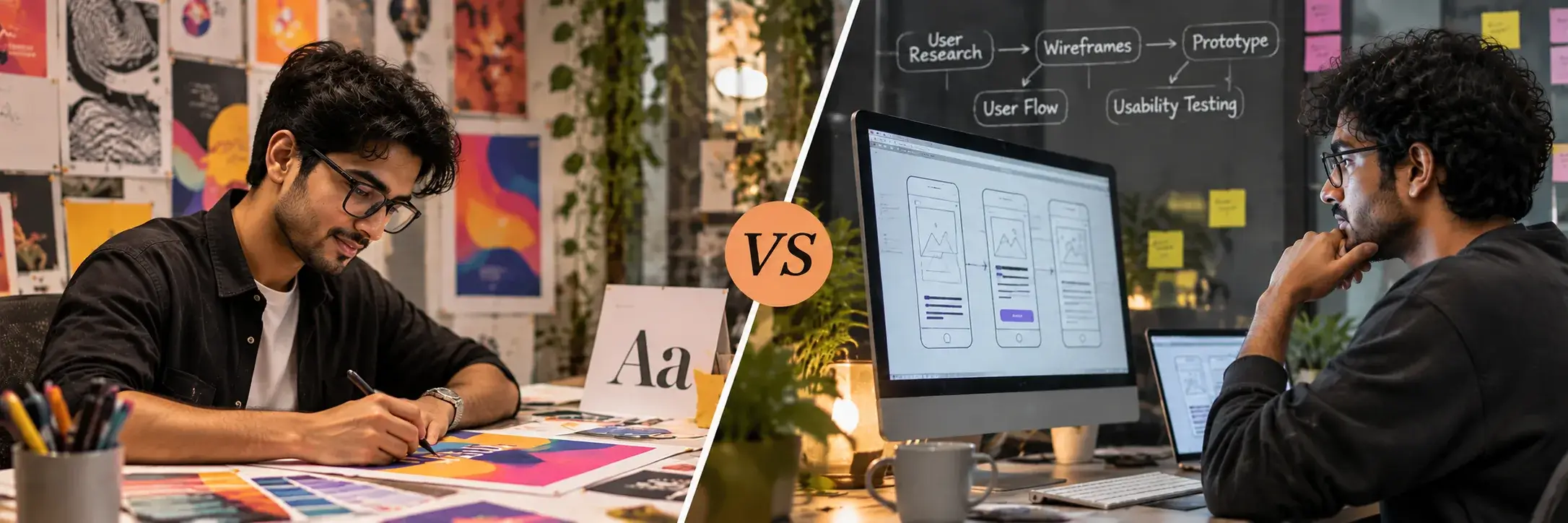
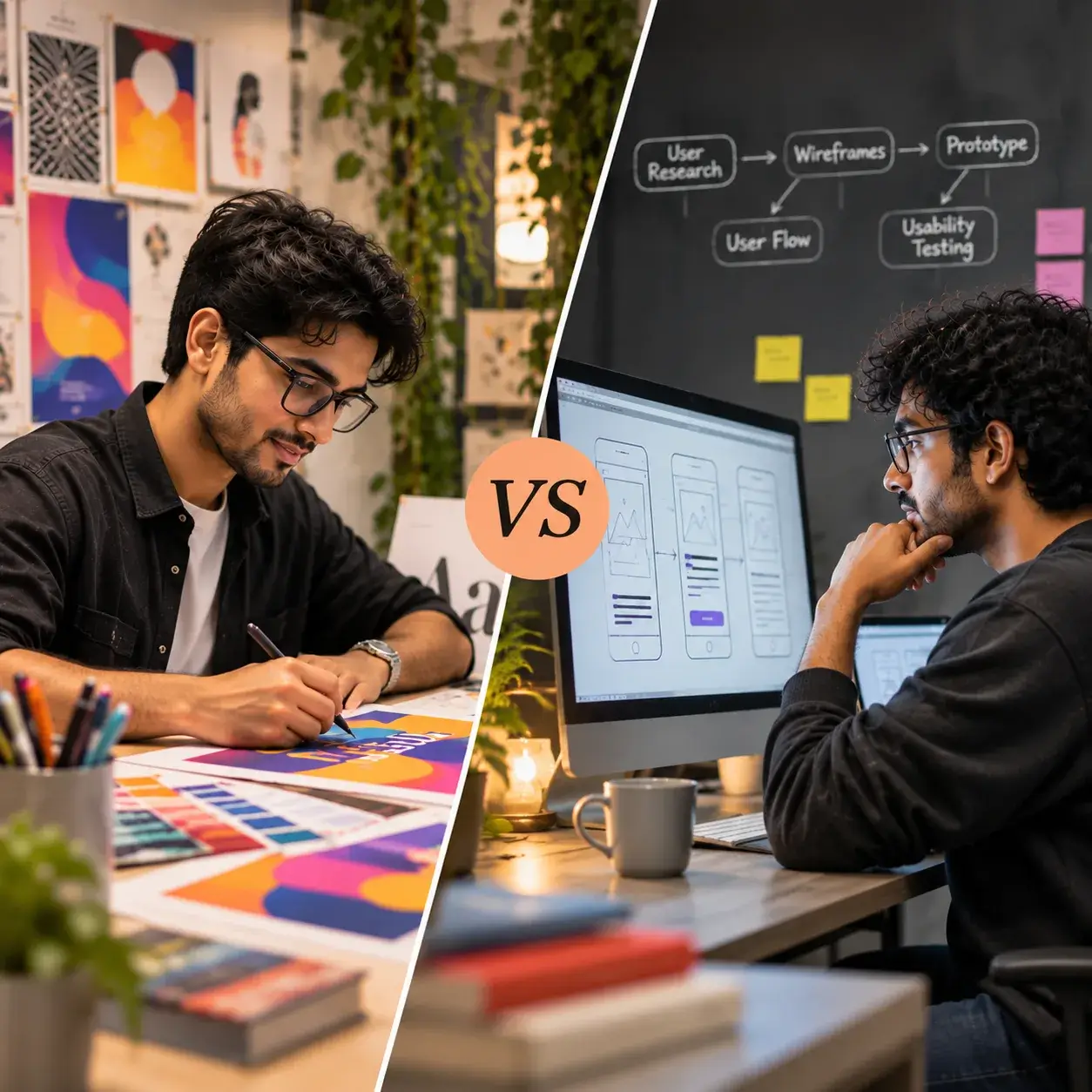
Communication Design and UX Design share a foundation in creativity and problem-solving, but their objectives differ. While Communication Design focuses on communicating ideas through visual elements, UX Design aims to make interactions with products and digital platforms intuitive and accessible.
Here are the key differences:
1. Primary Objective
2. Design Approach
3. Core Disciplines
4. Research Methodologies
5. Design Processes
6. Common Deliverables
7. Tools and Technologies in BDes in Communication
8. Industries and Applications
Consider an e-commerce application. A communication designer develops its visual identity, product imagery and promotional graphics, while a UX designer focuses on navigation, product discovery and checkout experiences.
This is where the disciplines complement each other. A UI UX designer benefits from understanding visual communication alongside user behaviour, helping create digital experiences that are both engaging and functional.
Also Read: Bdes Communication Design vs Graphic Design: Key Difference?
Although Communication Design and UX Design have different objectives, their boundaries are becoming increasingly fluid as digital experiences evolve. Websites, mobile applications and interactive platforms need more than attractive visuals or functional interfaces. They must communicate information clearly while making interactions intuitive. This is where both disciplines come together, combining visual storytelling with user-centred problem-solving to create meaningful experiences.
Both disciplines use typography, colour, spacing and composition to organise information and guide attention. Communication designers use these elements to make messages visually engaging, while UX designers apply them to help users navigate interfaces and identify important actions. A strong understanding of graphic design principles can therefore strengthen the work of a UX designer.
Effective design begins with understanding the people it serves. Communication designers study audience preferences, cultural contexts and emotional responses to create relevant visual messages. UX designers go deeper into user behaviour, motivations and challenges through interviews, research and testing. Both approaches rely on empathy to make design decisions more meaningful.
Modern digital platforms bring visual communication and user experience together. A website, for instance, must reflect a brand's identity while allowing visitors to navigate information effortlessly. Communication design establishes the visual language, while UX design shapes the interaction journey. This overlap creates opportunities for designers to explore disciplines such as interface design, digital storytelling and interactive media.
Accessibility is an important consideration across both disciplines. Communication designers must ensure that visual messages are readable and understandable across different audiences. UX designers consider accessible navigation, colour contrast, screen-reader compatibility and ease of interaction. Whether pursuing communication design courses or specialising in UX, students need to understand how inclusive design makes information and experiences accessible to more people.
Ultimately, the distinction between these disciplines is not always absolute. As design becomes more interdisciplinary, professionals who understand both visual communication and user experience can approach creative challenges with a broader perspective.
Both Communication Design and UX Design require creative thinking, problem-solving and an understanding of human behaviour. However, the skills needed in each field reflect their distinct approaches. While communication designers translate ideas into compelling visual narratives, UX designers focus on creating functional and user-friendly experiences.
The career scope of these disciplines extends across industries such as technology, advertising, e-commerce, entertainment, healthcare and digital media.
Communication Design Course career options include:
UX Design career options include:
The growing demand for digital experiences has also expanded opportunities for professionals exploring UX designer jobs across technology-led industries. Ultimately, career progression in either field depends on practical experience, specialisation, a strong portfolio and the ability to adapt to evolving design practices.
Also Read: UI UX Design Degree vs Self-Learning – Do You Need
The future of design will depend on how effectively creativity, technology and human understanding come together. Artificial intelligence, automation, Augmented Reality (AR) and Virtual Reality (VR) are changing how designers approach research, ideation and creative execution, opening new possibilities for visual storytelling and interactive experiences. However, technology alone cannot replace creative judgement, critical thinking and contextual understanding. As the boundaries between graphic design, communication design and UX continue to evolve, designers will need skills that extend beyond their specialisation. Research, collaboration, technological fluency and adaptability will become increasingly important in solving complex design challenges.
This shift also calls for a broader approach to design education. Students exploring a B.Des in Communication Design or a bachelor degree in UI UX design should look for opportunities to understand multiple creative disciplines, experiment with emerging technologies and work on practical challenges. Exposure to branding, visual storytelling, digital media, interaction design and prototyping can help build a more versatile design foundation. Ultimately, the ability to connect creative thinking with technology and human-centred problem-solving will be central to the next generation of design professionals.
Also Read: How Technology & AI Is Changing B Des Communication
Communication Design and UX Design may approach problem-solving differently, but both play an important role in shaping how people engage with information, products and experiences. While one focuses on visual storytelling and effective communication, the other prioritises usability and meaningful interactions. As these disciplines increasingly overlap, the distinction between them is less about choosing one over the other and more about understanding where your interests and strengths lie.
For aspiring designers, the right starting point is to build a strong foundation in design principles, develop an understanding of people and technology, and remain open to exploring different creative disciplines. Whether your interest lies in branding, graphic design, digital experiences or product design, the ability to think critically and adapt to changing industry needs will remain valuable.
For students exploring these possibilities, ATLAS ISDI's B.Des in Communication Design & New Media offers an opportunity to understand design through a combination of visual communication, digital media and emerging technologies. Exploring its programme curriculum can be a useful next step in understanding how different design disciplines come together in contemporary design education.
Communication Design focuses on visual storytelling, branding and conveying information, while UX Design focuses on creating intuitive and user-friendly digital experiences.
Not exactly. UX Design is a distinct discipline, but it shares principles with communication design, including visual hierarchy, information design and audience understanding.
Both offer diverse opportunities. Communication Design spans branding, advertising and digital media, while UX Design offers roles in technology, fintech, e-commerce and product development.
It can provide a strong foundation through exposure to UI/UX, interaction design and digital prototyping. Additional UX research, usability testing and portfolio development can help students pursue specialised roles.
Students interested in visual storytelling and creative expression may prefer Communication Design. Those drawn to user behaviour and digital problem-solving may prefer UX Design. A programme offering interdisciplinary exposure can help students explore both before specialising.