

A brand campaign is no longer designed for a single poster, billboard or print advertisement. The same idea may need to become a 10-second Reel, an animated product demonstration, a kinetic typography video, an interactive website element and a motion-led advertisement. This shift has changed what organisations expect from designers. Knowing how to create a strong static visual is still important, but increasingly, designers are also expected to understand movement, timing, digital behaviour and storytelling.
That is one reason motion graphics jobs are attracting attention among design graduates. Motion is now used across advertising, entertainment, gaming, technology, e-commerce, education and digital products, creating demand for designers who can translate visual ideas into moving experiences.
But there is an important distinction to make. Motion graphics is not itself a BDes degree, nor is it necessarily the single most in-demand design career in India. It is a specialised skill that can emerge from disciplines such as graphic design, animation and communication design. Its growing relevance comes from something bigger: motion is becoming part of how brands, products and information are designed for digital audiences.
For students choosing a BDes, therefore, the question is not simply whether motion graphics offers jobs. It is whether their design education can give them the foundation to work across visual communication, digital media and emerging technologies, while allowing them to specialise in areas such as motion. That is where the real career opportunity lies.
Motion graphics are becoming more valuable because the way organisations communicate has changed. Brands, technology companies, entertainment platforms and digital businesses are no longer communicating only through static posters, advertisements or website graphics. Their ideas need to work across Reels, digital ads, product videos, app interfaces, explainers and other screen-based formats where movement can guide attention and make information easier to understand. This has expanded the role of the designer from creating individual visual assets to designing how those assets behave across different digital environments. As a result, motion graphics are increasingly becoming a useful skill across the wider design industry, rather than remaining limited to animation studios or advertising agencies.
Brands increasingly need animated versions of their identities for social media, websites, campaigns and digital advertisements.
Platforms such as Instagram and YouTube have made short, visually engaging content an important part of brand communication, creating demand for designers who can work with movement, typography and visual storytelling.
SaaS and technology companies use motion graphics to demonstrate products, explain complex processes and make technical concepts easier for customers to understand.
Film, OTT, television and streaming platforms use motion for title sequences, promotional content, trailers, broadcast graphics and other visual experiences.
Motion increasingly overlaps with 3D, interaction design and game development, creating opportunities for designers who can work across these disciplines.
Educational platforms use animation to explain concepts, processes and data that may be difficult to communicate effectively through static content.
Websites and applications use motion to guide users, communicate feedback and make interactions easier to understand.
The important point is that this growth is not simply about the increasing popularity of video . Motion has become a way of communicating information. A designer who understands why something should move, what should move, when it should move and how that movement supports the message brings a different level of value to a design team. This is also why motion graphics is becoming relevant to students pursuing broader disciplines such as a graphic design degree or BDes Communication Design, rather than being limited to students who specialise in animation.
A BDes can provide a strong foundation for a career in motion graphics, but the value of the degree depends on what students learn beyond software and technical execution. Motion graphics are built on principles such as composition, typography, visual hierarchy, storytelling and communication, all of which are central to design education. A well-rounded BDes can help students understand these fundamentals while giving them opportunities to experiment with digital media, motion and emerging technologies. This matters because tools will continue to change, but the ability to develop an idea, communicate it visually and adapt it across different formats remains relevant.
Students develop an understanding of typography, colour, composition, visual hierarchy and visual storytelling, which form the foundation of effective motion design.
Motion graphics is ultimately about communicating an idea through movement. A BDes can help students understand how audiences interpret visual information and how design choices influence that interpretation.
Depending on the curriculum, students can experiment with animation, digital media, video, interaction and time-based design before deciding whether to specialise further.
Design education typically involves working on briefs, researching problems, developing concepts and refining ideas. These skills are directly relevant to professional motion graphics work.
Motion increasingly overlaps with branding, UX, technology, 3D and storytelling. Exposure to different design disciplines can help students build combinations of skills rather than being restricted to one medium.
Studio projects, live briefs and independent experimentation can give students the opportunity to develop work that demonstrates not just technical ability, but also their thinking and creative process.
For students considering a bachelor of graphic design or a BDes Communication Design, this broader foundation can be particularly useful. The objective should not be to graduate knowing one animation software exceptionally well. It should be to understand how to use design, technology and motion together to solve communication problems . That is what can make a BDes a useful starting point for a long-term career in motion graphics.
Also Read: Bdes Communication Design vs Graphic Design: Key Difference?
The growing demand for motion-led content makes it tempting to call motion graphics one of India’s most in-demand design careers. But that conclusion needs some qualification. Motion graphics is a skill and specialisation, not a BDes degree , and demand for design professionals varies significantly across industries. A student choosing a design degree should therefore look beyond a single job title and consider how different skills can work together to create stronger career opportunities.
The bigger opportunity lies in how motion can strengthen other areas of design. A graphic designer can use motion to create more dynamic brand identities, while a communication designer can use animation to make information easier to understand. Similarly, a designer working with digital products can use motion to improve how users navigate and interact with an interface.
This is where a graphic design degree or BDes Communication Design can offer an advantage. Students can build fundamentals in typography, visual communication, branding and storytelling before developing specialised motion skills. Such a foundation gives them more flexibility to move between motion graphics designer jobs and other creative roles as the industry evolves.
Students should not choose a BDes simply because one career appears to be trending. They should look for programmes that combine design fundamentals with technology, experimentation, industry exposure and opportunities to build a strong portfolio. For someone interested in motion, the ideal programme should make it possible to develop motion as a specialisation without limiting their understanding of the wider design ecosystem.
Instead of asking whether motion graphics is India's single most in-demand BDes career, students should ask whether it is becoming an important skill across the design industry. The answer is increasingly yes. From motion graphics jobs in Mumbai and advertising to technology, entertainment and digital products, motion is becoming part of how visual communication works. The strongest career opportunity may therefore belong to designers who can combine motion with other valuable design capabilities.
Also Read: Animation and Graphic Design Degree: Everything You Need
Motion graphics is becoming an increasingly valuable part of India's design economy, but it would be misleading to treat it as a guaranteed or universally dominant BDes career. Its real strength lies in how widely the skill can be applied. From advertising and entertainment to technology, digital products and education, organisations are using motion to communicate ideas in ways that static design alone cannot always achieve.
For students, this makes the choice of a design degree more important than simply chasing the latest job title. A strong foundation in visual communication, typography, storytelling and design thinking can provide the base, while exposure to motion, technology and interdisciplinary learning can help students build a career that evolves with the industry.
At ISDI, students can explore design through an interdisciplinary, industry-oriented approach that brings together creativity, technology, entrepreneurship and real-world learning. For aspiring designers who want to understand not just how to create visuals, but how design can shape communication and experiences, this broader approach can provide a strong foundation for the future.
A motion graphics designer creates animated visual content using typography, graphics, illustrations, video and effects. They work on advertisements, social media content, brand videos, explainers, interfaces and entertainment content.
A motion graphics designer's salary varies based on experience, location, portfolio and technical expertise. Specialisations such as 3D, UX motion and visual effects can also influence earning potential.
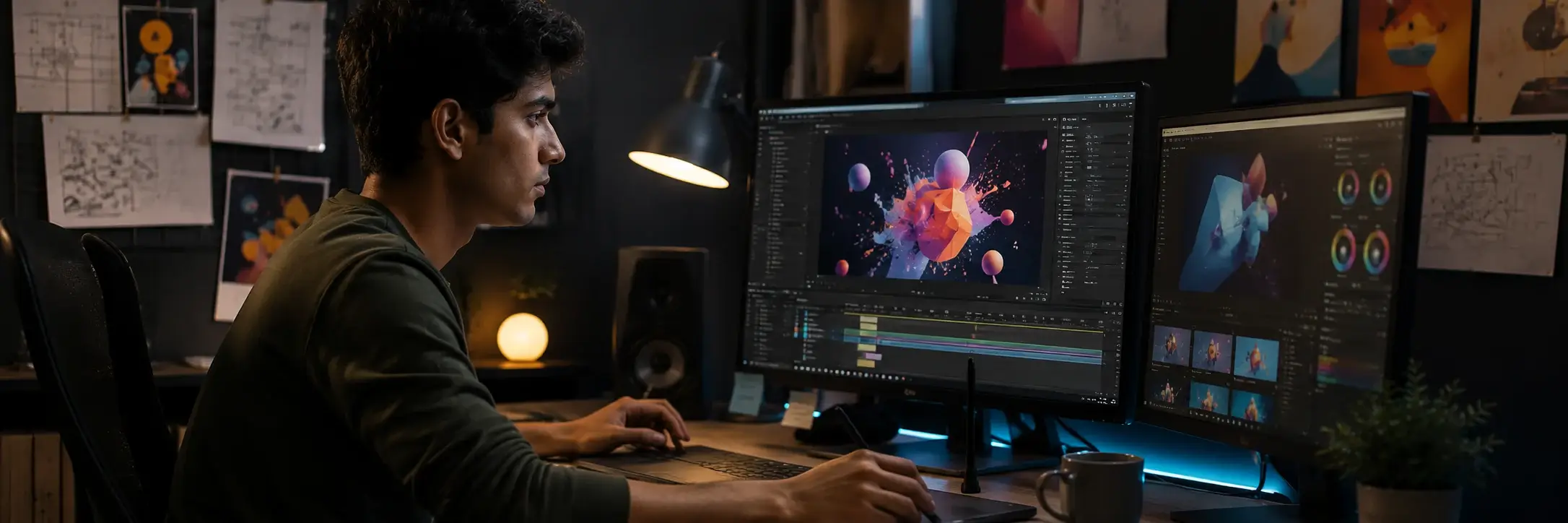
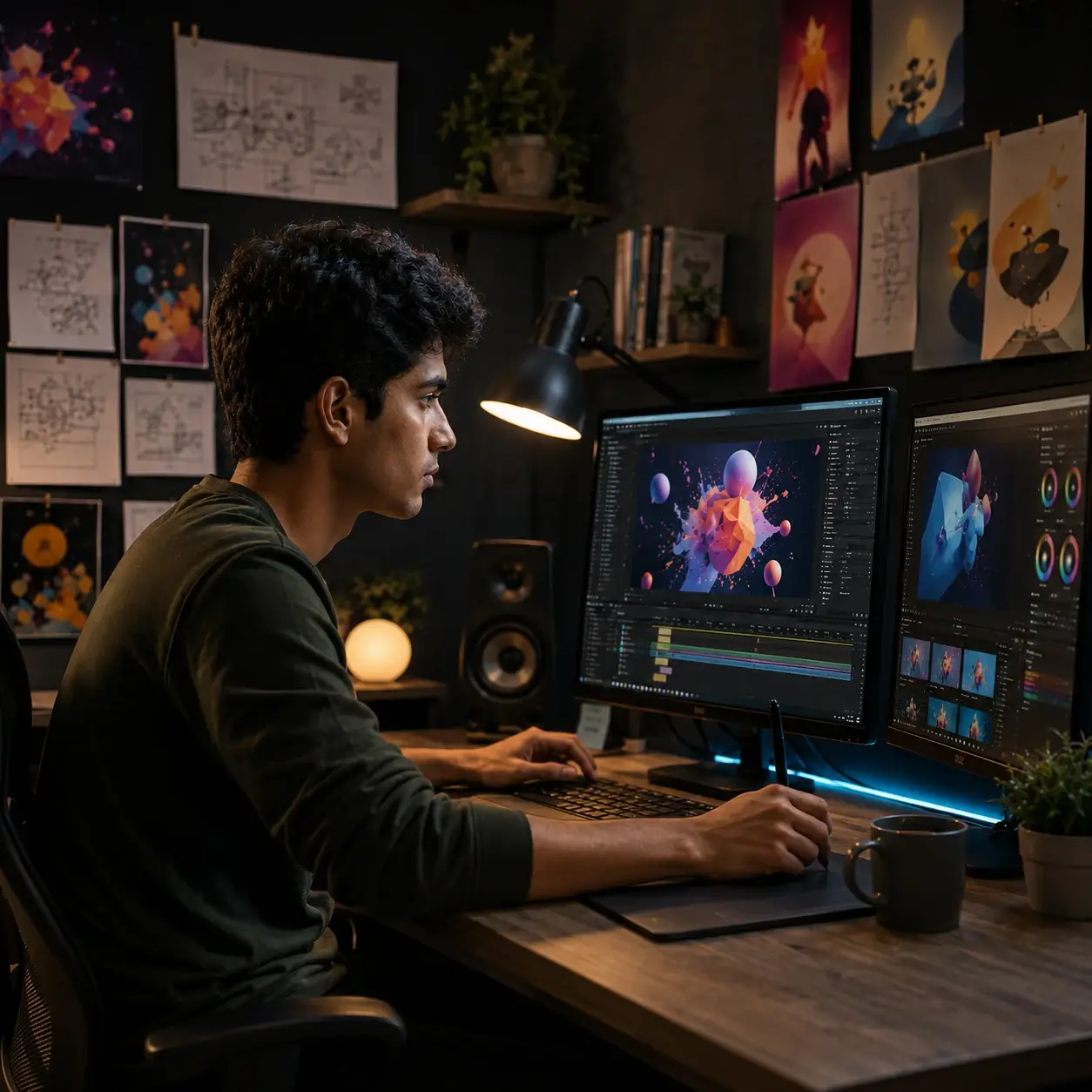
Motion graphics designers commonly use tools such as Adobe After Effects, Premiere Pro, Illustrator and Photoshop. Depending on their specialisation, they may also use Cinema 4D, Blender or other 3D and animation software.
Yes, motion graphics offers opportunities across advertising, entertainment, technology, gaming, e-learning and digital media. Its growing use across digital platforms makes it a valuable skill within the broader design industry.
Build strong fundamentals in graphic design, typography, visual storytelling and animation during your B.Des. Develop motion skills, create a focused portfolio and gain practical experience through internships, live projects or freelance work.