
What Does a Fashion Styling Degree Actually Teach?
Introduction
Fashion styling has long been framed as instinct, an almost mythical “eye” that some people simply have. But that idea feels incomplete today. In a world where every image is intentional and instantly judged, styling is less about raw taste and more about interpretation with purpose.
A look is never just a look. It carries signals about identity, culture, and aspiration. The same outfit can feel luxurious, ironic, or rebellious depending on how it’s styled, who it’s for, and where it appears. That kind of nuance doesn’t come from instinct alone. It comes from understanding media, audiences, and context. This is where a fashion styling degree becomes far more layered than it seems. It isn’t about learning how to dress well. It’s about learning how to think in images. A bachelor degree in fashion styling or a fashion styling masters degree trains students to decode why visuals work, how trends evolve, and how styling shapes perception across platforms.
At its core, styling education builds visual literacy. Students learn composition, proportion, and colour, but also intent. What is this look saying? Who is it speaking to? What cultural references does it carry? A strong bachelor of fashion styling programme also grounds students in fashion history and cultural context, helping them move beyond surface-level aesthetics. There’s a clear industry dimension too. Styling today spans editorials, campaigns, e-commerce, and social media. Each space demands a different approach. A styling degree prepares students to adapt ideas across formats, collaborate with creative teams, and work within real-world constraints.
At the same time, the rise of digital platforms has expanded the stylist’s role. Many now shape personal brands or build their own. A personal stylist degree often includes content creation and audience understanding, while advanced programmes explore emerging areas like virtual styling and digital fashion.
What ties it all together is a shift in perspective. Stylists are no longer just curating clothes. They are shaping how fashion is seen and understood. In that sense, a fashion styling degree isn’t about clothes at all. It’s about learning how to shape perception in an increasingly visual world.
Styling as a Language and Understanding Fashion Beyond the Outfit
Fashion styling is really about how you tell a story through what people wear. Clothes, accessories, and even the setting come together to create a certain feeling or message. A fashion styling degree helps students move beyond seeing outfits as separate pieces and start understanding the bigger picture—how culture, brand identity, audience behaviour, and platforms all shape the way a look is perceived.
In a well-designed BA fashion styling programme, students explore how the same outfit can take on completely different meanings depending on where it appears—whether it’s a magazine shoot, an ad campaign, or a social media post. A personal stylist degree, on the other hand, leans more into working with individuals, helping translate someone’s personality into a visual identity that feels both natural and intentional. Over time, styling stops feeling like guesswork and starts to feel like a language, one where creativity and context always work together.
From Creative Instinct to Strategic Thinking in Fashion Styling
For a long time, styling was seen as something purely creative, an instinct-led skill built on having a good eye. While that still matters, it’s no longer enough. The role of a stylist has expanded alongside the industry itself. Today, styling sits at the intersection of fashion, media, branding, and consumer behaviour. What looks good is only one part of the equation. What work has become far more important.
A modern fashion styling degree reflects this shift by training students to think beyond aesthetics and approach styling as a strategic function. Whether someone is pursuing a BA fashion styling or a more advanced programme, they’re learning how to connect creative choices with real-world outcomes. This means understanding not just how to build a look, but how that look performs across platforms, audiences, and brand narratives.
In practical terms, this shift shows up in how stylists are expected to think and work today:
- From trend-following to trend analysis: Stylists are expected to decode where trends come from, how they evolve, and when they lose relevance.
- From visual appeal to audience alignment: A look must resonate with a specific audience, not just look aesthetically pleasing in isolation.
- From standalone outfits to brand storytelling: Styling now plays a key role in shaping how a brand is perceived across campaigns and content.
- From static formats to platform-specific styling: What works in print may not work on Instagram or e-commerce, and stylists must adapt accordingly.
- From creative execution to collaborative strategy: Stylists often work closely with marketers, photographers, and creative directors to ensure visual consistency and impact.
This evolution has made styling more dynamic, but also more demanding. It requires a balance of intuition and analysis, creativity and clarity. A strong styling degree prepares students for this reality by giving them both the creative foundation and the strategic mindset needed to navigate a fast-moving, visually driven industry.
What a Fashion Styling Degree Really Teaches Beneath the Surface
A well-designed associate degree in fashion styling or a comprehensive bachelor degree in fashion styling goes far beyond surface-level creativity. The curriculum is structured to build both artistic confidence and industry awareness, ensuring that students don’t just create visually appealing work, but understand the thinking behind it. Whether one pursues a BA fashion styling, a bachelor of fashion styling, or progresses into a fashion styling masters degree, the learning journey is layered, combining theory, practice, and real-world exposure.
Visual Storytelling and Image Construction
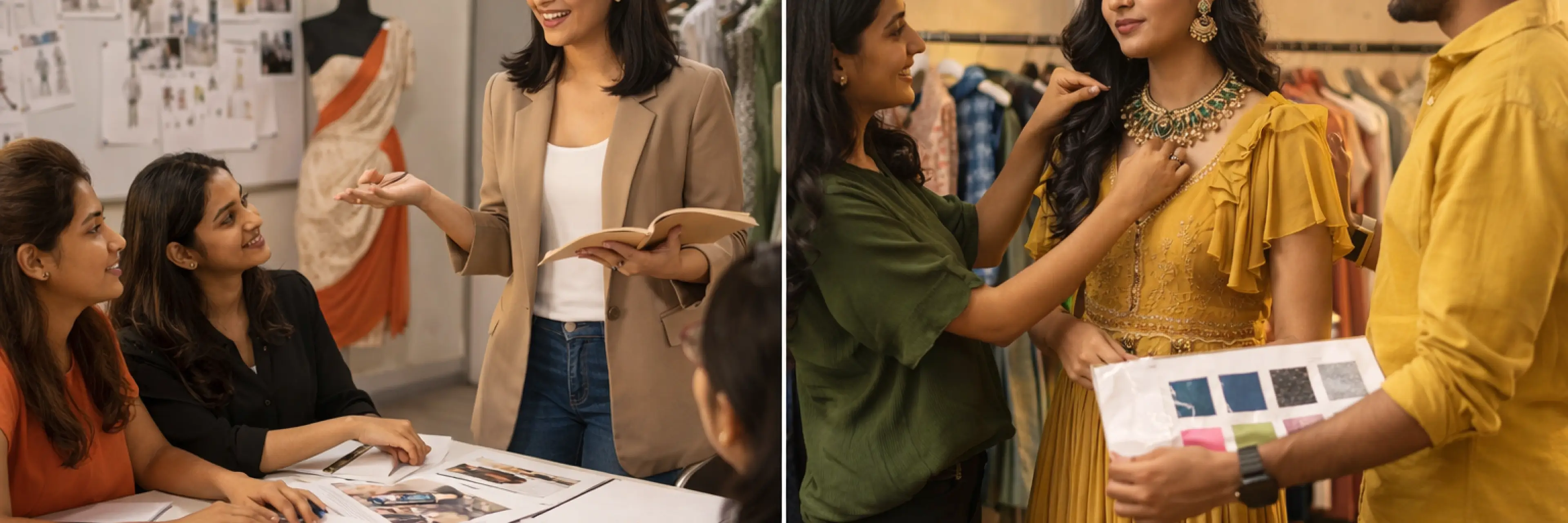
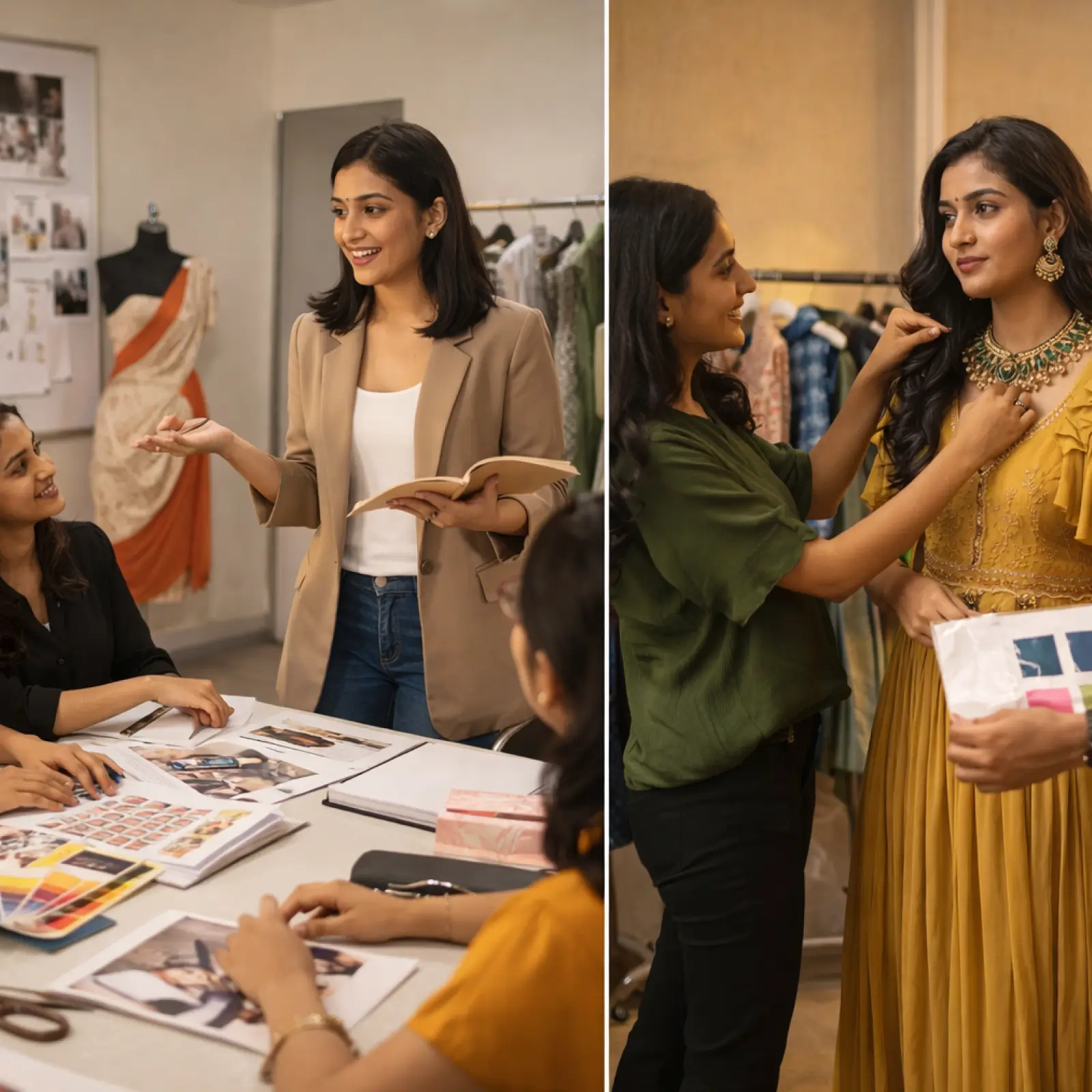
Students learn how to create narratives through styling using composition, colors, and textures.This is where most students begin, but it quickly moves beyond the basics. Visual storytelling teaches students how to translate ideas into images that communicate clearly and powerfully. It’s not just about putting together outfits that look good, but about creating a cohesive narrative through silhouettes, textures, colours, and composition. Students learn how to build mood boards, develop concepts, and execute shoots that reflect a clear point of view. Over time, they begin to understand how small styling choices can shift the entire meaning of an image, making this one of the most critical skills within a fashion styling degree.
Fashion History Culture and Context
Styling becomes far more meaningful when it is informed by context. In a BA fashion styling and production or BA hons fashion styling and production programme, students explore how fashion has evolved across time and cultures, and how it continues to respond to social, political, and economic shifts. This helps them recognise references, avoid repetition, and create work that feels relevant rather than derivative. Understanding context also allows stylists to draw from diverse influences with intention, rather than using them superficially. It builds a depth of thinking that separates a trained stylist from someone relying purely on instinct.
Industry Practices and Professional Workflows
A strong styling degree ensures that students are prepared for the realities of the industry, not just its creative side. This includes learning how to collaborate with photographers, designers, makeup artists, and creative directors, as well as understanding timelines, budgets, and production logistics. Students are introduced to the practical aspects of sourcing garments, managing wardrobes, and executing shoots under real constraints. A bachelor degree in fashion styling often mirrors professional environments, helping students transition smoothly into the workplace with both confidence and clarity.
Digital Styling and New Media
The role of a stylist has expanded significantly with the rise of digital platforms. Today, styling is not limited to magazines or runway shows. It exists across social media, e-commerce, and content-driven platforms. A fashion styling masters degree or even an advanced undergraduate programme introduces students to styling for digital formats, where attention spans are short and visual impact needs to be immediate. They learn how to adapt aesthetics for different platforms, understand content trends, and create visuals that are both engaging and strategically aligned with brand goals.
Personal Branding and Entrepreneurial Thinking
Many stylists today work independently or build their own presence, which makes personal branding an essential part of the curriculum. A personal stylist degree or a bachelor of fashion styling often includes training in portfolio development, client management, and self-presentation. Students learn how to position themselves in a competitive industry, build networks, and approach their work as both a creative and professional practice. This entrepreneurial mindset allows them to explore diverse career paths, from freelance styling to consulting and content creation.
Together, these areas create a well-rounded learning experience where creativity is constantly supported by context, strategy, and application. Rather than producing stylists who simply follow trends, a thoughtfully designed fashion styling degree develops individuals who can question, interpret, and shape the visual direction of the industry.
What Does Fashion Styling Education Look Like in the Future
Styling education is not standing still and it can’t afford to. The fashion industry is being reshaped by technology, shifting consumer values, and entirely new forms of media. As a result, what students learn today has to prepare them for roles that may not have fully existed a few years ago.
Looking ahead, the next phase of styling education will be defined by how well it adapts to these changes while still holding on to its creative foundation. The focus will move toward building professionals who are not just visually skilled, but also adaptable, informed, and comfortable working across disciplines.
Over the next 5–10 years, a few key shifts are already becoming clear:
- Deeper integration of technology: Styling will increasingly intersect with AI tools, virtual fashion, and digital wardrobes. Students will need to understand how to create looks not just for physical spaces, but for screens, simulations, and immersive environments.
- A stronger focus on sustainability: As the industry rethinks its impact, styling will play a role in promoting conscious consumption. This includes working with existing garments, re-styling pieces, and supporting circular fashion practices rather than constant newness.
- New opportunities in digital and virtual spaces: Styling is expanding into areas like gaming, digital avatars, and virtual influencers. This opens up entirely new creative fields where clothing exists purely in digital form but still carries cultural and visual meaning.
- The rise of the independent creator: Stylists are no longer limited to working behind the scenes. Many are building their own platforms, audiences, and personal brands. This makes content creation, storytelling, and audience engagement essential skills.
- Cross-disciplinary learning becoming the norm: Future stylists will need to understand not just fashion, but also elements of business, media, and technology. The ability to move between these areas will define long-term success.
This shift will naturally influence how programmes are structured. Advanced courses like a fashion styling masters degree are likely to become more specialised, allowing students to explore niche areas such as digital fashion or luxury branding in depth. At the same time, undergraduate programmes will focus on building flexible skill sets that can adapt to multiple career paths.
Even as these changes unfold, one thing remains constant. Styling is no longer just about creating visually appealing outfits. It is about interpreting culture, responding to change, and shaping how fashion is experienced across both physical and digital worlds.
Conclusion
A fashion styling education, when done right, changes the way you see the world. It moves you from simply noticing what looks good to understanding why it works, who it speaks to, and how it shapes perception. What begins as an interest in clothes evolves into a deeper ability to interpret culture, build narratives, and make intentional creative decisions.
As the fashion industry becomes more visual, fast-moving, and platform-driven, this kind of thinking is no longer optional. Stylists are expected to do more than curate outfits. They are expected to create meaning, adapt across mediums, and respond to shifting cultural signals with clarity and originality.
This is where institutions like ATLAS ISDI – School of Design & Innovation play an important role. By combining design thinking, industry exposure, and hands-on learning, they prepare students to engage with styling as both a creative and strategic practice. The focus is not just on skill-building, but on developing a point of view that can evolve with the industry.
In the end, a fashion styling degree is not just about entering a profession. It’s about learning how to see, interpret, and shape the visual world with intent—and doing it in a way that stays relevant, thoughtful, and future-ready.
Frequently Asked Questions
1. What is a fashion styling degree and what does it include?
A fashion styling degree teaches visual storytelling using clothing, accessories, and context. It includes styling techniques, fashion history, media understanding, and industry projects. Students learn both creative and strategic aspects of styling.
2. What can you do with a bachelor degree in fashion styling?
A bachelor degree in fashion styling opens careers in editorial styling, advertising, e-commerce, and personal styling. Graduates also work with influencers, brands, or as freelancers. It builds both creative and industry-ready skills.
3. Is a personal stylist degree worth it for a career in fashion?
A personal stylist degree is valuable for those who want to work directly with clients. It focuses on wardrobe planning, body types, and personal branding. It also helps in building a freelance or consulting career.
4. What is the difference between a BA fashion styling and a fashion styling masters degree?
A BA fashion styling builds foundational skills in styling, culture, and industry basics. A fashion styling masters degree goes deeper into specialization, research, and advanced concepts. It’s ideal for leadership or niche roles.
5. Can I start with an associate degree in fashion styling?
Yes, an associate degree in fashion styling is a good starting point. It covers basic styling skills and introduces industry practices. Many students later pursue advanced degrees for better opportunities.
6. What is taught in a BA hons fashion styling and production course?
A BA hons fashion styling and production course combines styling with production knowledge. Students learn shoot planning, collaboration, and execution. It prepares them for real-world fashion and media environments.
We’re here to help!
Building 2, BKC 51
Next to Equinox Business Park
Bandra Kurla Complex Junction
Mumbai – 400051